Unclogging Your Gutters: A Step-by-Step Guide from the Ground Up
Why Clean Gutters Are Essential for Every Homeowner
Clean gutters are one of the simplest ways to protect your home from serious — and expensive — water damage.
Here’s a quick overview of how to clean gutters:
- Remove debris by hand or with a gutter scoop, starting near the downspout
- Flush gutters with a garden hose from the far end toward the downspout
- Clear downspouts using a hose, plumber’s snake, or auger
- Inspect for damage like leaks, sagging, or improper slope
- Clean the exterior to remove black streaks, algae, and grime
Most homeowners need to clean gutters at least twice a year — once in spring and once in fall. However, you can achieve the total elimination of annual gutter cleaning with a permanent system that offers a lifetime guarantee for an average installation cost of $5,000. If you have pine trees nearby, every three months is safer for traditional systems.
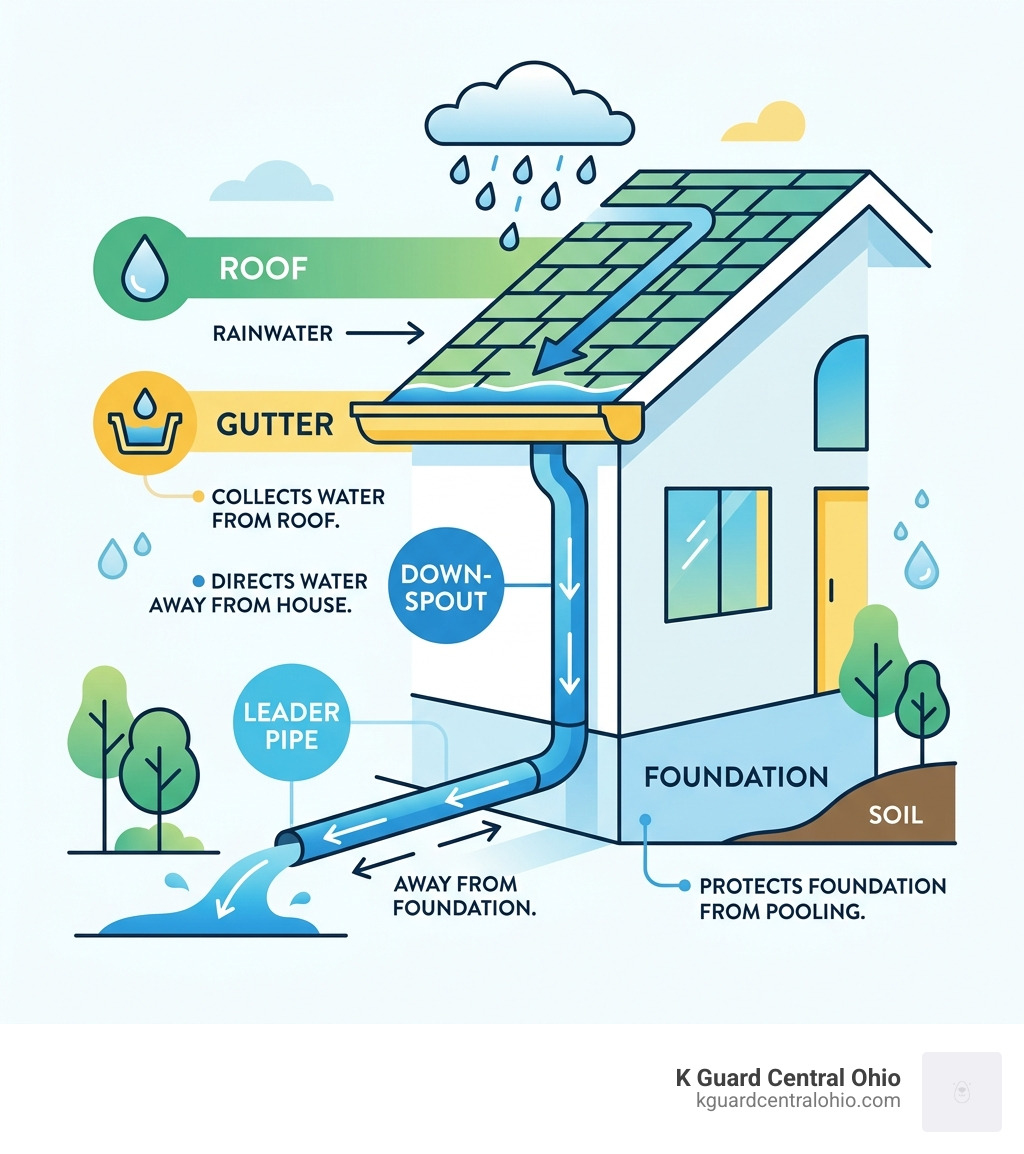
When gutters fill up with leaves, twigs, and debris, rainwater has nowhere to go. It spills over the sides, soaks into your fascia boards, pools against your foundation, and can even work its way under your roof shingles. The result? Leaks, mold, rot, and foundation cracks that can cost thousands to repair.
The good news: cleaning your gutters is a manageable DIY job — and this guide walks you through every method, from ladder-based hand cleaning to ground-level tools that never require you to climb at all.
Why You Must Clean Gutters Regularly to Protect Your Home
As we move through April 2026, many Central Ohio homeowners are beginning their spring maintenance checklists. At the top of that list should be the gutter system. While it’s easy to ignore what’s happening above eye level, the consequences of neglect are severe.
Clogged gutters are one of the leading causes of flooded basements. When water cannot flow through the downspouts, it pools around the foundation. Over time, this saturates the soil, creating hydrostatic pressure that forces water through porous concrete or into cracks. Beyond the basement, constant moisture leads to foundation erosion, which can compromise the structural integrity of your entire home.

According to How Often Should You Clean Your Gutters?, failing to maintain this system can lead to roof longevity issues. When water backs up, it can freeze in the winter (a common issue here in Ohio), creating ice dams that force moisture under your shingles. This leads to rot in the roof decking and interior ceiling leaks.
Furthermore, a gutter filled with decomposing leaves is essentially a five-star hotel for pests. Mosquitoes breed in the standing water, while rodents and birds find the debris perfect for nesting. Some experts even note that snakes will slither up downspouts to hunt the rodents living in your gutters. Regular cleaning also prevents fascia rot, which occurs when the wooden boards behind your gutters are constantly exposed to moisture. Maintenance pros interviewed in How Often Should You Really Clean Your Gutters? We Asked Maintenance Pros emphasize that keeping these channels clear is the only way to ensure water moves away from the home as intended.
Signs You Need to Clean Gutters Immediately
Sometimes you don’t need a calendar to tell you it’s time to clean gutters. Your house will give you several “cries for help.” Keep an eye out for these red flags:
- Visible Debris: If you can see “mustaches” of grass or leaves peeking over the edge of the gutter from the ground, the clog is already significant.
- Tiger Stripes: These are those unsightly black streaks or grime lines on the exterior of the gutter caused by water overflowing and carrying dirt down the front face.
- Sagging Metal: Gutters are designed to carry water, not pounds of wet sludge. If your gutters are pulling away from the house or sagging, the weight of the debris is likely the cause.
- Plant Growth: If you see actual seedlings or moss growing in your gutters, you’ve waited too long. You now have a rooftop garden that is actively destroying your fascia.
At K Guard Central Ohio, we’ve seen how these issues can escalate. You can learn more about our commitment to home protection on our About Us page.
How to Clean Gutters for Maximum Drainage Efficiency
To clean gutters effectively, you must focus on more than just “scooping the gunk.” The goal is to restore the system’s efficiency.
First, ensure all debris is removed, starting from the downspout and working backward. Once the visible material is gone, you must verify the slope. A properly functioning gutter should have a 1/4-inch to 1/2-inch decline for every 20 feet of run toward the downspout. If the gutter is level or sloping away from the drain, water will sit and stagnate, leading to rust and mosquito breeding.
Additionally, check your support hangers. These should be spaced every 2 feet to provide adequate support for the weight of the water. If you want to see a system designed to handle maximum flow without the need for constant manual intervention, check out How It Works.
Essential Tools and Safety for Gutter Maintenance
Before you head outside, you need the right gear. Safety is the most important factor when you decide to clean gutters yourself. Thousands of ladder-related injuries occur every year, and most are preventable with the right preparation.
The Essential Toolkit:
- Sturdy Ladder: Use an extension ladder for two-story homes or a sturdy A-frame for single stories.
- Ladder Stabilizer: This prevents the ladder from damaging the gutters and provides a much more stable platform.
- Work Gloves: Thick suede or heavy-duty rubber gloves protect your hands from sharp metal edges and bacteria-laden bird droppings.
- Safety Glasses: Debris can fly up when you are scooping or flushing.
- Gutter Scoop: A specialized plastic scoop is better than a metal trowel, as it won’t scratch the gutter’s interior coating.
- Non-slip Shoes: Rubber-soled shoes are a must.
- Debris Bucket: Use a bucket with a “LadderLimb” or a simple S-hook to keep your hands free.
As noted in Easy Steps for DIY Gutter Cleaning | HGTV, preparation is half the battle. Laying a tarp on the ground below your workspace can also make cleanup much faster, as you can drop debris directly onto it.
How to Clean Gutters Safely from a Ladder
If you are using a ladder, follow the “three-point contact” rule: always have two hands and one foot, or two feet and one hand, in contact with the ladder at all times.
- Placement: Ensure the ladder is on firm, level ground. Never climb a ladder in high winds or during a storm.
- The Spotter: If possible, have someone hold the base of the ladder.
- Scooping Technique: Start near the downspout. Use your plastic scoop to pull debris away from the opening. This prevents you from accidentally pushing more gunk into the downspout.
- Movement: Never overreach. If you can’t reach a spot comfortably, climb down and move the ladder. Overreaching is the primary cause of ladder tips.
For those who want to see what a professional-grade installation looks like compared to the standard DIY setup, our Photos gallery shows the difference in quality and safety. You can also find more safety tips in How to Clean Gutters Safely and Effectively.
Alternative Methods to Clean Gutters from the Ground
Not everyone is comfortable on a ladder, and that’s perfectly okay. In fact, many professionals recommend ground-based methods for single-story homes to minimize risk.
- Leaf Blower Attachments: Many leaf blowers have curved nozzle attachments that can reach up to 11 or 12 feet. This allows you to blow dry leaves out of the gutter while standing safely on the grass.
- Wet/Dry Vac: You can purchase gutter cleaning kits for your shop vac. These use rigid extension tubes to suck debris directly out of the channel.
- Pressure Washer Wands: A telescoping wand with a U-shaped attachment can blast away stubborn gunk. However, be careful not to use too much pressure, as you can damage the gutter’s pitch or force water under the shingles.
- Telescoping Gutter Tongs: These are long-reach poles with a “claw” at the end operated by a handle. They are great for pulling out large clumps of leaves or sticks.
According to How to Clear Your Home’s Gutters in a Few Simple Steps – This Old House, these methods work best when the debris is dry. If the gutters are filled with wet, heavy sludge, manual scooping is often the only way to get them truly clean.
Clearing Downspout Clogs and Exterior Grime
Even if the horizontal gutters are clear, a clogged downspout will cause the system to fail. To clear a downspout:
- The Hose Test: Stick a garden hose into the top of the downspout and turn it on full blast. If water backs up, you have a clog.
- The Plumber’s Snake: If the hose doesn’t work, use a plumber’s snake or a hand auger to break up the debris from the bottom up.
- The Tap Method: Sometimes, gently tapping the side of the downspout with a screwdriver handle can vibrate the clog loose.
Once the inside is functioning, address the “tiger stripes.” You can clean the exterior of your gutters using a soft-bristled brush on an extension pole and a solution like 30-Second Outdoor Cleaner. This removes algae and grime without the need for a ladder. For more on how we ensure a clean, professional look during a new Installation, check our dedicated service page.
Common Mistakes and When to Call a Professional
DIY gutter cleaning is a great way to save money, but it’s easy to make mistakes that lead to bigger problems.
| DIY Cleaning | Professional Service |
|---|---|
| Cost: $20 – $50 (Tools) | Cost: $140 – $300 |
| Time: 2 – 4 Hours | Time: 1 Hour |
| Risk: High (Ladder falls) | Risk: Low (Insured pros) |
| Detail: Often misses minor leaks | Detail: Includes full inspection |
Common Mistakes to Avoid:
- Ignoring the Downspouts: Many people clean the “trough” but forget to check the vertical pipes.
- Using the Wrong Tools: Metal shovels can scrape away the protective coating on your gutters, leading to premature rust.
- Overlooking the Pitch: If you don’t check the slope, your “clean” gutters will still hold standing water.
- Neglecting Safety: Never work alone if you are on a ladder.
If your home is more than two stories high, or if you notice significant damage like large cracks or sagging fascia, it is time to call a professional. We offer various Financing options to help homeowners manage the cost of necessary gutter upgrades or replacements, including the K-Guard system which provides a lifetime guarantee and the total elimination of annual gutter cleaning for an average cost of $5,000.
Frequently Asked Questions about Gutter Care
How often should I clean gutters if I have pine trees?
Pine trees are the nemesis of a clean gutter. Unlike broad leaves that fall mostly in autumn, pine trees drop needles year-round. Because needles are small and thin, they easily slip through many standard gutter guards and create dense, mat-like clogs. If you have pine trees overhanging your roof, we recommend a three-month interval for cleaning to prevent severe blockages.
Are gutter guards worth the investment?
This is a common question for Central Ohio homeowners. Traditional mesh or screen guards can reduce the frequency of cleaning, but they don’t eliminate it. Small debris often gets stuck in the mesh, requiring you to climb up and brush them off.
However, a high-quality, solid gutter guard system—like K-Guard—is a different story. These systems use liquid adhesion to direct water into the gutter while leaves and debris simply fall over the edge. These are widely considered worth the investment because they offer a permanent solution. You can view our specific leaf-free options on Our Products page.
What is the ideal slope for proper drainage?
As mentioned earlier, the ideal slope is a 1/4-inch decline for every 10 to 20 feet of gutter. If the slope is too steep, the water will overshoot the downspout during heavy rain. If it’s too shallow, water will pool. Standing water is the primary cause of gutter rust and provides a breeding ground for mosquitoes.

Conclusion
Cleaning your gutters is a vital part of homeownership, especially in the variable climate of Central Ohio. Whether you choose to tackle the job yourself with a ladder and a scoop or use modern ground-based tools, the goal remains the same: keep the water moving away from your home.
However, if you are tired of the biannual ritual of climbing ladders and scooping out wet leaves, there is a better way. At K Guard Central Ohio, we provide a specialized gutter guard system that is fundamentally different from the screens you find at big-box stores.
Our K-Guard system comes with a lifetime guarantee that your gutters will never clog. It is a completely seamless, high-capacity system that can handle the heaviest Ohio downpours while keeping debris out entirely. By choosing K-Guard, you are choosing the total elimination of annual gutter cleaning.
The average house installation for our high-performance system is approximately $5,000, an investment that pays for itself by protecting your foundation, roof, and fascia for the life of your home. Stop worrying about “tiger stripes” and sagging metal.
Ready to protect your home once and for all? Contact us today for a Leaf-Free Gutter Installation in Columbus, Ohio and experience the peace of mind that comes with a maintenance-free home.