Aluminum Gutter Wall Straps: Secure Your Drainage System Today
Why Choose Aluminum Gutter Wall Straps for Your Home?
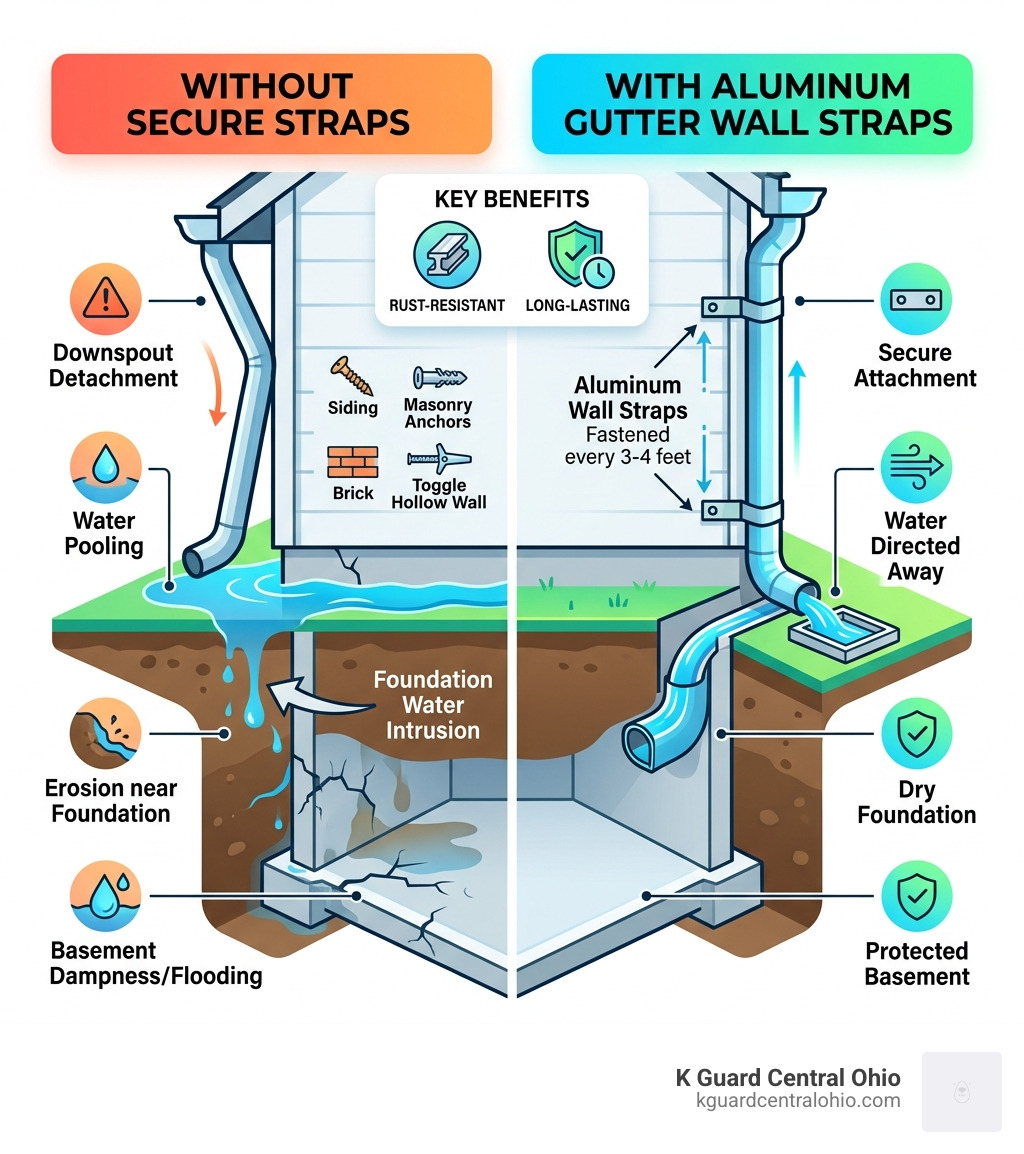
Aluminum gutter wall straps are the small but critical pieces of hardware that hold your downspouts firmly against your home’s exterior wall. Without them, downspouts sag, pull away from the wall, and can dump water right next to your foundation — causing serious damage over time.
Here’s what you need to know about aluminum gutter wall straps at a glance:
| Feature | Details |
|---|---|
| What they do | Secure downspouts to exterior walls to prevent sagging and detachment |
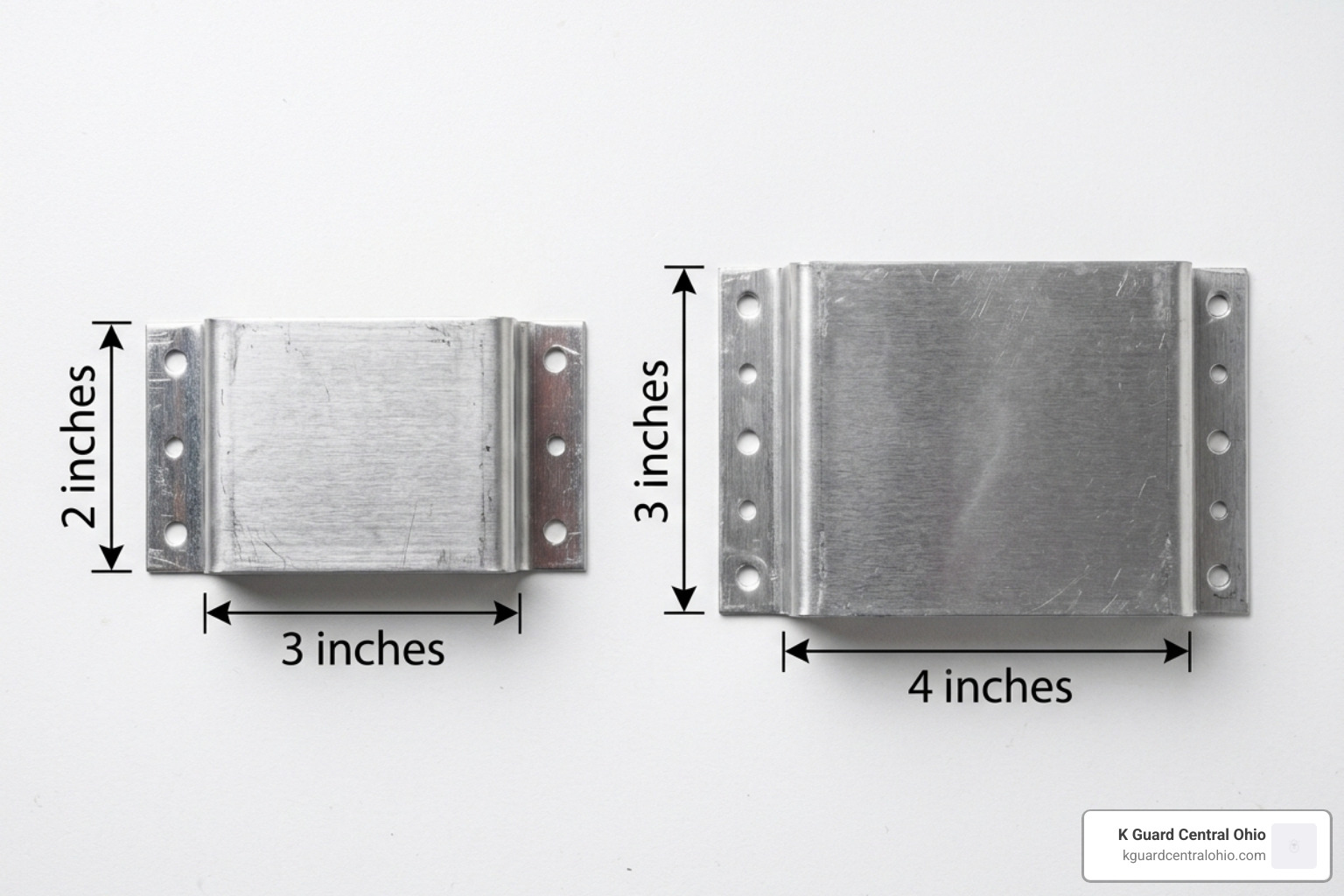
| Common sizes | 2×3 inch (standard) and 3×4 inch (oversized downspouts) |
| Key material benefit | Rust-resistant, lightweight, and built to last 20-40 years |
| Recommended spacing | Every 3-4 feet along the downspout |
| Typical straps needed | 2 for single-story, 3 for two-story homes |
| Best fasteners | Wood screws (wood siding), masonry anchors (brick), toggle bolts (hollow walls) |
A loose downspout isn’t just an eyesore. It can redirect hundreds of gallons of rainwater toward your foundation every year, leading to erosion, basement flooding, and costly repairs. Choosing the right aluminum gutter wall straps — and installing them correctly — is one of the simplest ways to protect your home.
I’m Rich Mannino, General Manager of K-Guard Leaf Free Gutters, and with nearly two decades of hands-on experience in gutter systems, I’ve seen how the right aluminum gutter wall straps can mean the difference between a gutter system that holds up for decades and one that fails after a single harsh Ohio winter. Our K-Guard systems provide a lifetime guarantee and the elimination of annual gutter cleaning, with a $5,000 average installation cost. Let’s walk through everything you need to make the best choice for your home.
When we talk about drainage security in Central Ohio, we have to talk about the materials that can survive our unpredictable weather. As of May 2026, aluminum remains the gold standard for residential gutter hardware. But why choose aluminum over other metals?
First and foremost is rust resistance. Unlike galvanized steel, which can eventually succumb to the elements and leave ugly orange streaks down your siding, aluminum creates its own protective oxide layer. This means it won’t rust or stain your home’s exterior. Most professional-grade aluminum gutter wall straps come with a baked-on finish, ensuring the color stays vibrant and the metal stays protected for decades.
Furthermore, aluminum is incredibly lightweight yet maintains a high strength-to-weight ratio. This makes it easy to handle during installation but tough enough to support a downspout full of rushing water. When you are looking into the Cost of New Gutters 101, it’s important to remember that the small hardware choices—like your straps—dictate the longevity of the entire system.
Another technical benefit is how aluminum handles thermal expansion. In Ohio, we see massive temperature swings. Aluminum expands and contracts at a rate that is generally compatible with your aluminum gutters and downspouts, preventing the fasteners from backing out or the straps from warping over time. Plus, with a wide variety of Color Options, you can find straps that perfectly match your K Style Aluminum Gutter T Straps for a seamless, professional look.
Selecting the Right Size and Style for Your Downspouts
Choosing the wrong strap size is like trying to wear shoes two sizes too big—it just won’t work, and you’ll probably trip. Most residential homes in Columbus and the surrounding areas use one of two standard sizes.
2×3 Inch Standard Straps
This is the most common size for residential homes. These straps are designed to wrap snugly around a 2×3-inch rectangular downspout. They are typically about 10.75 inches long before they are bent into shape.
3×4 Inch Oversized Straps
If you have a large roof or a commercial property, you likely have 3×4-inch downspouts. These require longer straps—usually around 12.5 inches—to ensure there is enough material to wrap around the larger profile and still anchor securely to the wall. Using Heavy Duty Downspout Clips in these larger sizes is essential for managing the increased water weight.
| Specification | 2×3 Inch Strap | 3×4 Inch Strap |
|---|---|---|
| Downspout Compatibility | Standard Residential | Large Residential / Commercial |
| Approx. Length | 10.75 inches | 12.5 inches |
| Material Gauge | .027 to .032 | .032 to .040 |
| Typical Use | 5 Inch Seamless Gutters | 6 Inch or High-Capacity Systems |
Essential Aluminum Gutter Wall Straps Sizes
When shopping for aluminum gutter wall straps, pay attention to the gauge (thickness).
- .027 Gauge: The standard for residential use. It’s flexible enough to work with but strong enough for daily rain.
- .040 Gauge: Often referred to as “Heavy Duty” or “Professional Grade.” These are thicker and provide extra rigidity, which we often recommend for areas with high wind or heavy snow loads.
Look for a ribbed design. Straps with a small “rib” or indentation running down the center are significantly stronger than flat pieces of metal because the ribbing prevents the strap from bending or buckling under pressure. Most high-quality straps also come with pre-drilled holes, which saves you the headache of trying to drill through metal while balanced on a ladder.
Step-by-Step Installation Guide for Maximum Security
Proper installation is what separates a “DIY disaster” from a professional-grade drainage system. If you’re tackling this yourself, follow these steps to ensure your downspouts stay put.
- Mark Your Spacing: The general rule of thumb is to place one strap every 3 to 4 feet. For a standard 10-foot downspout on a single-story home, you’ll want one near the top (about a foot below the gutter) and one near the bottom (about a foot above the ground or drainage transition).
- Select Your Fasteners: This is where most people go wrong.
- Wood Siding: Use 1.5-inch stainless steel or aluminum wood screws.
- Brick or Masonry: You must use masonry anchors. Pre-drill the hole with a hammer drill and insert a plastic anchor before driving in your screw.
- Vinyl Siding: Be careful not to over-tighten, as vinyl needs to move slightly with temperature changes.
- Apply Sealant: To prevent water from seeping behind your siding and causing rot, apply a small dab of high-quality silicone sealant into the screw hole before you drive the fastener home.
- Secure the Strap: Wrap the strap around the downspout. Some styles, like the Amerimax Aluminum K-Style straps, are designed to be screwed into the wall first, then wrapped over the front. Use small “zip” screws (usually 1/2 inch) to secure the strap to the downspout itself so it doesn’t slide up or down.
- Check for Level: Before the final tighten, ensure your downspout is perfectly vertical. A lopsided downspout doesn’t just look bad; it can cause uneven water flow and debris buildup.
If this sounds like a lot of work, you’re right! Many homeowners find that Hiring a Gutter Contractor is the best way to ensure the job is done safely and correctly the first time. Our professional Installation team handles all these technical details so you don’t have to.
Pro Tips for Maintaining Aluminum Gutter Wall Straps
- Check Tightness Annually: Ohio’s freeze-thaw cycles can occasionally loosen screws. Give them a quick check every spring.
- Noise Elimination: If your downspout “clangs” when it’s windy, it’s usually because a strap is loose. Adding a small piece of rubber gasket between the strap and the downspout can act as a silencer.
- Finish Inspection: While aluminum won’t rust, the paint can occasionally chip. A quick touch-up with matching spray paint will keep your curb appeal high.
- High-Wind Reinforcement: If your home is in an open area prone to high winds, reduce your strap spacing to every 2 feet for extra peace of mind.
Aluminum vs. Alternative Materials: Which Lasts Longer?
In gutter hardware, you’ll often see plastic or galvanized steel options. Here is why we almost always steer our Central Ohio clients toward aluminum.
Plastic Clips: These are often cheaper and easier to snap on, but they are a nightmare in the long run. Plastic becomes brittle when exposed to UV rays and freezing temperatures. After a few Ohio winters, plastic straps often crack and fail, leaving your downspout flapping in the breeze.
Galvanized Steel: While very strong, steel has a major weakness: galvanic corrosion. If you use steel straps on aluminum downspouts, a chemical reaction occurs when they get wet, causing the aluminum to deteriorate rapidly. Furthermore, once the zinc coating on steel wears off, it will rust.
Copper: Beautiful and incredibly long-lasting, but also very expensive. Copper is usually reserved for historic restorations or high-end architectural projects.
When you’re Unpacking the True Cost of New Gutters and Downspouts, aluminum offers the best “bang for your buck.” It provides a service life of 20 to 40 years with almost zero maintenance. When Picking a Gutter Replacement Company, always ask what material their hardware is made of—if it’s not aluminum or stainless steel, keep looking!
Frequently Asked Questions about Gutter Hardware
How many aluminum gutter wall straps do I need per story?
For a standard one-story home (approx. 10ft downspout), we recommend 2 to 3 straps. For a two-story home (approx. 20ft downspout), you should use 5 to 6 straps. The industry standard is one strap for every 3 feet of vertical pipe to ensure it can handle the weight of water and the force of wind.
Can I use aluminum straps on galvanized steel downspouts?
We don’t recommend it. Mixing different types of metals can lead to galvanic corrosion, which eats away at the softer metal. Always match your strap material to your downspout material. If you have aluminum downspouts, use aluminum gutter wall straps.
Why is my downspout rattling during heavy May rainstorms?
Rattling is almost always caused by loose or insufficient straps. If the downspout isn’t held tightly against the wall, the vibration of the water rushing through the pipe will cause it to “chatter” against your siding. Tightening your current straps or adding an extra one in the middle of a long run usually solves the problem.
Conclusion
Your gutter system is only as strong as its weakest link. While the gutters themselves get all the glory, the aluminum gutter wall straps are the unsung heroes that keep the whole system standing. By choosing high-quality aluminum hardware and ensuring it’s installed at the correct intervals with the right fasteners, you are protecting your home’s foundation and your own peace of mind.
At K Guard Central Ohio, we believe in doing things right the first time. That’s why Our Products are designed to be the last gutter system you’ll ever need. Our specialized K-Guard system offers:
- A Lifetime Guarantee: We stand behind our work for as long as you own your home.
- Elimination of Annual Gutter Cleaning: No more ladders, no more muck, and no more clogged downspouts.
- Professional Mounting: We use heavy-duty hardware to ensure your system stays secure through every storm.
With a $5,000 average installation cost, K-Guard is an investment in your home’s future. If you’re tired of worrying about sagging downspouts or overflowing gutters, it’s time to upgrade to a permanent solution.
Ready to secure your home’s drainage system? Contact K Guard Central Ohio today for a free estimate and see the difference that professional-grade hardware and expertise can make!