To Gutter or Not to Gutter: A Dormer Dilemma
Do Dormers Really Need Gutters? Here’s What You Need to Know
Gutters on dormers are one of the most misunderstood parts of home water management. Some dormers need them. Some don’t. And on the ones that do have them, a bad installation can actually cause the leaks you were trying to prevent.
Quick answer — whether your dormer needs gutters depends on:
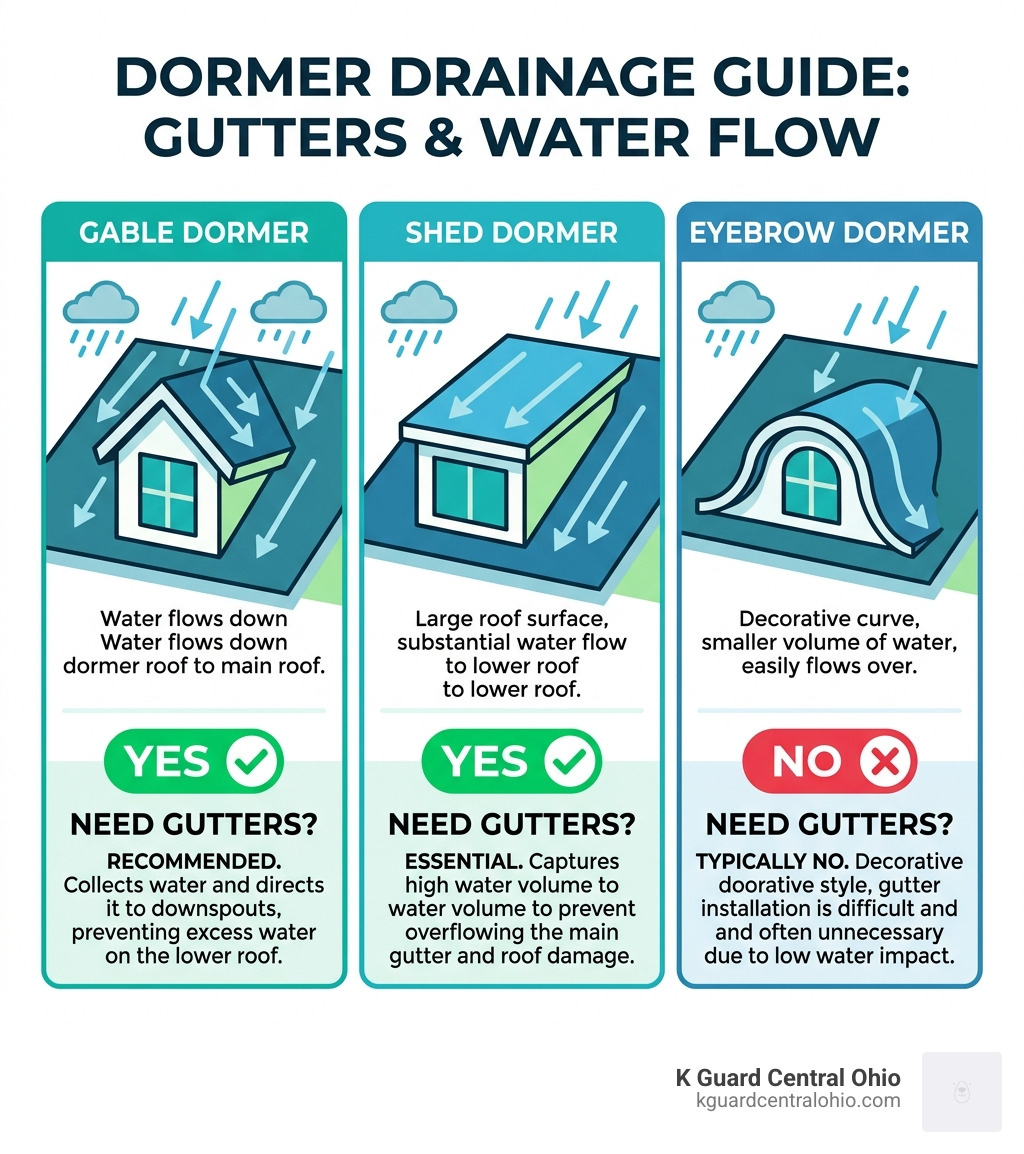
- Dormer type: Functional dormers (like gable and shed styles) that add living space almost always need gutters. Decorative ones (like eyebrow dormers) typically don’t.
- Climate: In a place like Central Ohio, with heavy rain and snow, gutters on functional dormers are usually essential.
- Water volume: Even if you have gutters, fast-moving water during heavy rain can shoot right past them — a common problem homeowners don’t expect.
- Installation quality: Poorly pitched gutters, bad flashing, or the wrong downspout size can create more damage than having no gutter at all.
One homeowner described it well: water was gaining so much momentum off their dormer that it flew right past the gutter entirely during heavy rain, creating a mess at ground level. That’s not unusual — and it points to a bigger truth.
Getting dormer drainage right isn’t just about adding a gutter. It’s about understanding how water moves on your specific roof.
This guide covers everything: dormer types, when gutters help vs. hurt, how to install them correctly, and what alternatives exist when a traditional gutter isn’t the right fit.
Understanding Dormer Types and Their Water Management Needs

Before we can decide if you need gutters on dormers, we have to identify what kind of dormers you have. Dormers are architectural features that project vertically from a sloped roof. While they were historically used to add light and ventilation to attics, today they are key for increasing living space and curb appeal.
Gable Dormers
These are the most common style you’ll see while driving through Central Ohio neighborhoods. They have a classic triangular roof (a “gable”) that peaks in the middle. Because they have two sloping sides, they shed water effectively, but that water often collects in the “valley” where the dormer meets the main roof. This is a primary spot for leaks if drainage isn’t handled correctly.
Shed Dormers
Shed dormers have a single-sloped roof that tilts in the same direction as the main roof but at a shallower angle. These are common on Cape Cod-style homes because they maximize interior headroom. Because they often have a wide front face, they collect a significant amount of rainwater that needs to be directed away from the windows and the siding below.
Hipped Dormers
Similar to a hip roof, these dormers have three sloping planes that meet at a point or ridge. They are incredibly stable and common on American Foursquare homes from the early 20th century. Like gable dormers, they create multiple points where water can converge, requiring careful management.
Eyebrow and Segmental Dormers
Eyebrow dormers are arched and low-profile. They are primarily architectural statements rather than space-makers. Because they don’t typically add functional living space and have a curved design, they usually do not require gutters. Segmental dormers are similar but have a more defined “half-circle” roof.
[TABLE] Comparing Dormer Types and Gutter Necessity
| Dormer Type | Purpose | Gutter Necessity | Leak Risk |
|---|---|---|---|
| Gable | Light/Headroom | High | High (at valleys) |
| Shed | Living Space | Very High | Moderate |
| Hipped | Style/Space | High | Moderate |
| Eyebrow | Aesthetics | Low/None | Low |
| Segmental | Aesthetics | Low | Low |
In Central Ohio, where April 2026 weather continues to bring unpredictable heavy downpours and winter snow cycles, the structural integrity of these features depends on water management. A dormer should always be a “subordinate” design element—meaning it shouldn’t overwhelm the main roof—but its water output can certainly overwhelm your main gutter system if you aren’t prepared.
Why Gutters on Dormers Can Lead to Roof Leaks
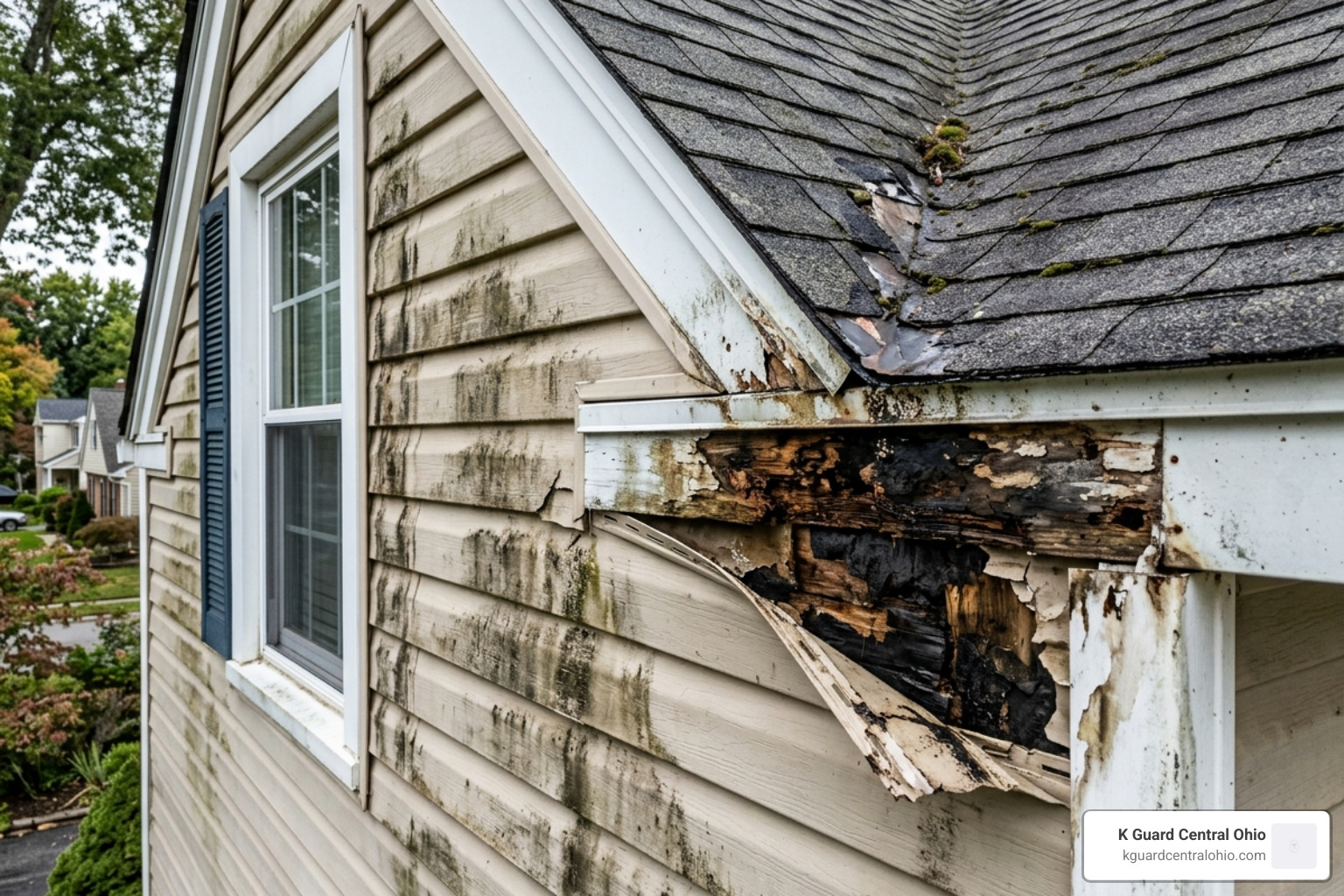
It sounds counterintuitive, doesn’t it? You install a gutter to prevent leaks, yet gutters on dormers are frequently cited as the source of roofing headaches. Here is why this happens:
- Water Momentum and Gutter Bypass: During heavy Central Ohio rainstorms, water gains significant speed as it rolls down the dormer roof. If the gutter is too small or positioned slightly too low, the water simply “overshoots” it, dumping directly onto the main roof or the ground below.
- Improper Pitch: Small gutters are hard to slope correctly. If the gutter is level or pitched away from the downspout, water pools. Standing water leads to rusted fasteners and rotted fascia boards.
- Flashing Failures: Flashing is the waterproof strip between the dormer and the roof. Often, installers will nail gutter brackets through the flashing or siding, creating a “piercing” where water can seep into the wall.
- Moss and Debris: Because dormer gutters are small and often high up, they are the first to get clogged with moss or leaves. A clogged dormer gutter acts like a dam, forcing water back up under the shingles.
- Inaccessibility: Let’s be honest—nobody likes climbing a ladder to the very peak of the house. Because they are hard to reach, these gutters are often neglected, leading to long-term failure.
Managing Water Volume with gutters on dormers
The volume of water a dormer sheds might seem small, but the velocity is the real killer. Standard 5-inch gutters might struggle with the concentrated flow from a large shed dormer. In many cases, we recommend upgrading to 6-inch gutters or using oversized downspouts to handle the “dump” of water that occurs during a storm.
If you don’t manage this volume, the water hits your main roof with enough force to wear away the protective granules on your shingles. This is why many experts, including those on platforms like JustAnswer (which saw a 14% traffic rise recently for home improvement queries), suggest using splash guards. These are small metal “walls” attached to the outer rim of the gutter to catch high-velocity water.
Aesthetic Challenges of gutters on dormers
No one wants their beautiful home to look like a maze of aluminum pipes. When you have two closely spaced dormers, the challenge is finding a way to drain them without a giant downspout running right down the middle of your roof.
Solutions include:
- Color Matching: Painting the downspouts to match the siding or the roof shingles.
- Hidden Drainage: Using closed pipes tucked into the corners of the dormer.
- K-Style Profiles: Using seamless gutters that mimic the look of decorative crown molding to maintain historic preservation standards.
Proper Installation and Configuration of gutters on dormers
If you decide to go ahead with installation, doing it right the first time is the only way to avoid the leaks often associated with dormer gutters.
Seamless integration is the goal. We recommend running the downspout from the dormer gutter directly into the lower, main roof gutter whenever possible. This prevents water from ever touching the main roof shingles, which significantly extends the life of your roof.
However, if a direct connection isn’t possible, a metal tray or “splash pan” should be installed on the roof surface where the downspout empties. This protects the shingles from erosion.
- Attachment: Never nail through the siding or flashing. Use high-quality sealants and brackets designed for roof-mount or fascia-mount applications.
- Secondary Roof Protection: Ensure the area below the dormer has reinforced underlayment. The “valley” where the dormer meets the roof is the most vulnerable spot on your entire home.
Alternatives to Traditional Gutters for Dormer Runoff
Sometimes, the best gutter is no gutter at all. If a traditional system is too ugly or difficult to maintain, consider these alternatives:
- Roof Diverters: These are “L-shaped” metal strips (sometimes called “kick-out flashing”) that sit on the roof and guide water sideways into the main gutters, preventing it from running down the face of the dormer.
- Rain Chains: A decorative and functional alternative to downspouts. They guide water down a chain into a basin or the lower gutter. They are less obtrusive and add a bit of “zen” to your home’s exterior.
- Rain Handlers: These are louvered systems that break up the falling water into a fine mist, dispersing it over a wide area rather than letting it fall in a heavy stream.
- Ground-Level Fixes: If you choose to let the water fall, you must protect the ground. French drains, dry wells, or decorative rock beds can prevent the water from eroding your foundation or landscaping.
Maintenance and Professional Care for Dormer Systems
Maintenance is where most homeowners fail. Because of the accessibility hurdles, dormer gutters often become “science experiments” for moss and weed growth.
Our Expert Maintenance Tips:
- Annual Inspections: Check your dormer gutters every spring. Look for “tiger stripes” (dark streaks) on the front of the gutter, which indicate frequent overflowing.
- Ladder Safety: If you aren’t comfortable on a high ladder, don’t risk it. Dormer gutters are often located on the second or third story.
- Moss Treatment: In the damp Central Ohio climate, moss loves the shade created by dormers. Regular treatments can prevent moss from clogging your downspouts.
When should you call a pro? If you see water dripping from the soffits under the dormer, or if you notice your main gutters are sagging under the weight of the extra water, it’s time for a professional assessment. Experts like Rick, a licensed construction supervisor with over 71,000 satisfied customers, emphasize that catching a dormer leak early can save you thousands in interior drywall repairs.
Frequently Asked Questions about Gutters on Dormers
Do all dormer styles require gutters for protection?
No. Decorative dormers like eyebrow or small segmental styles often don’t need them because they don’t catch enough water to cause damage. However, shed and gable dormers that protect living space should almost always have a water management system.
How do I prevent water from skipping over my dormer gutters?
The best solution is a combination of splash guards and ensuring the gutter is properly pitched. If the water momentum is still too high, you may need to install a roof diverter higher up on the dormer roof to break the flow.
Can adding gutters to existing dormers cause roof sagging?
If the gutters are not cleaned and they fill with heavy wet debris or ice, the added weight can cause the eaves of the dormer to sag. This is why using a lightweight, seamless aluminum system is vital.
Conclusion
Managing gutters on dormers is a balancing act between architectural beauty and functional protection. In Central Ohio, ignoring dormer runoff is a recipe for roof rot and foundation issues. Whether you choose traditional gutters, rain chains, or clever roof diverters, the goal is the same: keep the water moving away from your home’s structure.
If you’re tired of climbing ladders or worried about that mysterious damp spot on your upstairs ceiling, it might be time for a permanent solution. At K Guard Central Ohio, we specialize in high-capacity, leaf-free systems that can handle the unique challenges of dormer runoff without the maintenance headache.
Don’t let a “dormer dilemma” dampen your home’s value. For a professional look at your roof’s drainage, Leaf-free gutter installation in Columbus OH is your best bet for a dry, worry-free future. Contact us today for a consultation!