Heavy Rain Gutter Guards: Defending Your Home From the Ultimate Deluge
When Heavy Rain Hits, Your Gutters Are the Last Line of Defense
Heavy rain gutter guards are the fastest way to protect your home from overflow, clogs, and water damage during serious storms. Here’s what you need to know before buying:
Best heavy rain gutter guards at a glance:
| Type | Best For | Heavy Rain Performance |
|---|---|---|
| Micro-mesh (stainless steel) | Most homes, mixed debris | Excellent — up to 60 GPM flow |
| Integrated hood system (K-Guard) | Permanent, zero-maintenance protection | Excellent — fully enclosed, debris-free |
| Perforated aluminum | Light debris, moderate rain | Good |
| Foam/brush inserts | Budget installs | Poor in heavy downpours |
Every year, homeowners across Central Ohio watch helplessly as clogged gutters overflow during summer thunderstorms. Water pours over the edge, soaks into the fascia, pools against the foundation, and finds its way into basements.
The problem isn’t always the rain. It’s the debris sitting in the gutter before the storm even starts.
A quality gutter guard system changes that equation entirely. Instead of scrambling to clean gutters before every major storm, a properly installed system keeps water moving — automatically, season after season — with no annual cleaning required.
The best systems, like the K-Guard Leaf Free Gutter System, go beyond a simple screen or mesh clip-on. They replace your entire gutter with a fully integrated, covered trough that sheds leaves and channels high-volume runoff safely away from your roof, siding, and foundation. The average installation runs around $5,000, backed by a lifetime guarantee.
I’m Rich Mannino, General Manager of K-Guard Leaf Free Gutters, and I’ve spent nearly two decades helping Central Ohio homeowners find permanent, storm-ready solutions to their heavy rain gutter guard challenges. In that time, I’ve seen which systems hold up when the storms get serious — and which ones fail when it matters most.
Why K-Guard Is Built for Homes That Face Serious Storms
When we talk with Central Ohio homeowners about heavy rain gutter guards, the conversation usually starts with one urgent question: “Will this actually work when the rain is coming down sideways?”
That is the right question.
A gutter protection system is not just there for a calm drizzle. It has to perform during sudden summer downpours, wind-driven storms, leaf-heavy fall rains, and freeze-thaw seasons that send roof grit, twigs, seed pods, and debris toward the gutter line.
K-Guard Central Ohio focuses on a fully integrated gutter protection system rather than a small add-on piece placed over an old gutter. That matters because heavy-rain performance depends on the whole drainage path: roof runoff, gutter opening, trough capacity, pitch, downspout flow, and debris shedding.
For a local overview of the system, see this Central Ohio gutter guard overview. If you are still weighing whether protection makes sense now, our guide on why your home needs gutter guards explains the everyday benefits in more detail.
| K-Guard storm-performance feature | What it means for the homeowner |
|---|---|
| Fully integrated covered gutter | Replaces the old open trough instead of simply covering it |
| Debris-shedding design | Leaves, sticks, and seed pods are directed away from the water channel |
| Enclosed water path | Helps keep runoff moving toward the downspouts during heavy rain |
| Professional installation | Proper fit, pitch, and alignment for the home |
| Seamless appearance | Clean curb appeal without bulky clip-on pieces |
| Lifetime guarantee | Long-term protection instead of a short-term fix |
| No annual gutter cleaning | Eliminates the yearly climb-and-scoop routine |
A Fully Integrated Heavy Rain Gutter Guard System
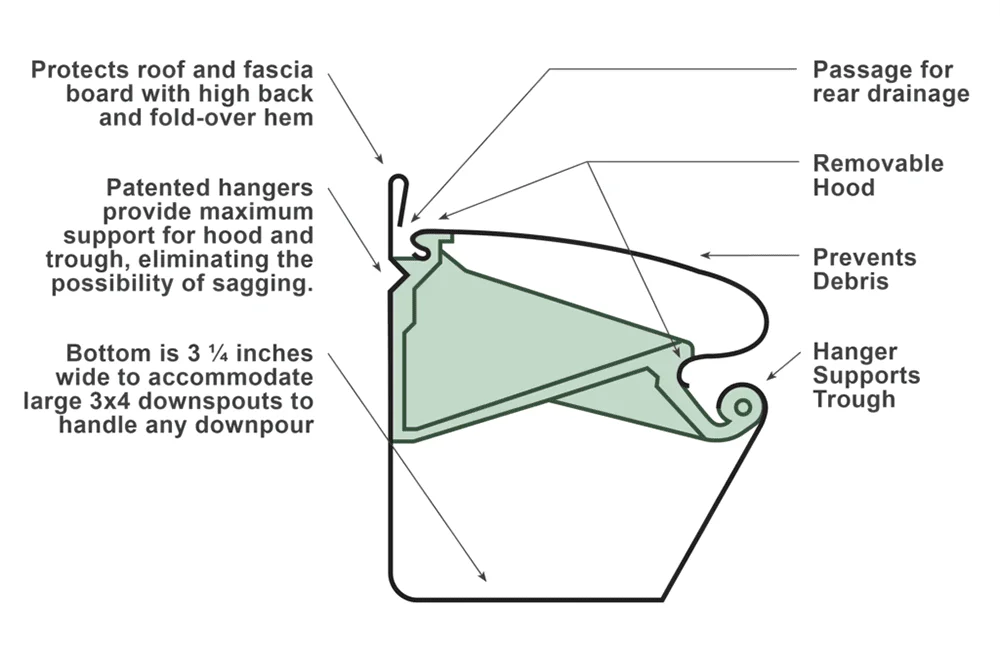
Most standard gutters are open troughs. That means anything that lands on the roof can wash straight into the gutter: maple leaves, oak leaves, pine needles, roof grit, twigs, seed pods, and the occasional mystery object that looks like it came from another zip code.
A covered gutter system changes the design. Instead of leaving the channel exposed, K-Guard uses an integrated gutter protection system that helps shed debris while still allowing roof runoff to enter the drainage path.
That integrated approach is important for heavy rain because water moves fast. During a downpour, the system has to do two things at once:
- Accept a high volume of runoff from the roof.
- Keep debris out so the water path stays open.
A screen or insert may help reduce debris, but it still depends heavily on the old gutter underneath. If that gutter is poorly pitched, undersized, damaged, or already holding years of sludge, the guard is only solving part of the problem.
K-Guard is built as a complete system: covered protection, water handling, gutter body, and professional installation working together.
Designed to Shed Leaves, Sticks, and Roof Debris
The biggest enemy of storm performance is not one big leaf. It is buildup.
One leaf catches a twig. The twig catches roof grit. The roof grit forms sludge. Then seed pods, pollen, and shingle granules settle in. Before long, your gutter has gone from “drainage system” to “tiny rooftop compost pile.”
During a heavy storm, that debris blocks water from reaching the downspouts. Water then takes the path of least resistance, usually over the front edge of the gutter. From there, it can splash against siding, soak fascia boards, wash out landscaping, and collect near the foundation.
K-Guard’s covered design is made to reduce that cycle. By helping debris move off the system instead of dropping into the trough, it protects downspout flow and reduces the conditions that lead to clogs.
Quality gutter protection systems can prevent most common clogs caused by leaves, pine needles, and storm debris. Some high-performing guard categories are designed for substantial rainfall rates, with micro-mesh systems commonly marketed around high flow capacities such as 60 gallons per minute. But the key is not only how much water a material can pass in a lab. It is whether the full installed system keeps working on a real home during real storms.
Built for Long-Term Value, Not Short-Term Fixes
K-Guard is not meant to be a temporary seasonal accessory. It is a permanent gutter protection solution for homeowners who are tired of cleaning gutters, worrying about storm overflow, and paying attention to every dark cloud like it personally owes them money.
The average house installation is approximately $5,000. That investment includes more than the product itself. It includes professional measurement, fitting, installation, and the long-term value of a system backed by a lifetime guarantee.
The practical benefits are clear:
- No annual gutter cleaning
- Less ladder risk
- Fewer emergency overflow problems
- Better protection for fascia, siding, landscaping, and foundation areas
- Cleaner curb appeal
- More predictable drainage during storms
For many homeowners, the value is not just financial. It is the peace of mind of not saying, “I should have cleaned those gutters,” every time the weather forecast turns dramatic.
How Heavy Rain Gutter Guards Protect Against Clogs, Overflow, and Water Damage
A gutter system has one job: collect roof water and move it away from the home.
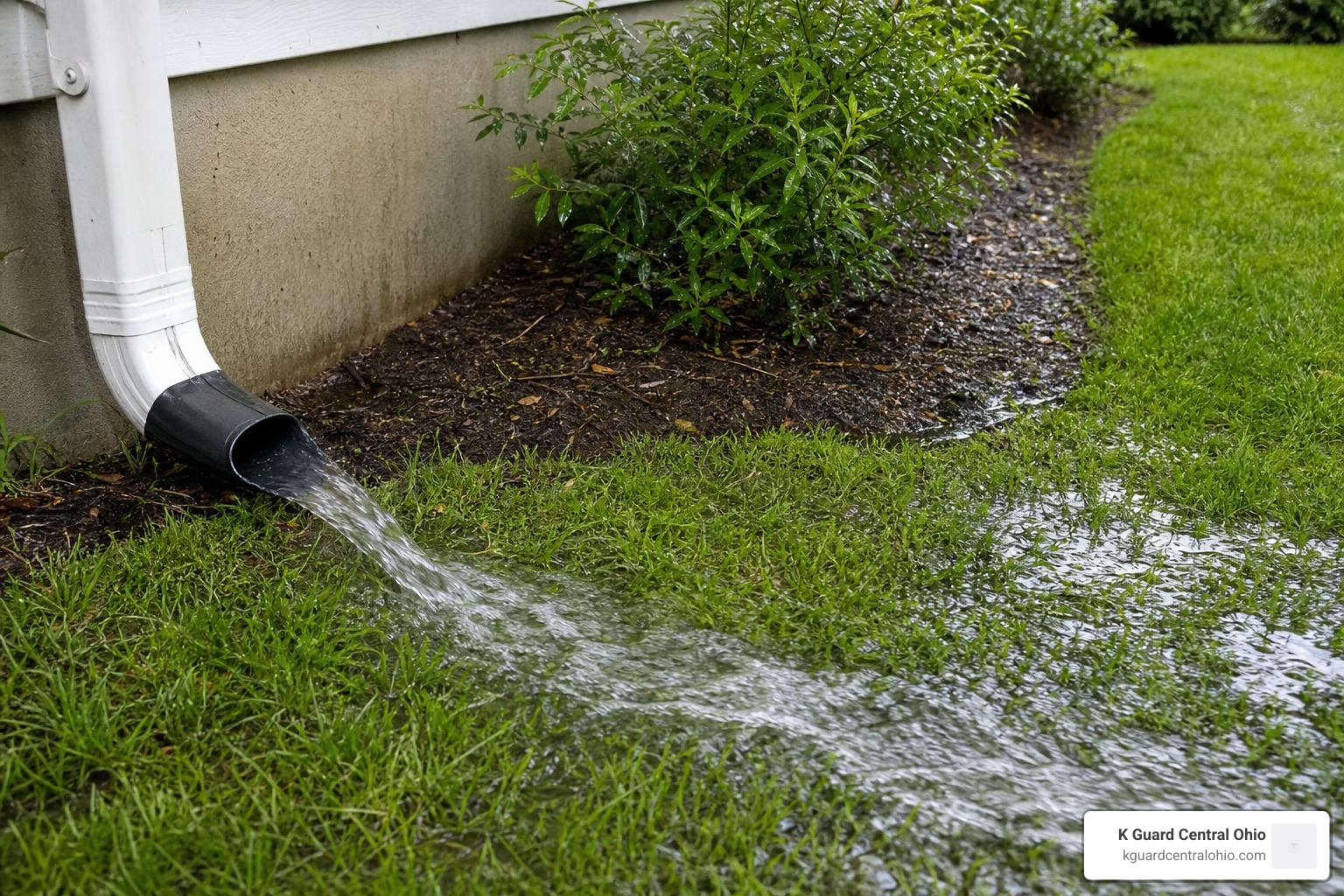
When it does that job well, you barely notice it. When it fails, you notice quickly. Overflow can show up as muddy trenches along the foundation, stained siding, rotted fascia, basement dampness, moldy smells, mosquito activity, and landscape washout.
For a broader look at solving drainage issues, see our guide to rain gutter solutions.
What K-Guard Heavy Rain Gutter Guards Are and How They Work
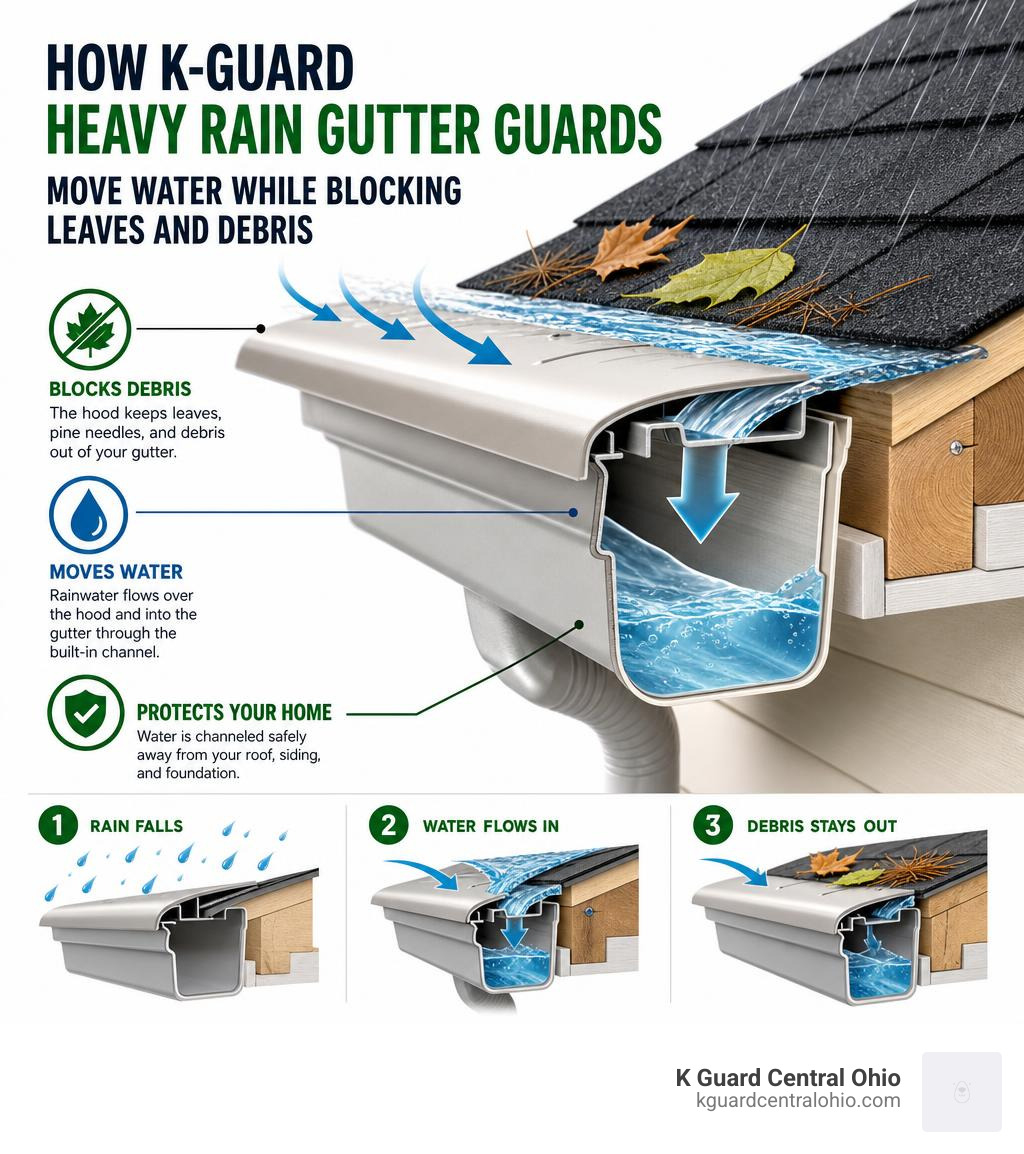
K-Guard heavy rain gutter guards are part of an integrated gutter protection system. Instead of leaving an open trough exposed to falling debris, the system uses a covered design to guide water into the gutter while helping leaves and debris move past the opening.
Here is the simple version:
- Rain hits the roof and flows toward the gutter edge.
- The covered system helps control that runoff.
- Water enters the protected gutter channel.
- Leaves, sticks, and larger debris are kept out of the water path.
- Water moves through the trough and into the downspouts.
- Downspouts discharge water away from the foundation.
That last step is crucial. A guard is only as good as the drainage route it supports. Proper gutter pitch, clear downspouts, and correct discharge locations all help the system protect the home.
Do Heavy Rain Gutter Guards Work in Major Storms?
Yes, high-quality gutter guards can work very well in heavy rain, but the answer depends on the type of guard, the home, and the installation.
The best-performing systems in heavy rain generally share a few traits:
- They allow strong water entry.
- They keep debris from entering the gutter channel.
- They are professionally fitted to the roof edge and gutter line.
- They account for roof valleys and concentrated runoff areas.
- They work with properly sized downspouts.
- They maintain the right slope toward drainage points.
Central Ohio storms can drop intense bursts of rain in short periods. When that happens, roof valleys become especially important because they concentrate water from multiple roof planes into one area. If a system is not designed or installed with those flow points in mind, water can overshoot.
That is why K-Guard installation is not just a quick “snap this on and hope” project. We look at how water actually moves across your roof. We pay attention to inside corners, roof pitch, gutter length, downspout placement, and any areas that may need extra flow control.
Can any gutter system overflow in a truly extreme cloudburst? Yes. If rainfall intensity exceeds what the roof drainage layout can physically carry, some overflow may happen. But a properly installed heavy-rain gutter protection system dramatically reduces the most common cause of overflow: clogged gutters before the storm even begins.
How They Help Prevent Foundation, Fascia, and Pest Problems
Clogged gutters do not fail quietly. They create a chain reaction.
When water spills over the edge, it can:
- Saturate soil near the foundation
- Increase the risk of basement seepage
- Erode mulch and landscaping
- Splash dirt and debris onto siding
- Soak fascia boards and roof-edge trim
- Contribute to wood rot and peeling paint
- Create standing water where mosquitoes can breed
- Provide nesting material and shelter for pests
Pests love clogged gutters because debris provides cover, moisture, and nesting material. Birds, insects, rodents, and mosquitoes are not picky. If your gutter becomes a leafy spa resort, they may check in.
By keeping the gutter channel open and reducing standing water, K-Guard helps make your gutter system less attractive to pests and more effective at moving water away from the home.
What to Consider Before Buying Heavy Rain Gutter Protection
Buying gutter protection is not just about choosing the strongest-looking product. The best system for your home depends on your roof, trees, drainage layout, and long-term goals.
If you are comparing investment and value, our breakdown of gutter guard costs and value can help.
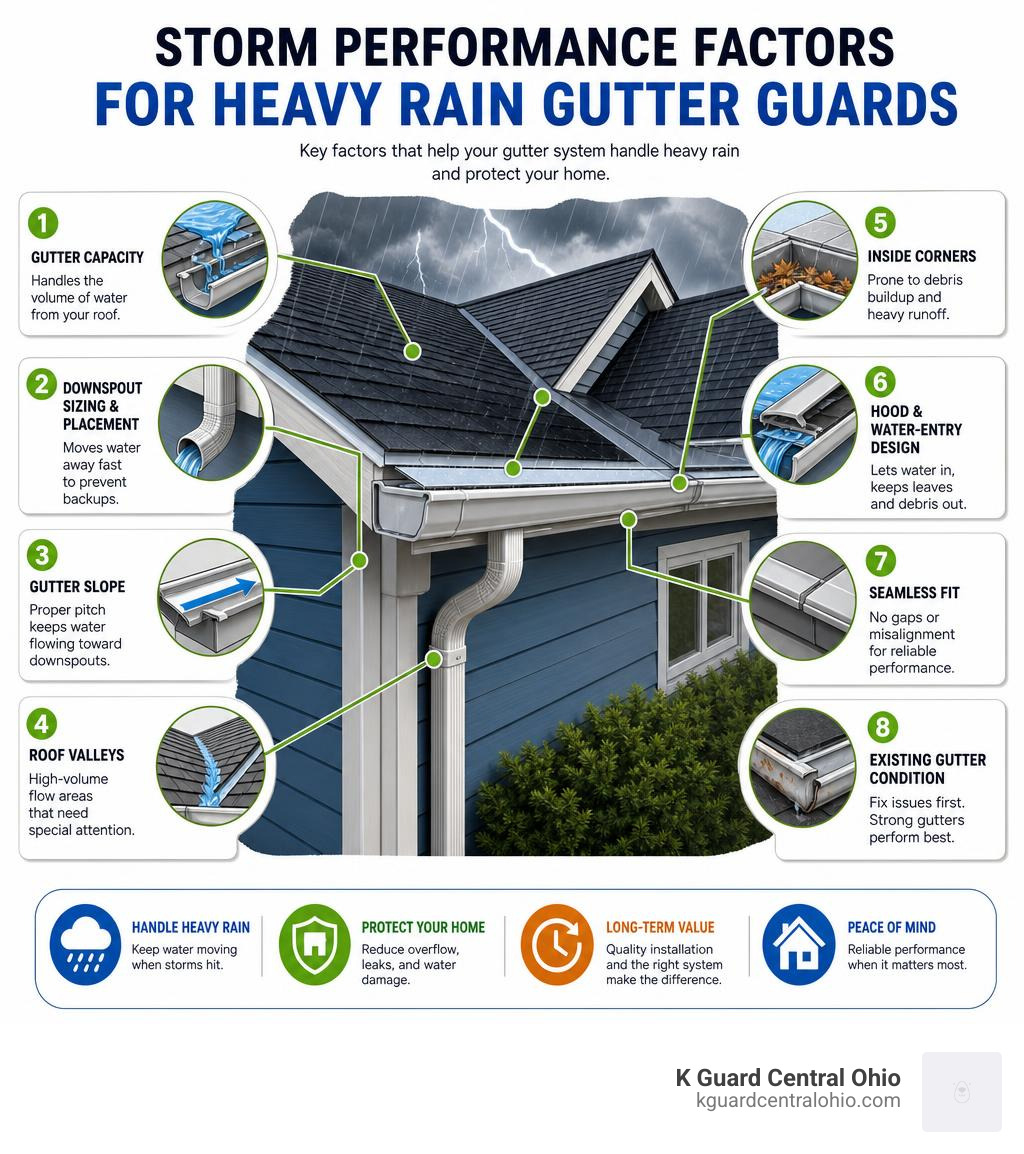
Storm Performance Factors That Matter Most
For heavy rain, these are the factors we look at first:
Gutter capacity: Larger roof areas produce more runoff. The gutter system must be able to collect and move that water.
Downspout sizing and placement: A gutter can only drain as fast as the downspouts allow. Too few downspouts can cause water to back up during intense rain.
Gutter slope: Gutters need the right pitch so water moves toward the downspouts instead of sitting in the trough.
Roof valleys: Valleys create high-volume water flow. These areas may need special attention during installation.
Inside corners: Corners often collect debris and experience heavy runoff. Poorly designed systems can overflow here first.
Hood and water-entry design: The guard must allow water in without inviting leaves and debris along for the ride.
Seamless fit: Gaps, misalignment, or poorly attached pieces can cause water bypass, debris entry, and long-term performance issues.
Existing gutter condition: If old gutters are sagging, leaking, or pulling away from the fascia, covering them will not fix the underlying problem.
Cost, Warranty, and Long-Term Value
The average house installation is approximately $5,000. For that, homeowners are looking for more than a clean gutter line. They want long-term protection that reduces maintenance and helps defend the home during serious rain.
The most important value points are:
- A lifetime guarantee
- No annual gutter cleaning
- Professional installation
- Reduced ladder risk
- Fewer water-damage concerns
- Better curb appeal
- A permanent system rather than a seasonal patch
A low-cost guard may look appealing at first, but if it clogs, warps, lifts, allows overflow, or still requires regular cleaning, the savings can disappear quickly. Heavy rain has a way of exposing shortcuts. It is not rude; it is just very thorough.
Why the Right System Matters During Heavy Rain
During light rain, many gutter products appear to work. During heavy rain, the weak points show up.
Common problems include:
- Water sheeting over guards instead of entering the gutter
- Debris matting over screens
- Foam inserts holding grit and organic material
- Brush inserts trapping debris inside the gutter
- Poorly pitched gutters causing standing water
- Undersized downspouts creating backup
- Roof valleys overwhelming small openings
- Old fascia failing under water weight
That is why we recommend choosing a professionally installed permanent system if your goal is true storm readiness. Occasional inspections are still smart, especially after major wind events, but you should not have to plan your weekends around scooping gutter sludge.
Installation and Maintenance Tips for Maximum Heavy-Rain Performance
Even the best gutter guard design needs proper installation. Heavy rain does not care what the brochure says. It cares about physics.
For a deeper look at what homeowners should know before installation, visit our guide to installed gutter guards.
Why Professional K-Guard Installation Matters
Professional installation matters because every home moves water differently.
Our installation process considers:
- Roofline measurements
- Gutter length
- Fascia condition
- Downspout locations
- Roof pitch
- Valley runoff
- Fastener placement
- Seamless alignment
- Water flow direction
- System appearance
If fascia boards are damaged, they should be addressed before installing a permanent gutter system. If downspouts are blocked or poorly placed, they need attention too. If a valley dumps a large volume of water into one short gutter section, that area may need additional flow planning.
This is where professional experience pays off. A good installation is not just about attaching the system. It is about making sure the system is ready for the first big storm after installation.
Maintenance After Installation: No Annual Gutter Cleaning
One of the biggest advantages of K-Guard is the elimination of annual gutter cleaning.
That does not mean we pretend weather does not exist. Central Ohio homes still deal with pollen, roof grit, leaves, branches, and storms. But instead of scooping out the gutter trough every year, maintenance is reduced to simple awareness and occasional checks.
After installation, we recommend:
- Looking over the system after severe windstorms
- Checking that downspout outlets are not buried or blocked
- Keeping large branches trimmed back when possible
- Watching roof valleys for unusual debris buildup
- Rinsing visible surface film if pollen or grit collects heavily
- Calling a professional if you notice unexpected overflow
The point is simple: no annual gutter cleaning, no dangerous ladder routine, and no digging out wet leaf sludge. Your weekends deserve better.
Regular Cleaning vs. K-Guard Heavy Rain Gutter Protection
Regular gutter cleaning can work, but only if it happens before the clog causes trouble. That is the problem.
A homeowner may clean gutters in spring, then a summer storm drops branches and leaves into the system. Or gutters are cleaned in fall, then late-season debris piles up before a cold rain. Timing matters, and storms do not send calendar invites.
Manual cleaning also comes with downsides:
- Repeated ladder climbing
- Recurring service appointments
- Missed clogs between cleanings
- Emergency overflow during storms
- Messy debris removal
- Risk of damaging gutters while cleaning
K-Guard changes the maintenance model. Instead of reacting to debris after it enters the gutter, the system is designed to keep debris out in the first place.
For more on permanent heavy-duty protection, see how to get heavy-duty gutters you will not have to touch.
Frequently Asked Questions About Heavy Rain Gutter Guards
Homeowners usually ask excellent questions before buying gutter protection. Here are the ones we hear most often from Central Ohio residents.
For local information, visit our page for gutter guards in Columbus.
What Makes K-Guard Effective in Heavy Rain?
K-Guard is effective in heavy rain because it is a complete gutter protection system, not just a cover placed over an old open gutter.
The system combines:
- A covered design that helps shed debris
- A protected water channel
- Professional measurement and fitting
- Proper gutter slope
- Downspout-focused drainage
- A seamless appearance
- Long-term protection backed by a lifetime guarantee
Heavy rain performance depends on keeping the drainage path open. By reducing the leaves, sticks, seed pods, and roof debris that lead to clogs, K-Guard helps water keep moving when storms hit.
Can Gutter Guards Still Overflow in a Severe Storm?
Yes, any gutter system can overflow under the wrong conditions. It is rare to hear a gutter company say that plainly, but it is true.
Overflow may happen if:
- Rainfall is extremely intense
- Downspouts are blocked at the outlet
- The roof sends too much water into one small area
- A roof valley needs extra flow control
- The system was installed incorrectly
- The home has damaged fascia or poor gutter pitch
- Surface debris builds up after a major storm
The goal of heavy rain gutter guards is to prevent the most common and preventable overflow problem: clogged gutters. With proper installation and reasonable upkeep, K-Guard provides strong storm-ready protection for Central Ohio homes.
Are Heavy Rain Gutter Guards Worth It Compared With Cleaning Gutters Every Year?
For many homeowners, yes.
Cleaning gutters every year may seem simple, but it does not solve the real issue: debris keeps coming back. If you live near trees, experience frequent storms, or have a multi-story home, annual cleaning can become inconvenient, risky, and easy to postpone.
K-Guard offers a different value proposition:
- No annual gutter cleaning
- Lifetime guarantee
- Reduced ladder risk
- Better protection against clogs and overflow
- Improved defense against water damage
- Less standing water and pest attraction
- A finished look that improves curb appeal
With an average installation of approximately $5,000, it is a long-term home protection investment. If your goal is to stop worrying about gutters every storm season, that value can be significant.
Conclusion
Heavy rain gutter guards are not just a convenience. In Central Ohio, they are a practical defense against clogged gutters, overflow, foundation saturation, fascia damage, pest problems, and the never-ending chore of annual gutter cleaning.
K-Guard Central Ohio is built for homeowners who want a permanent, storm-ready system rather than another temporary fix. With a fully integrated design, professional installation, no annual gutter cleaning, and a lifetime guarantee, it offers the kind of protection that helps you feel confident when the forecast turns ugly.
The average house installation is approximately $5,000, and the value comes from long-term performance: cleaner gutters, safer maintenance, better drainage, and stronger protection for your home.
If you are ready to stop climbing ladders and start protecting your home from the next heavy downpour, explore gutter guard products from K-Guard Central Ohio.