Do Gutter Guards Damage Your Roof? What to Check Before Installation
Homeowners ask us this one all the time, and the honest answer is that a gutter guard doesn’t damage a roof on its own. The risk is in how the product gets attached, and that varies a lot between designs. Some guards slide under the first course of shingles, some are fastened straight through them, and others stay clear of the roof surface completely.
That difference affects more than water, because it can also change what your shingle manufacturer will stand behind. Most people only find that out after something goes wrong at the eave.
Do gutter guards damage your roof? What shingle makers say
Atlas Roofing makes asphalt shingles rather than gutter products, and it published a technical bulletin on this exact question. Its position isn’t that guards are bad, it’s that certain installation practices cause problems.
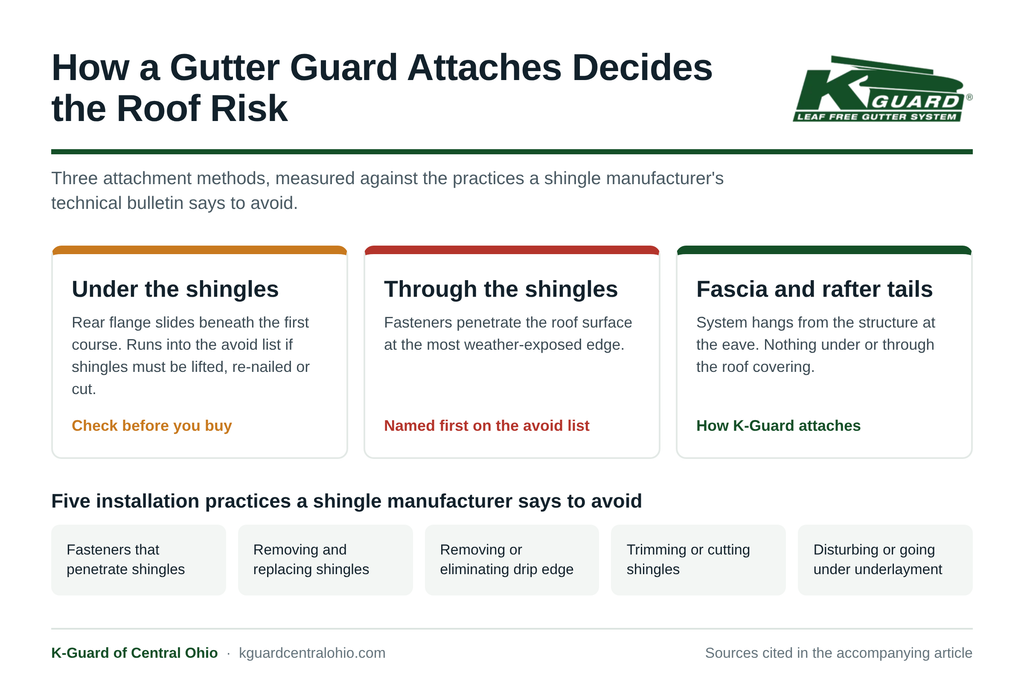
Atlas says that in most cases, gutter covers installed by professionals following good roofing practice don’t affect the Atlas shingle warranty, and then it lists the methods to avoid (Gutter Covers and Atlas Asphalt Shingles technical bulletin):
| Practice the bulletin says to avoid | Why it matters on the roof edge |
|---|---|
| Fasteners that penetrate the shingles to hold the gutter in place | Every penetration is a potential leak path at the most weather-exposed edge of the roof |
| Removing and replacing shingles during installation | Re-laid shingles rarely reseal like factory-set courses, especially in cool weather |
| Removing or eliminating the drip edge | Drip edge directs runoff into the gutter instead of behind it, onto the fascia |
| Trimming, cutting or modifying the shingles | Cutting exposes the mat and shortens the shingle’s service life at the eave |
| Removing underlayment, or installing the guard under the underlayment | Underlayment is the secondary water barrier, and disturbing it at the eave defeats it |
Atlas also notes that its shingle warranties cover defects in Atlas shingles, and they don’t cover gutter covers or damage caused by putting them up (Atlas Roofing on gutter covers and shingle warranties). A roof warranty covers shingle defects, so if a guard install causes a problem at the eave, you’re dealing with a separate claim against a different company.
Other manufacturers publish their own instructions and they don’t all say the same thing. If your roof is still under a manufacturer warranty, the answer for your house comes from those written instructions rather than from a door to door salesperson.
How gutter guards work at the eave: three attachment methods
Ask any installer how their product attaches at the eave and you’ll get one of three answers.
Under the shingles. The rear flange slides beneath the first shingle course, which is quick to install. It runs into the bulletin above whenever the crew has to lift, re-nail or cut shingles to get the flange in, and windblown rain can travel up that flange in exposed spots.
Through the shingles. Fasteners penetrate the roof surface, which is the first practice the Atlas bulletin names. This is the hardest method to defend on a newer roof.
To the fascia and rafter tails. The system hangs from the structure at the eave rather than from the roof covering, so nothing goes under the shingles and nothing is fastened through them.
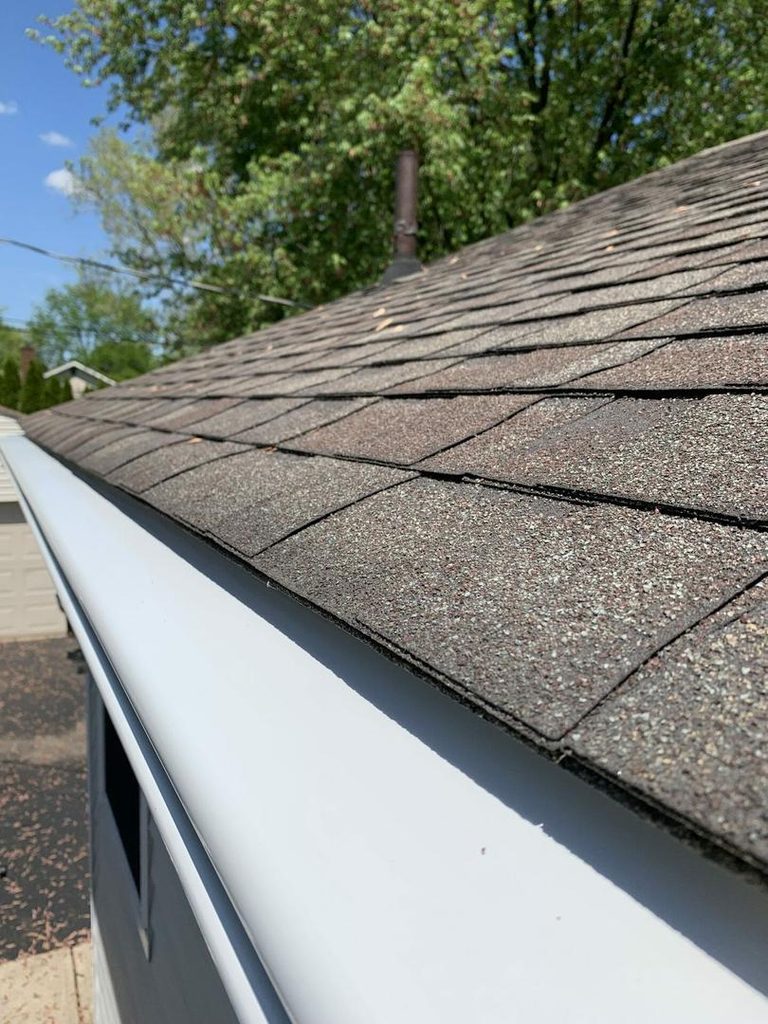
Our system is in that third group. We hang it from the fascia board and rafter tails, so nothing slides under your shingles and nothing gets fastened through them, and the assembly is built not to touch or interfere with the roof and roofline. The curved hood, high-capacity gutter, patented polymer hangers and oversized downspouts go up as one integrated system rather than a cover laid over the gutters already on your house.
Why we never touch the drip edge
Drip edge is the strip of metal flashing at the eave that carries runoff past the fascia and drops it into the trough. Without it, water clings to the underside of the shingle and wicks back onto the wood, which is why homes with rotten fascia so often have a gutter problem behind it. Homeowners rarely spot a missing drip edge from the ground, so it’s the one item on the avoid list that can quietly cause damage for years.
Ohio building departments read the residential code language on drip edge in different ways. Some require it outright, and others defer to whatever the shingle manufacturer’s instructions say (Greene County, Ohio shingle roof requirements). Our installers leave yours in place either way, because no gutter product is worth trading it for. If a company tells you the drip edge has to come off to fit their guard, get a second quote before you agree to it.
What to look for if guards are already on your house
You can check most of this from the driveway after a storm, so please don’t get on a ladder for it. Look along the eave line in good light for any of the following:
· Water running behind the gutter during rain, which usually means the drip edge is missing or has been lifted by a rear flange.
· Staining or peeling paint on the fascia, which is the slower version of the same problem.
· Shingle tabs at the eave sitting higher than their neighbors, or a wavy first course, which suggests the shingles were lifted and re-set.
· A line of granule loss above the gutter, which can follow a cut or a row of fasteners.
· A damp spot on the ceiling near an exterior wall after wind-driven rain, which needs attention right away.
If you find any of it, have the company that installed the guards come back out and take a look, and bring in your roofer too if the roof is still fairly new. Catching a lifted shingle course or a missing drip edge now costs a fraction of what replacing wet sheathing costs later.
What to verify before installation day
Get these in writing before work starts:
- The attachment method, in specific terms: fascia, rafter tails, under the shingles, or through them.
- Whether any shingle will be lifted, cut, re-nailed or replaced.
- Whether the drip edge stays exactly as it is.
- Whether the underlayment is disturbed anywhere along the eave.
- Whether the shingle manufacturer’s instructions have been checked against the product, if your roof warranty is still live.
Any installer should be able to answer these on the spot, and ours will put the answers in your estimate.

If your roof is close to replacement
We get this question from homeowners whose shingles only have a year or two left in them. If you have new gutters installed now and a roofer tears off those shingles next spring, you’ll pay for work along that edge twice, since our crew and the roofing crew both have to touch it. Tell us about your roof plans when we come out to measure and we’ll schedule around them, and it’s worth telling your roofer about the gutter work too so nobody undoes the other’s work.
FAQ
Do gutter guards damage your roof?
The product itself doesn’t, though the installation method can. A shingle manufacturer bulletin from Atlas Roofing lists five practices to avoid: fasteners penetrating shingles, removing and replacing shingles, removing drip edge, cutting or modifying shingles, and disturbing the underlayment.
Do gutter guards void a shingle warranty?
Atlas states that guards installed by knowledgeable professionals per good roofing practice generally don’t affect its shingle warranty, and that the warranty covers Atlas shingle manufacturing defects rather than gutter covers or damage from installing them. Other manufacturers publish their own terms, so check the instructions for the shingles on your roof.
Is it bad if gutter guards go under the shingles?
It depends on whether the installation lifts, re-nails or cuts shingles to get there, since those steps appear on the avoid list. A system that attaches to the fascia and rafter tails avoids the question entirely.
Does K-Guard attach under the shingles?
No. K-Guard’s published comparison states the system attaches to the fascia board and rafter tails and is engineered not to touch or interfere with the roof and roofline.
Can gutter guards be installed on an old roof?
Physically, usually yes. If a tear-off is coming within a year or two, it’s worth coordinating the two jobs so the same edge detail isn’t paid for twice.
Should the drip edge ever be removed to fit a gutter guard?
No. Drip edge directs runoff into the gutter instead of behind it, so any product that requires its removal should be declined.
Ask this before you buy
Gutter guards work best when the installation protects the roof edge instead of disturbing it. If you’re weighing options for your home, contact K-Guard of Central Ohio to schedule an on-site estimate and ask exactly how the system attaches at the fascia before anything goes up.