Gutter Apron vs Drip Edge: Where Water Really Goes at Your Roof Edge
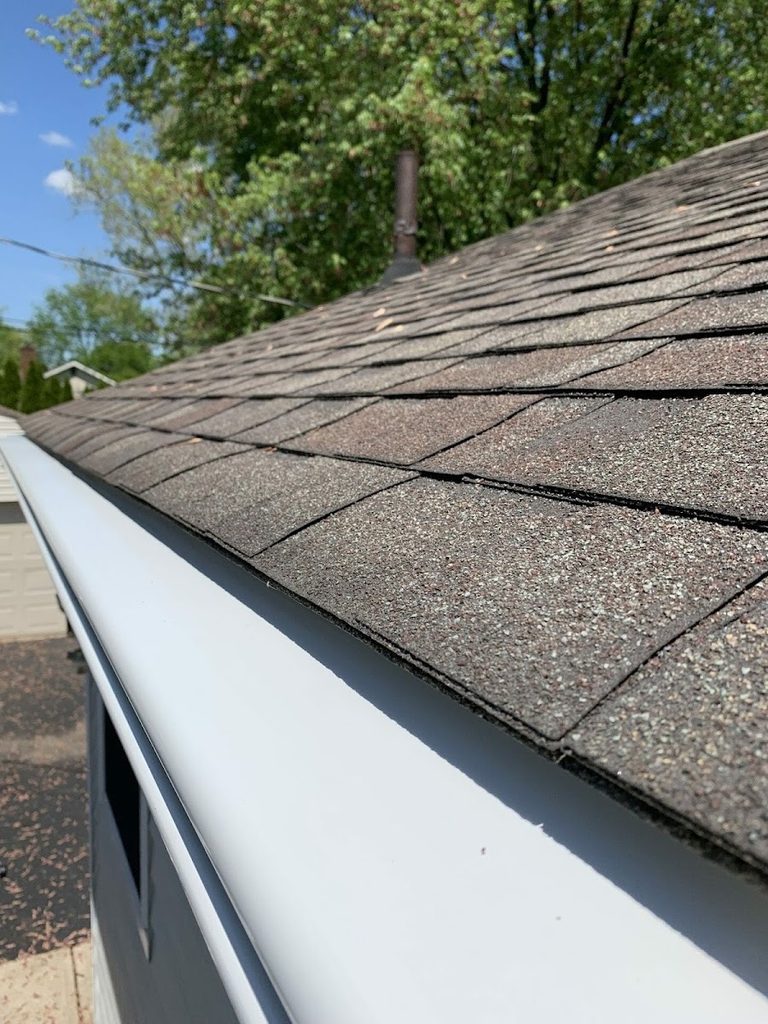
A gutter apron is the bent metal at your roof edge that carries runoff off the shingles and into the trough. When yours is missing or set wrong, water rides back under the shingles and soaks the wood behind the gutters. Most homeowners find this out the hard way. Paint peels along the fascia, or a soffit panel starts to sag, and the gutter gets the blame. The real culprit sits an inch or two above it.
What is a gutter apron, and how does it differ from a drip edge
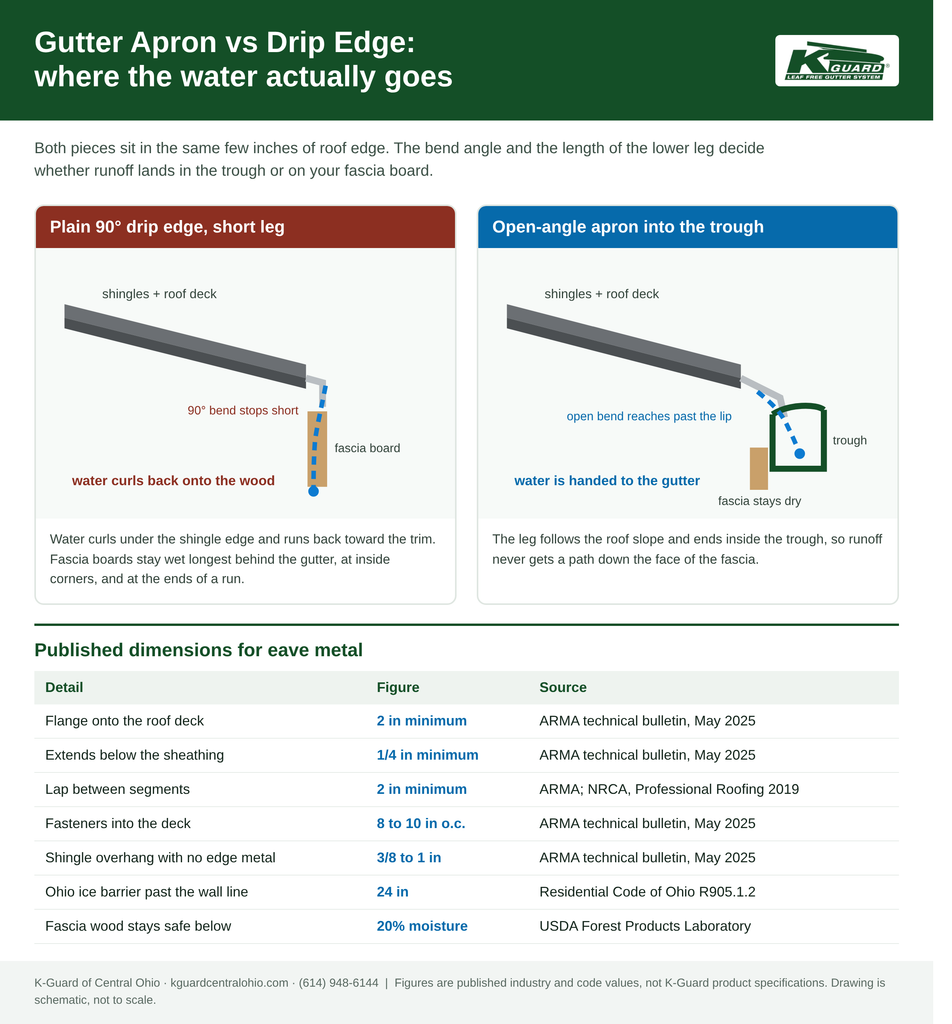
Both pieces are metal flashing at the eave, usually aluminum or galvanized steel. What separates them is the angle and the length of the lower leg. Plain drip edge is bent near 90 degrees, so it breaks water off the deck and gives the shingle courses a clean line. An aluminum gutter apron is bent open, past 90 degrees, so the lower leg follows the slope and reaches into the trough.
That extra reach is the whole point. On a house with a short shingle overhang, or with the trough hung slightly low, water leaving a plain 90-degree bend can jump the back lip and run down the fascia board. Rain gutter apron flashing closes the gap and hands water straight to the gutter system instead of to the air above it.
What the roofing industry says about eave metal
The Asphalt Roofing Manufacturers Association treats this metal as rot prevention. Its bulletin says installing edge flashing at eaves, gables, and rakes is a common way to help mitigate potential rotting of wood materials caused by water getting underneath the edge of the shingles. That happens when water flows back onto the roof deck or fascia (ARMA bulletin, May 2025). The bulletin also points out a detail crews often skip – the lowest edge should carry an outward bent flange so it can direct water off the metal rather than onto the wood holding it up.
The National Roofing Contractors Association adds the lap and spacing most crews work to. It suggests adjacent segments of eave metal be lapped a minimum of 2 inches and fastened at about 12 inches on center, slightly staggered, with tighter spacing in high wind areas (Professional Roofing, 2019).
| Detail at the eave | Flange onto roof deck | Below the sheathing | Lap at joints | Fastening or shingle overhang | Source |
|---|---|---|---|---|---|
| Any edge flashing profile | 2 in minimum | 1/4 in minimum | 2 in minimum | roofing nails 8 to 10 in o.c., not through the vertical leg | ARMA |
| Contractor practice for lap and spacing | not specified | not specified | 2 in minimum | about 12 in o.c., staggered | NRCA |
| L profile, 90 degree bend | 2 in | 1/4 in | 2 in | shingles run 1/4 to 3/4 in past the metal | ARMA |
| T or D profile | 2 in | 1/4 in | 2 in | eave shingles up to 3/4 in past the metal, or flush | ARMA |
| No edge metal at all | none | none | none | eave and rake overhang 3/8 to 1 in | ARMA |
Ohio code leaves this to your shingle manufacturer
The Residential Code of Ohio has a section for this metal, R905.2.8.5, but instead of listing dimensions it points back to Sections 903.1 and 905.1. In practice that means the flashing is required only when the roof covering manufacturer’s installation instructions require it. Greene County’s building regulation office spells it out and tells homeowners to consult the shingle manufacturer to find out whether the metal is part of the shingle installation and warranty (Greene County requirements). Kettering’s reroofing guide reads the same way, noting the residential code requires it if the manufacturer requires it, while the commercial code calls for it at eaves and gables of shingle roofs (Kettering reroofing guide).
A house in Westerville or Gahanna can pass a residential reroof with thin edge detailing, then, as long as the shingle instructions allow it. Ice protection works differently. Ohio’s residential code requires an ice barrier running from the eave edge to a point at least 24 inches inside the exterior wall line where local conditions call for one (Residential Code of Ohio R905.1.2). That matters because meltwater trapped at the eave ends up in the same place a short apron sends it.
Why water keeps running behind gutters and rotting the wood
Water does not fall straight off a roof. Federal wood researchers put it plainly. Water tends to curl under the edge of the shingles and flow back toward the trim, so shingles must extend far enough past the edge and metal edgings must be carefully positioned so runoff clears the trim. Leaking and overflowing gutters wet that trim further (USDA FPL, GTR-215). Fascia boards are thin, and thin boards drink water fastest through their cut ends.
Once that wood stays wet, the clock starts. Wood decays above 30 percent moisture content and will not decay below 20 percent, with the range between the two treated as a grey area (USDA FPL decay research). A trough that overflows in every heavy rain, or flashing installed an inch short of the back lip, keeps the fascia parked in that decay range for weeks at a time. So the rot turns up in the same three spots over and over: behind the back of the gutter, at inside corners, and at the ends of a run.
What to check before gutter apron installation or new gutters
If the eaves are already being opened up for other work, that is the least expensive moment to fix the geometry. Ask three questions while a ladder is up. Does the lower leg of the metal actually reach past the back lip of the trough? Is the metal lapped and fastened on the roof deck rather than nailed through its face? Is the fascia sound enough to hold anything at all?
That last question decides more than people expect. K-Guard’s hooded system hangs from patented high-strength polymer hangers screwed into the fascia board and rafter tails rather than under or through the shingles. The roof edge stays sealed, and the trough’s support does not depend on roofing fasteners. You can see the installation sequence and how the hood and trough work together on our site. The full 5-inch gutter with oversized 3×4-inch downspouts also moves more water away from the eave than a standard residential setup, which cuts down the overflow that soaks trim. Rotten fascia has to be replaced first, and a crew that skips that step is hanging new metal on wood that cannot hold it.
Frequently asked questions
Do I need both an apron and a drip edge?
One piece per edge usually does the job, chosen for the geometry. Plenty of roofs get an open-angle apron at the eaves where gutters hang and a plain 90-degree profile at the rakes. ARMA’s guidance is to use a profile that does not hinder water from running off the roof, which is a better test than the label on the box.
Is this metal required by code in Ohio?
Not on its own. Ohio’s residential section defers to the roof covering manufacturer’s installation instructions, so the shingle brand’s manual controls the requirement on a house (Greene County). The commercial code language is stricter and calls for edge flashing at eaves and gables of shingle roofs.
Can this be installed after the roof is finished?
Yes on the eave side, and it happens often. The metal slides under the first shingle course and over the back of the trough, then gets fastened to the deck. Installing gutter apron on a finished roof is fussier than doing it during a reroof, and the shingles need to be warm enough to lift without cracking.
Why is water running behind my gutter when the gutter is clean?
Look at the eave first. Missing metal, a lower leg that stops short, flashing set back too far, or shingles trimmed flush with the fascia all send water past the trough. The FPL research on water curling under the shingle edge describes that failure (GTR-215).
Does a gutter guard fix water getting behind the gutter?
A hood changes what enters the trough, not where the roof sends water. If the apron geometry is wrong, fix it during the gutter work, because both details live in the same few inches of roofline.
Get your eaves checked before the wood pays for it
Peeling paint and dark streaks behind a gutter mean water is already reaching the trim, and every storm makes it worse. A K-Guard estimator will look at your gutter apron and flashing geometry, the fascia condition, and how much water each roof plane sheds. You get a plain explanation of what needs correcting before anything new goes up. Contact K-Guard of Central Ohio to schedule a look at your roofline and protect the wood you cannot see from the ground.