
Say Goodbye to Gutter Gunk: Simple Strategies for Debris-Free Gutters
Why Clogged Gutters Are a Bigger Problem Than You Think
To prevent clogged gutters, follow these core strategies:
- Clean gutters at least twice a year — in spring and fall
- Trim overhanging tree branches to reduce debris falling in
- Install gutter guards to block leaves and debris at the source
- Check and clear downspouts regularly to keep water flowing
- Extend downspouts at least 5 feet from your home’s foundation
- Inspect gutters for proper slope — aim for 1/16 to 1/8 inch drop per foot
Most homeowners don’t think about their gutters until something goes wrong. But by then, the damage is often already done.
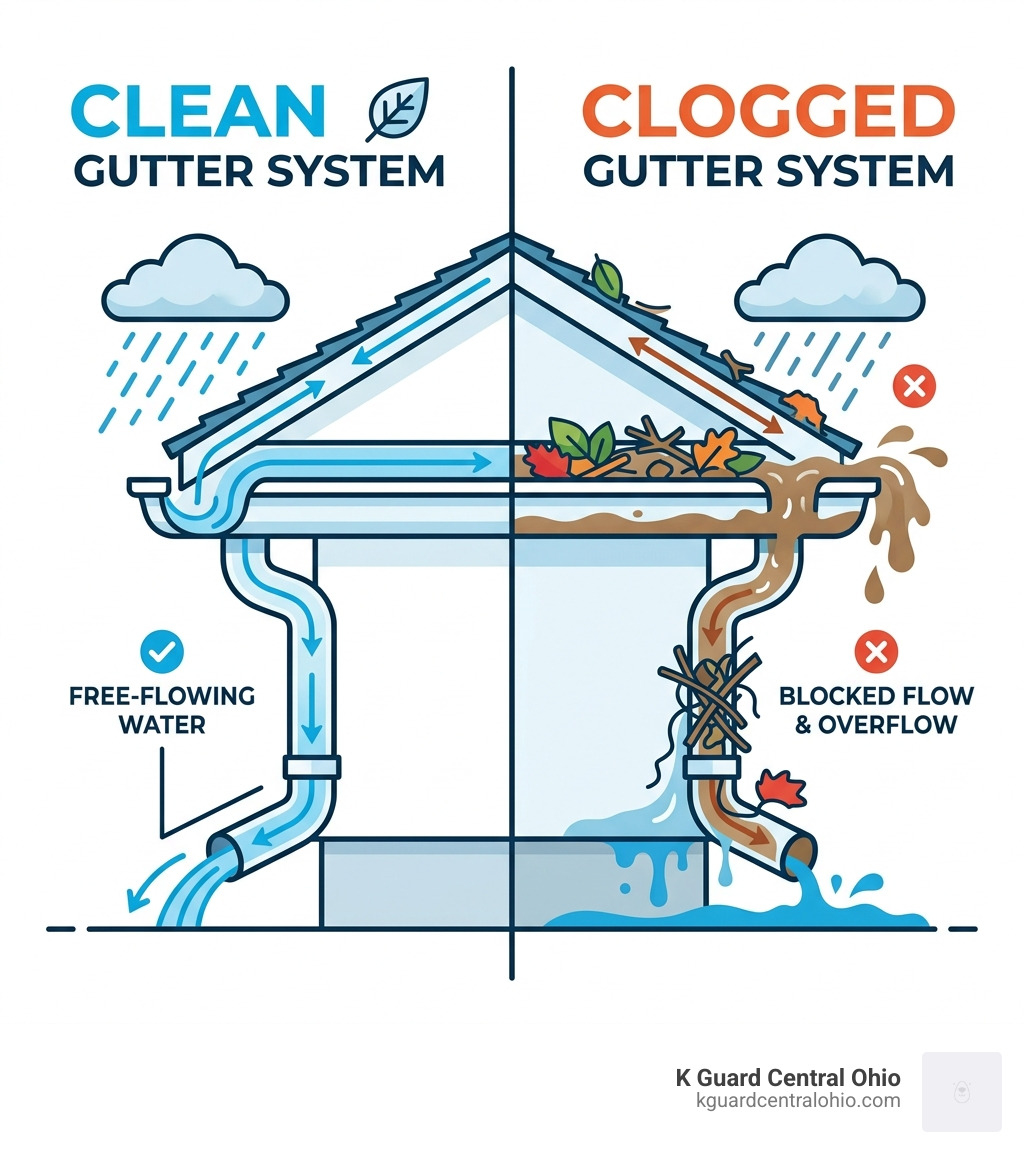
Clogged gutters are one of the most preventable sources of water damage to a home. When gutters fill with leaves, twigs, and debris, rainwater has nowhere to go. It spills over the sides, pools around your foundation, seeps behind your fascia boards, and can even work its way into your basement.
And the repairs? They can cost thousands of dollars — all from something as simple as a blocked gutter.
The good news: keeping your gutters clear doesn’t have to be complicated. Whether you’re a hands-on DIYer or someone who’d rather call in the pros, there are practical, affordable ways to keep water flowing where it should.
This guide walks you through exactly how to do that — from quick seasonal habits to long-term solutions that can virtually eliminate the problem for good.
The Hidden Dangers and Warning Signs of Gutter Blockages
When we talk about gutters, we aren’t just talking about metal channels on your roof; we’re talking about your home’s primary defense against the elements. In Central Ohio, where we see everything from heavy spring downpours to winter snowmelts, a failure in this system can be catastrophic.
The primary job of a gutter is to direct water away from your home. When a clog occurs, that water becomes a destructive force. One of the most severe consequences is foundation damage. When water pools at the base of your home instead of being diverted, it can cause the soil to shift, leading to cracks in the foundation or even basement flooding. This isn’t just a damp mess; it’s a structural nightmare that can cost tens of thousands to remediate.
Beyond the ground level, clogged gutters wreak havoc on your roof and siding. Waterlogged debris sits against your fascia boards (the wooden boards the gutters are attached to), leading to wood rot and decay. Furthermore, trapped moisture is the perfect recipe for roof leaks and “ice dams” during our cold Ohio winters. When snow melts and hits a frozen, leaf-filled gutter, it backs up under your shingles, eventually dripping into your attic and walls.
Don’t forget about the “uninvited guests.” Stagnant water and decomposing leaves are a 5-star resort for pests. Mosquitoes breed in the standing pools, while birds, squirrels, and rodents find the matted debris perfect for nesting. To keep your home safe, you must understand How to Keep Your Gutters Running Free This Old House.
Identifying Clog Symptoms
How do you know if you’re losing the battle against debris? You don’t always need to climb a ladder to find out. Here are the common red flags:
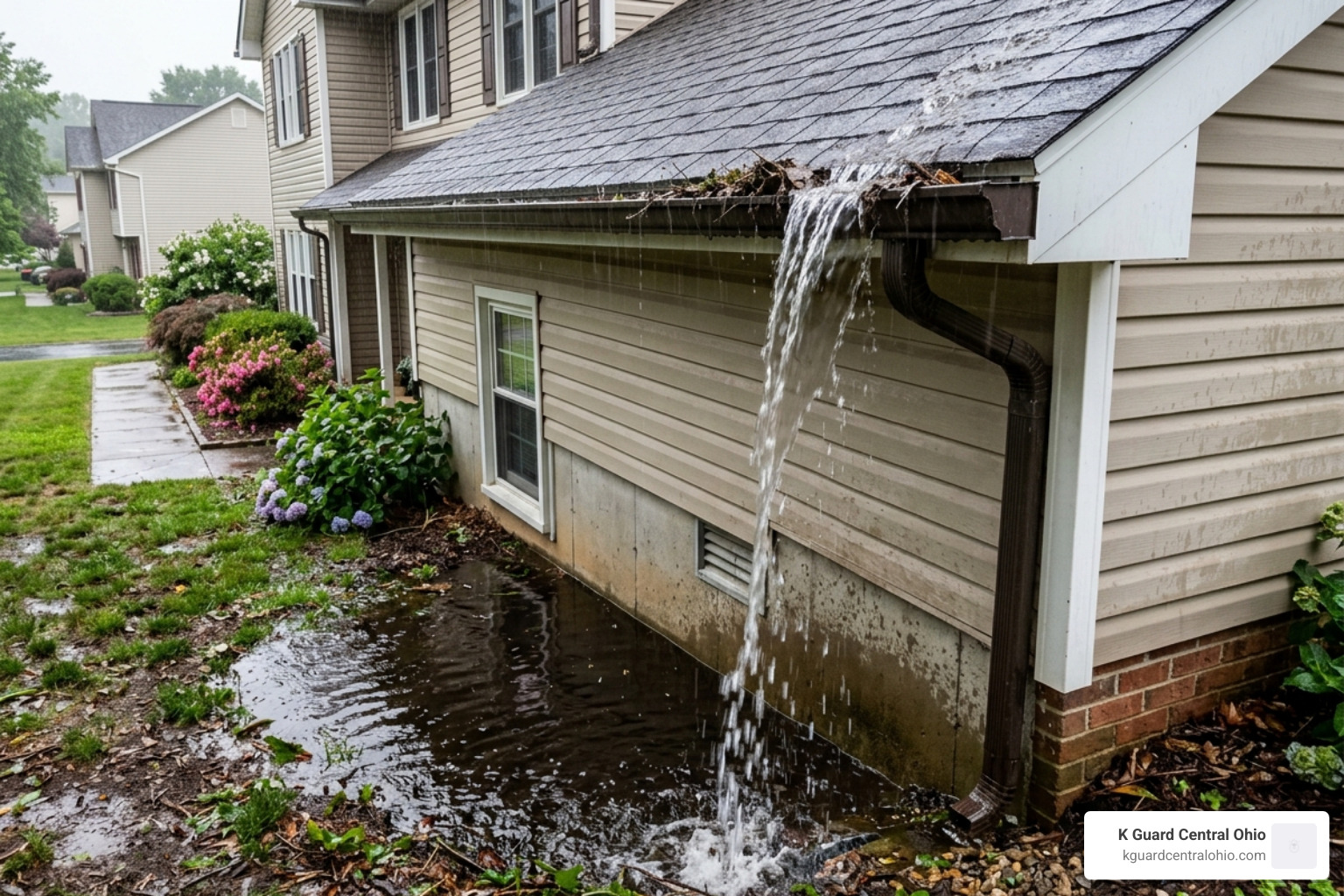
- The Waterfall Effect: If it’s raining and water is spilling over the sides of the gutter like a backyard fountain, you have a major blockage.
- Sagging Gutters: Gutters are designed to carry water, not five gallons of wet sludge. If your gutters are pulling away from the house or bowing in the middle, they are overloaded with debris.
- Siding Stains: Look for dark streaks or “tiger stripes” on your siding. This is often caused by dirty water overflowing and running down the face of your home.
- The Gutter Garden: If you see grass, weeds, or even small trees sprouting from your roofline, you definitely need to prevent clogged gutters immediately.
- Musty Odors: That “old basement” smell near your exterior walls often comes from decomposing organic matter trapped in your gutters.
Step-by-Step Guide to Maintain and Prevent Clogged Gutters
If you’ve decided to tackle the “gunk” yourself, safety must be your absolute priority. Every year, thousands of people end up in the emergency room due to ladder falls. Before you start, ensure you have a “spotter” (a friend or family member) to hold the base of the ladder.
When cleaning, always maintain “three-point contact”—that means two hands and one foot, or two feet and one hand on the ladder at all times. Use a ladder stabilizer to prevent the ladder from crushing your gutters or slipping on the siding.
Start your cleaning process near the downspout. This allows you to clear the most critical exit point first. Scoop out the large debris into a bucket rather than throwing it on your lawn (your landscaping will thank you!). Once the heavy lifting is done, use a garden hose to flush the remaining silt toward the downspout. If the water doesn’t drain, you likely have a clog inside the downspout itself. In these cases, a plumber’s snake or a high-pressure hose attachment can be used to break up the obstruction.
For those living in our local area, you might find that professional help is the safer route. Check out K-Guard Leaf Free Gutter Installation in Columbus Ohio for solutions that remove the need for this dangerous chore.
Essential Tools to Prevent Clogged Gutters
You can’t do a professional job with just your bare hands. If you want to prevent clogged gutters effectively, assemble this toolkit:
- Sturdy Extension Ladder: Ensure it reaches at least 3 feet above your roofline.
- Work Gloves: Heavy-duty suede or rubber-coated gloves protect you from sharp metal edges and “mystery sludge.”
- Safety Glasses: You’d be surprised how much debris flies back at you when flushing gutters.
- Gutter Scoop: A specialized plastic scoop is better than a metal trowel, as it won’t scratch the gutter’s protective coating. (Hack: A cut-up plastic milk jug works in a pinch!)
- Bucket with S-Hook: To collect debris so you aren’t moving the ladder every two minutes.
- Hose Wand: An extendable attachment for your garden hose helps you flush from the ground or a lower ladder rung.
Seasonal Maintenance to Prevent Clogged Gutters
As of April 2026, we are right in the middle of the spring cleaning season. In Central Ohio, our maintenance schedule is dictated by the trees.
Spring Cleanup: This is the time to remove the “helicopter” seeds from maples and the oak tassels that clog downspouts within days. This prevents the heavy spring rains from overflowing into your basement.
Fall Leaf Removal: This is the “Big One.” Once the leaves have finished falling, you must clear them before the first freeze. If you leave them, they will trap moisture and lead to ice dams.
Winter Vigilance: Keep an eye out for ice dams. If you see massive icicles forming only on your gutters, it’s a sign that heat is escaping your attic and melting snow that is then refreezing in your clogged gutters.
Landscaping Habits: Trim your tree branches! Keep a minimum 6-to-10-foot clearance between your roof and any overhanging limbs. This not only reduces the volume of leaves but also prevents squirrels and raccoons from using your gutters as a highway into your attic.
Optimizing Gutter Slope and Downspouts
Sometimes, gutters clog even when they look “clean.” This is often due to poor “pitch” or slope. Water needs gravity to move. A standard rule is that gutters should have a slope of 1/16 inch to 1/8 inch for every 1 foot of gutter. If the slope is too flat, water pools, and even a tiny bit of grit from your roof shingles will settle and form a dam.
Downspouts are the second half of the equation. According to the University of Nebraska–Lincoln, you should extend your downspouts at least 5 feet away from your foundation. Using splash blocks or gravel pits at the exit point helps prevent soil erosion. Also, ensure your seams are sealed; a leaking corner seam can cause water to drip directly onto your foundation, bypassing the downspout entirely.
The K-Guard Advantage: Long-Term Prevention with Leaf-Free Gutters
While DIY cleaning and seasonal maintenance are effective, they are also temporary. If you are tired of the “ladder life,” there is a permanent way to prevent clogged gutters.
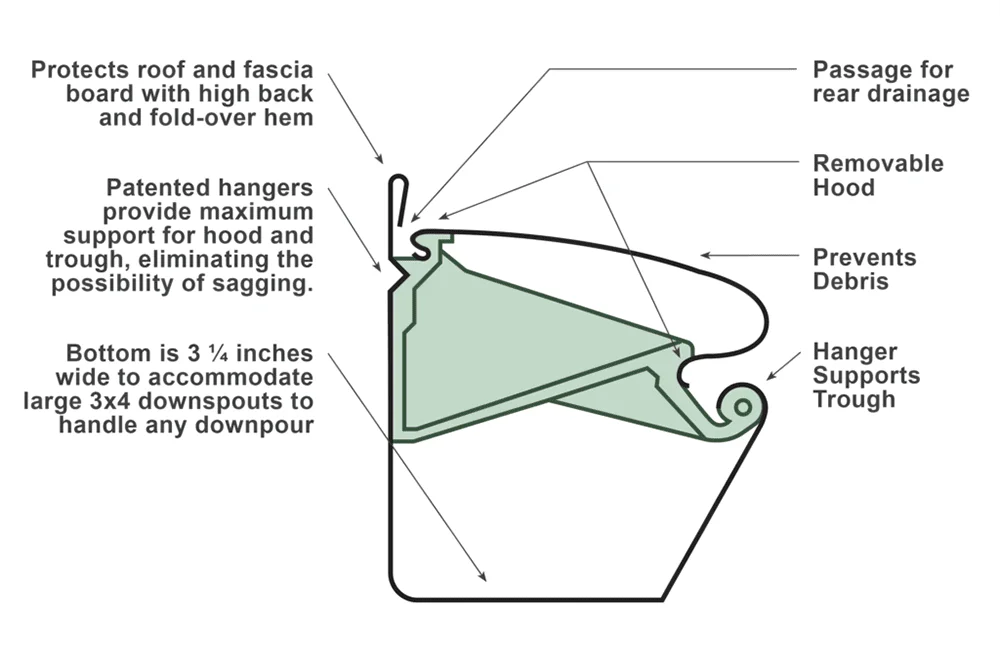
The K-Guard Leaf Free Gutter System is not just a “cover” or a “screen” that you slap onto your old gutters. It is a completely engineered, seamless, and enclosed system. Unlike mesh screens that can still get covered in pine needles or foam inserts that can grow mold, K-Guard uses the principle of liquid adhesion.
Water follows the curve of the hood and flows into the gutter, while leaves and debris simply slide off the edge and fall to the ground. It’s a “reverse-curve” system that is built to handle the heaviest Ohio downpours—up to 23 inches of rain per hour!
Why K-Guard Stands Out
When you compare K-Guard to traditional methods, the benefits become clear:
- Enclosed Design: Because the system is fully integrated, there are no gaps for birds or squirrels to build nests.
- Clog-Free Guarantee: We provide a lifetime warranty that your gutters will never clog. If they do, we come out and clean them for free.
- Superior Durability: Made from heavy-duty aluminum, K-Guard won’t sag or lose its pitch like the cheaper sectional gutters found at big-box stores.
- Aesthetic Appeal: K-Guard looks like crown molding for your home. It’s available in a variety of colors to match your trim perfectly.
- Maintenance-Free: You can finally get rid of the ladder and the “gutter gunk” forever.
To see how this system can protect your specific home, check out More info about our products.
Frequently Asked Questions About Gutter Maintenance
How often should I clean my gutters to prevent clogs?
For most homes in Central Ohio, the standard recommendation is twice a year—once in late spring and once in late autumn. However, if your home is surrounded by tall Oak or Maple trees, you may need to clean them as often as four times a year. Environmental factors like heavy storms or proximity to pine trees (which shed needles year-round) can also increase this frequency. For more details on timing, see How Often Should You Clean Your Gutters?
When should I hire a professional for gutter cleaning?
If your home is more than one story tall, we strongly recommend hiring a professional. The risk of a fall increases significantly with height. You should also call a pro if you notice severe sagging or if the “clog” is actually a pest infestation (like a wasp nest). On average, professional cleaning in 2024 costs between $140 and $300, which is a small price to pay for your safety.
Are gutter guards worth the investment?
Absolutely. While the upfront cost of a high-quality system like K-Guard is higher than a DIY scoop, you have to look at the long-term savings. You save on the cost of professional cleanings (which can total $600+ per year) and, more importantly, you protect yourself from the multi-thousand-dollar repairs associated with foundation damage and roof rot. Plus, the peace of mind of never having to climb a ladder again is priceless.
Conclusion
At K Guard Central Ohio, we believe that your home is your most important investment. You shouldn’t have to risk your safety or your foundation’s integrity every time a storm rolls through. By following the tips in this guide—regular cleaning, tree trimming, and ensuring proper slope—you can prevent clogged gutters and keep your home dry.
However, if you’re ready to say goodbye to “gutter gunk” for good, our leaf-free technology is the ultimate solution. Our professional installation team serves the entire Central Ohio area, providing a permanent, beautiful, and guaranteed clog-free system that adds real value to your home.
Ready to retire your ladder? More info about our products is just a click away. Let us help you protect your home with the best gutter system on the market.