
Rain Gutter Repair Cost: What to Expect When Your Gutters Go Down the Drain
Is Your Gutter Repair Bill About to Surprise You?
Rain gutter repair cost typically falls between $195 and $625, with most homeowners paying around $385. Simple fixes can run as low as $75, while complex repairs can exceed $1,200.
Here’s a quick snapshot to help you budget fast:
| Repair Type | Typical Cost Range |
|---|---|
| Minor leak or crack patch | $75 – $200 |
| Loose bracket / hanger fix | $60 – $120 |
| Sagging gutter repair | $80 – $600 |
| Clogged downspout | $160 – $400 |
| Section replacement | $100 – $550 |
| Full system repair | $400 – $1,200+ |
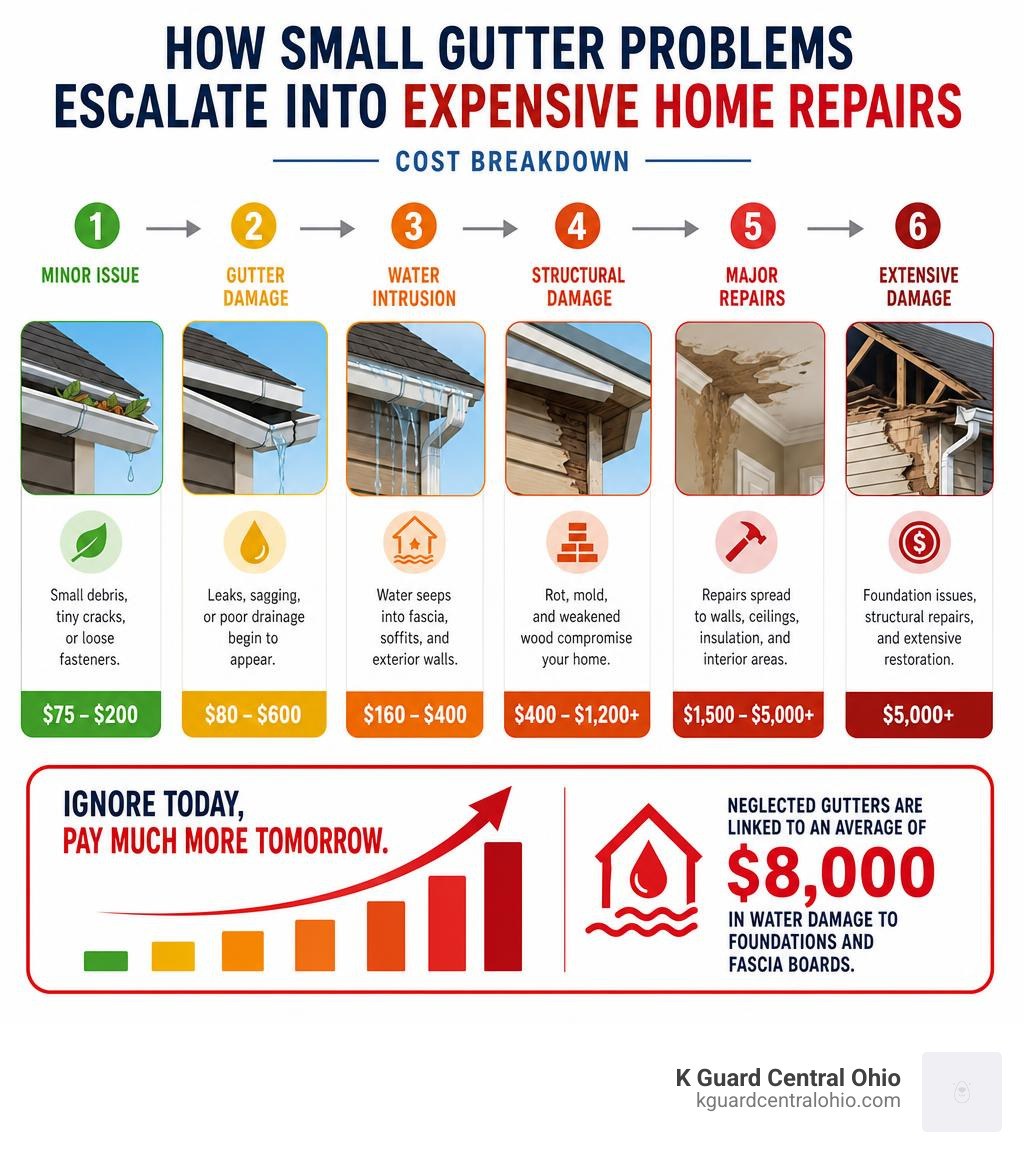
These numbers vary based on your gutter material, home height, and how far the damage has spread. Ignoring the problem can cost far more — neglected gutters are linked to an average of $8,000 in water damage to foundations and fascia boards.
I’m Rich Mannino, General Manager of K-Guard Leaf Free Gutters in Westerville, Ohio, and I’ve spent nearly two decades helping homeowners understand exactly what drives rain gutter repair cost — and when a smarter long-term solution makes more sense. In the sections below, I’ll walk you through every factor that shapes your repair bill and how to avoid paying more than you should.
2026 Rain Gutter Repair Cost: Average Prices, Per-Foot Rates, and Realistic Budgets
For 2026, most gutter repair projects fall into three budget buckets:
| Repair Scope | Typical 2026 Budget |
|---|---|
| Simple fix, such as a loose hanger or small seal | $75 – $200 |
| Average repair, such as leaks, pitch issues, or small section work | $195 – $625 |
| Complex repair, such as storm damage, fascia issues, or multiple sections | $700 – $1,200+ |
National estimates show a common average around $385 to $395. Sectional gutter repairs often land around $100 to $425, while seamless gutter repairs usually cost more because they require more specialized work and material matching. Some seamless repairs fall around $125 to $250 for smaller issues, but longer runs or custom fabrication can push the cost higher.
If you want to see how national quote data is gathered, Yelp offers a helpful overview of how gutter repair estimates are calculated. For Central Ohio homeowners comparing repair costs with full installation costs, we also recommend our Gutter Installation Cost Columbus Ohio Survival Guide.
In Central Ohio, weather matters. Heavy spring rain, summer storms, falling leaves, and freeze-thaw cycles can all stress gutter seams, fasteners, downspouts, and fascia boards. A gutter that looks “just a little loose” in September can become a sagging ice-loaded mess by February. Gutters are dramatic like that.
Emergency repairs may also cost more, especially after storms when demand rises. Labor, ladder access, roof height, and whether rotten wood is involved all affect the final quote.
Average rain gutter repair cost by project type
Here is a practical breakdown of common gutter repair jobs:
| Repair Type | Typical Cost Range | What It Usually Includes |
|---|---|---|
| Loose hanger or bracket | $60 – $120 | Refastening or replacing supports |
| Minor leak repair | $75 – $230 | Sealant, patching, seam repair, end cap work |
| Pitch adjustment | $80 – $250 | Re-sloping the gutter so water drains correctly |
| Sagging gutter repair | $80 – $600 | Re-hanging sections, replacing hangers, checking fascia |
| Clogged gutter or downspout | $160 – $400 | Clearing blockages and checking drainage |
| Downspout repair or replacement | $5 – $25 per linear foot | Reconnecting, sealing, replacing damaged sections |
| Section replacement | $100 – $550 | Removing damaged gutter and installing a matching section |
| Fascia or soffit-related repair | Varies widely | May involve wood repair before gutters can be secured |
| Storm damage repair | $300 – $1,200+ | Depends on impact, length, height, and water damage |
A small leak is usually one of the least expensive repairs. A sagging run costs more because the contractor may need to check the pitch, replace hidden fasteners, and inspect the fascia behind the gutter.
Once fascia rot enters the conversation, the repair is no longer just about gutters. The gutter has to attach to solid wood. If the board behind it is soft, split, or water-damaged, repairing the gutter without fixing the fascia is like hanging a picture frame on a wet cracker. Technically possible, but not wise.
Per-linear-foot rain gutter repair cost by material and style
Standard gutter repairs often range from $4 to $18 per linear foot, but the material and profile can change that number quickly. Premium materials cost more to patch, replace, solder, or match.
| Gutter Type or Material | Typical Repair Cost | Expected Lifespan | Notes |
|---|---|---|---|
| Vinyl | $4 – $8 per linear foot | 10 – 20 years | Low cost, but can crack in cold weather |
| Aluminum | $5 – $8 per linear foot | 20 – 30 years | Lightweight, rust-resistant, common in Ohio |
| Galvanized steel | $11 – $18 per linear foot | 20 – 30 years | Strong, but can rust if coating fails |
| Copper | $27+ per linear foot | 50+ years | Long-lasting, premium material, higher labor cost |
| Zinc | $30+ per linear foot | 50+ years | Durable and premium, often specialty work |
| K-style gutters | $8.25 – $15 per linear foot | Varies by material | Common residential profile |
| Half-round gutters | Often higher than K-style | Varies by material | Decorative, may require specialty parts |
| Box or fascia gutters | Up to $35 per linear foot | Varies | More complex access and integration |
| Sectional gutters | $100 – $225 per small repair | Varies | More seams, easier section swaps |
| Seamless gutters | $125 – $250 per small repair | Often longer-lasting | Fewer leak points, more specialized repairs |
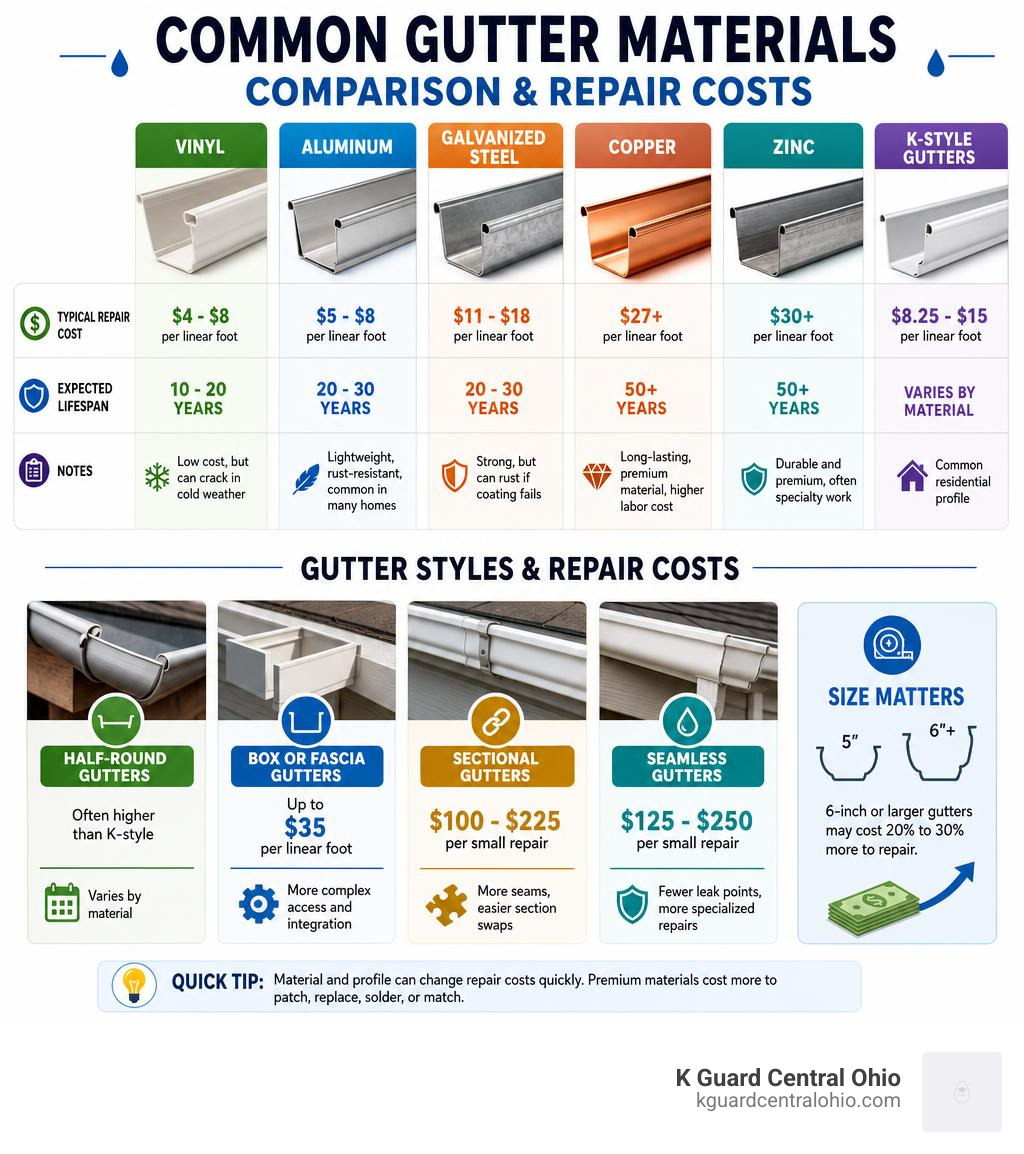
Gutter size also matters. A standard 5-inch gutter is common for many homes, while 6-inch or larger gutters may cost 20 percent to 30 percent more to repair because they require more material and sometimes heavier hardware. If you are comparing sizes, our guide to 5-Inch Seamless Gutters: What You Need to Know About Pricing explains what affects the numbers.
How gutter material changes repair pricing
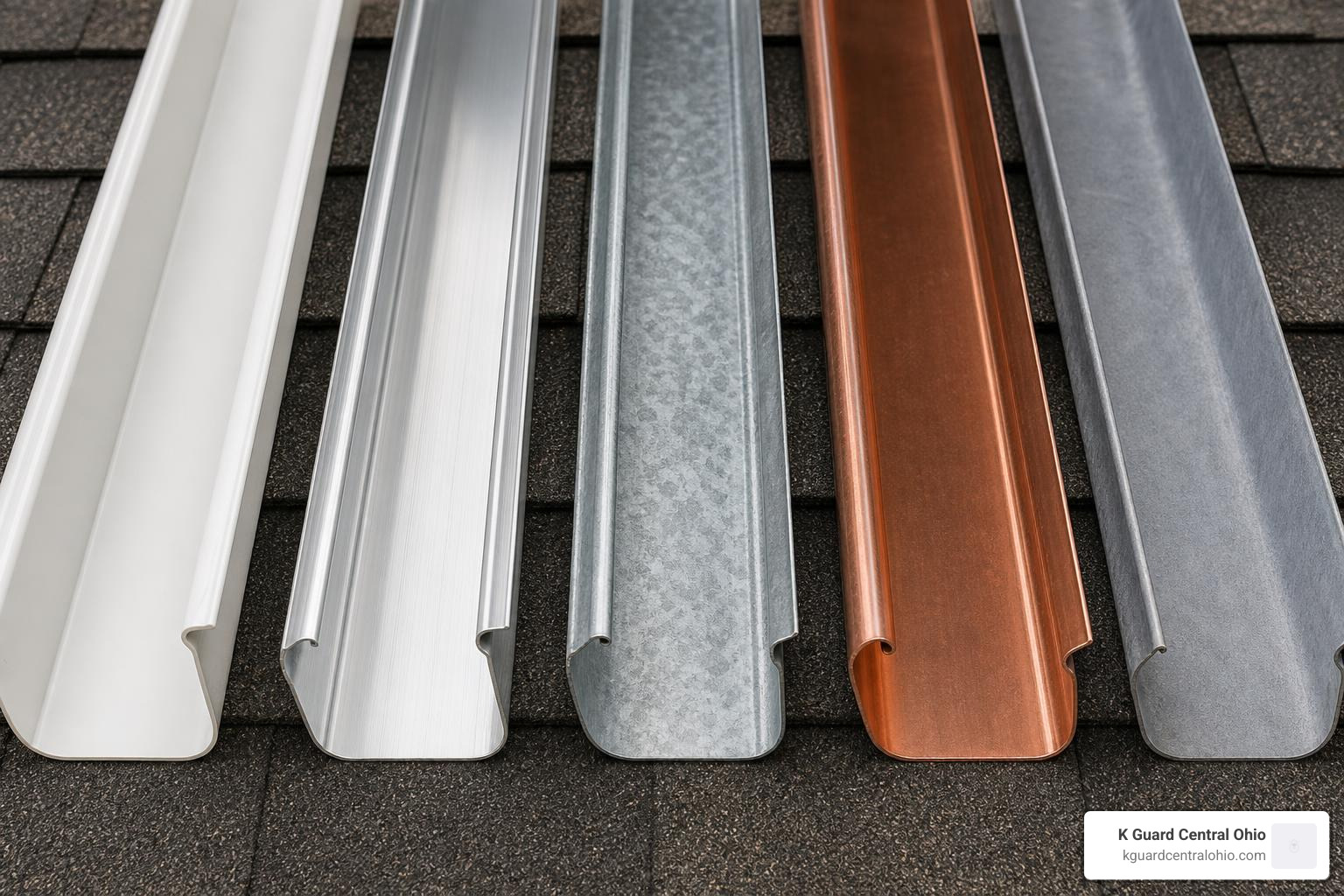
Material affects repair pricing in four main ways:
- The cost of the replacement piece or patch material
- The difficulty of matching the existing gutter
- The labor skill required
- The age and condition of the surrounding system
Vinyl is usually the cheapest to repair, but it can become brittle. In Central Ohio winters, repeated freezing and thawing may make older vinyl more likely to crack.
Aluminum is popular because it resists rust, is lightweight, and is easier to work with than steel or copper. It dents more easily than steel, but it is usually cost-effective to repair.
Steel is stronger but can rust. If rust is isolated, repair may make sense. If rust is spreading along multiple sections, replacement may be the smarter move.
Copper and zinc are premium materials with excellent lifespans. They develop a patina over time and can last 50 years or more, but repairs require compatible materials and more specialized work. Mixing the wrong metals can cause corrosion, so material matching matters.
What Factors Influence the Final Gutter Repair Bill?
The final bill depends on more than the broken piece you can see from the driveway. The biggest cost drivers include:
- Extent of damage
- Gutter material
- Linear feet being repaired
- Home height
- Roof pitch and access
- Number of stories
- Roofline complexity
- Downspout condition
- Fascia and soffit damage
- Existing gutter guards
- Disposal of damaged material
- Warranty expectations
- Seasonal demand
Routine maintenance work is often priced by the foot. January 2026 maintenance benchmarks show gutter maintenance starting around $4.49 to $5.53 per linear foot, depending on scope and location. For broader context, see these 2026 gutter maintenance cost benchmarks.
Damage severity: small leak, sagging run, or system failure
A small seam leak might only require cleaning, drying, sealing, and testing. A sagging run may require new hangers, pitch adjustment, and fascia inspection. A collapsed gutter may involve removal, replacement, wood repair, and downspout work.
Common signs of serious damage include:
- Water spilling behind the gutter
- Gutters pulling away from the fascia
- Standing water in the gutter after rain
- Soil erosion below the roofline
- Basement or foundation water concerns
- Peeling paint near the roof edge
- Rotten fascia boards
- Cracks, holes, rust, or separated seams
- Gutters bent by ice, limbs, or ladders
The scary part is not always the gutter bill. It is what happens when bad drainage is ignored. Overflowing or defective gutters can contribute to foundation and fascia damage that averages thousands of dollars to fix. That is why a $150 leak repair can be a very good day.
For small crack issues, our guide Cracked Gutter Got You Down? Easy Fixes Revealed explains what can often be patched and what should be inspected more closely.
Home height, access, and roof complexity
Home height can raise repair costs because it changes the equipment, safety setup, and labor time required.
| Home Type | Typical Repair Range |
|---|---|
| One-story home | $150 – $450 |
| Two-story home | $250 – $650 |
| Multi-story or difficult access | $500+ |
Two-story work can cost 10 percent to 30 percent more than similar work on a one-story home. Some sources show two-story repairs running nearly double in certain situations, especially when access is limited.
Cost can also rise when a home has:
- Steep roof pitches
- Multiple dormers
- Complex gables
- Walkout basements
- Decks blocking ladder placement
- Dense landscaping
- Tight side yards
- Heavy gutter guards that must be removed and reinstalled
Professional equipment is not just about convenience. It is about safety. A gutter repair is not a good time to discover that your ladder, your landscaping, and gravity are not on speaking terms.
Seamless versus sectional gutters: repair cost and longevity
Sectional gutters are made from shorter pieces joined together. Those joints are natural leak points. The upside is that replacing one damaged section may be straightforward.
Seamless gutters are formed in long continuous runs, usually on-site, so they have fewer seams and fewer leak-prone joints. They generally last longer and require less seam maintenance, but repairs can cost more because matching and fabricating the section may take specialized equipment.
Typical comparison:
| Gutter Type | Typical Small Repair Cost | Long-Term Notes |
|---|---|---|
| Sectional gutters | $100 – $225 | More seams, more potential leaks |
| Seamless gutters | $125 – $250 | Fewer seams, often better longevity |
Seamless gutter repairs may cost 15 percent to 40 percent more than sectional repairs, but the reduced number of joints can lower long-term maintenance. For many Central Ohio homes, seamless aluminum is a practical balance of durability, appearance, and cost.
If you are weighing repair costs against a new system, read Don’t Get Drained: Unpacking the True Cost of New Gutters and Downspouts.
Repair, Replace, or Upgrade: Making the Right Financial Decision
A common rule of thumb is the 50 percent rule: if the repair cost is more than half the cost of replacement, replacement deserves serious consideration.
Repair is usually best when:
- Damage is localized
- Gutters are relatively young
- Fascia is solid
- The same material is available
- Only one or two sections are affected
- The system has not needed repeated repairs
Replacement or an upgrade may be better when:
- Repairs keep happening
- Rust or cracks are widespread
- Multiple sections sag or leak
- Fascia damage is spreading
- Gutters are near the end of their lifespan
- Water is pooling near the foundation
- The system cannot handle the roof drainage
National full replacement estimates often range from roughly $1,700 to $3,100, while larger or more complex systems can cost more. For K-Guard Central Ohio, the average house installation is approximately $5,000. That reflects a long-term covered gutter solution rather than a simple patch or standard open gutter swap.
For more replacement budgeting, see The Real Cost of Gutter and Downspout Replacement in 2026.
Signs gutters need repair instead of full replacement
Repair may be the right choice if you notice:
- One localized leak
- A few loose screws or brackets
- Minor sagging in one run
- A clogged downspout
- A separated seam
- One small hole
- Improper pitch in a short section
- One storm-damaged section
- No major rust or rot
- Gutters that are still within their expected lifespan
These repairs are often quick and targeted. The goal is to restore water flow before the issue spreads.
Signs replacement is more cost-effective

Replacement becomes more cost-effective when the whole system is struggling. Warning signs include:
- Widespread rust
- Repeated leaks after previous repairs
- Peeling paint around the roofline
- Rotten fascia or soffit boards
- Cracked or warped gutter runs
- Multiple failing sections
- Loose spikes or fasteners throughout the system
- Water pooling near the foundation
- Gutters pulling away from the house
- Repair costs approaching 50 percent of replacement cost
Old gutters can become a cycle of patch, leak, patch, leak. At some point, that is not maintenance. That is a subscription plan you never wanted.
Gutter lifespan by material
Different materials age differently:
| Material | Typical Lifespan |
|---|---|
| Vinyl | 10 – 20 years |
| Aluminum | 20 – 30 years |
| Galvanized steel | 20 – 30 years |
| Copper | 50+ years |
| Zinc | 50+ years |
Central Ohio weather can shorten the life of neglected gutters. Freeze-thaw cycles expand small cracks. Snow and ice add weight. Leaves and debris hold moisture against metal. Spring storms can loosen hangers and shift pitch.
Maintenance frequency matters just as much as material. A well-maintained aluminum system can outperform a neglected premium system. For more long-term planning, see Cost of New Gutters 101.
How Gutter Guards, Maintenance, and Smart Planning Reduce Long-Term Costs
The cheapest gutter repair is the one you never need. Preventive maintenance helps reduce clogs, sagging, leaks, and fascia damage.
Traditional open gutters usually need cleaning at least twice a year: once in spring and once after fall leaves drop. Homes with trees may need more frequent cleaning. Downspouts should also be checked because clogs often happen where the gutter meets the downspout.
A covered gutter system can change the long-term math. K-Guard’s specialized gutter guard system is designed to keep leaves and debris out while moving water away from your home. The value is not just fewer clogs. It is the total elimination of annual gutter cleaning, reduced ladder risk, and fewer debris-related repairs over time.
For Central Ohio homeowners, the average K-Guard installation is approximately $5,000 and includes a lifetime guarantee. If annual cleaning, repeated clog repairs, and water overflow have become a regular headache, upgrading can make more sense than continuing to patch an open system.
Learn more about local covered options at Gutter Guards Columbus.
Do gutter guards lower repair frequency?
Yes, quality gutter guards can lower repair frequency by reducing debris buildup. Fewer clogs mean less standing water, less weight in the trough, less overflow, and less stress on hangers.
Gutter guards can help reduce:
- Leaf clogs
- Downspout blockages
- Sagging from wet debris
- Overflow near the foundation
- Repeated cleaning needs
- Ladder-related safety risks
That said, not all covers are the same. Some screens still allow small debris to collect. Some inserts can become clogged. A fully integrated covered gutter system is designed to move water while shedding debris more effectively.
Even with a covered system, we still recommend occasional visual checks after major storms. But with K-Guard, the goal is simple: no annual gutter cleaning. That is a big deal if you are tired of spending weekends scooping decomposed leaves out of a metal trough. Glamorous? No. Necessary? Also no, if the right system is installed.
For more on why this matters, see Why Your Home Needs Gutter Guards Right Now.
How homeowners can save on gutter repair costs
Use these simple strategies to control repair costs:
- Clean and inspect open gutters twice a year.
- Check downspouts after heavy storms.
- Fix small leaks before they spread.
- Watch for water pooling near the foundation.
- Bundle cleaning, repairs, and inspections when possible.
- Schedule non-urgent work before peak storm season.
- Compare detailed quotes, not just bottom-line prices.
- Ask whether fascia or soffit damage is included.
- Document storm damage with photos.
- Choose durable materials instead of repeat patching.
- Avoid delaying repairs through winter.
- Consider a covered gutter system if cleaning and clogs are recurring issues.
A good maintenance schedule makes problems easier to catch early. Our guide Don’t Get Drained: A Gutter Maintenance Schedule That Works Wonders lays out a simple plan.
DIY versus professional gutter repair
Some minor repairs can be DIY-friendly on a one-story home, such as:
- Tightening a loose screw
- Replacing an end cap
- Applying gutter sealant to a small leak
- Clearing a low, accessible downspout
- Reattaching a splash block
But DIY gutter repair has limits. Call a professional when:
- The home is two stories or taller
- The roof is steep
- The gutter is seamless
- The gutter is sagging badly
- Fascia may be rotten
- Pitch needs to be corrected
- Water is entering the home
- Multiple sections are failing
- You are not comfortable on a ladder
Professional labor often runs around $50 to $100 per hour, depending on the work and market conditions. That cost buys safety, equipment, experience, and quality control. Incorrect pitch or poor sealing can cause the same problem to return, only with more water damage and less patience.
DIY is great for painting a birdhouse. It is less charming when you are 18 feet in the air holding a tube of sealant and questioning your life choices.
Does homeowners insurance cover gutter repairs?
Sometimes, but not always.
Homeowners insurance may cover gutter damage if it comes from a sudden covered event, such as:
- Hail
- High wind
- A fallen tree limb
- Fire
- Certain storm damage
Insurance usually does not cover:
- Normal wear and tear
- Rust from age
- Neglected maintenance
- Long-term leaks
- Clogs from leaves
- Poor installation
- Damage that happened gradually
If you think storm damage caused the problem, take photos right away. Document the date, save inspection reports, and contact your insurance carrier promptly. Whether filing a claim makes sense depends on the repair cost, your deductible, and your policy terms.
Frequently Asked Questions About Rain Gutter Repair Cost
What is the average rain gutter repair cost in 2026?
The average rain gutter repair cost in 2026 is typically $195 to $625, with many homeowners paying around $385. Minor repairs may cost $100 to $350, while complex repairs involving multiple sections, fascia damage, or storm impact can exceed $1,000.
Your final cost depends on material, home height, repair length, damage severity, and whether the system is sectional or seamless.
Is it cheaper to repair or replace gutters?
Repair is usually cheaper in the short term. Many repairs cost 40 percent to 60 percent less than full replacement. However, replacement may be more cost-effective if repairs exceed 50 percent of the replacement cost, the gutters are old, or the same problems keep coming back.
If you are comparing new gutter options, read Don’t Get Soaked: A Homeowner’s Guide to New Gutter Costs.
Can one damaged gutter section be replaced?
Yes. On sectional gutters, one damaged 8-foot or 10-foot section can often be removed and replaced using couplings. This is common after limb impact, cracking, or localized rust.
With seamless gutters, replacing one section may require more specialized matching and fabrication. A professional should also check downspout alignment, gutter pitch, and the fascia behind the damaged area before installing the new section.
Conclusion
In 2026, most gutter repairs cost between $195 and $625, with an average near $385. Small fixes like leaks, loose hangers, and end caps are usually affordable. Bigger problems like sagging runs, storm damage, rotten fascia, or multiple failing sections can climb quickly.
The smartest decision comes down to three questions:
- Is the damage localized or widespread?
- Are the gutters still within their useful lifespan?
- Will another repair actually solve the problem long term?
If repairs are becoming routine, a covered gutter solution may be the better investment. K-Guard Central Ohio offers a specialized gutter guard system with a lifetime guarantee, total elimination of annual gutter cleaning, and an average house installation cost of approximately $5,000.
When your gutters go down the drain, your budget does not have to follow. Start with a clear inspection, compare repair versus replacement honestly, and choose the option that protects your home for the long run.
Ready to stop cleaning, patching, and worrying about overflow? Explore covered gutter solutions.


