Don’t Get Drained: A Gutter Maintenance Schedule That Works Wonders
Your Gutter Maintenance Schedule at a Glance
A gutter maintenance schedule is the single most effective way to protect your home from water damage, foundation erosion, and costly repairs. Here’s the quick answer:
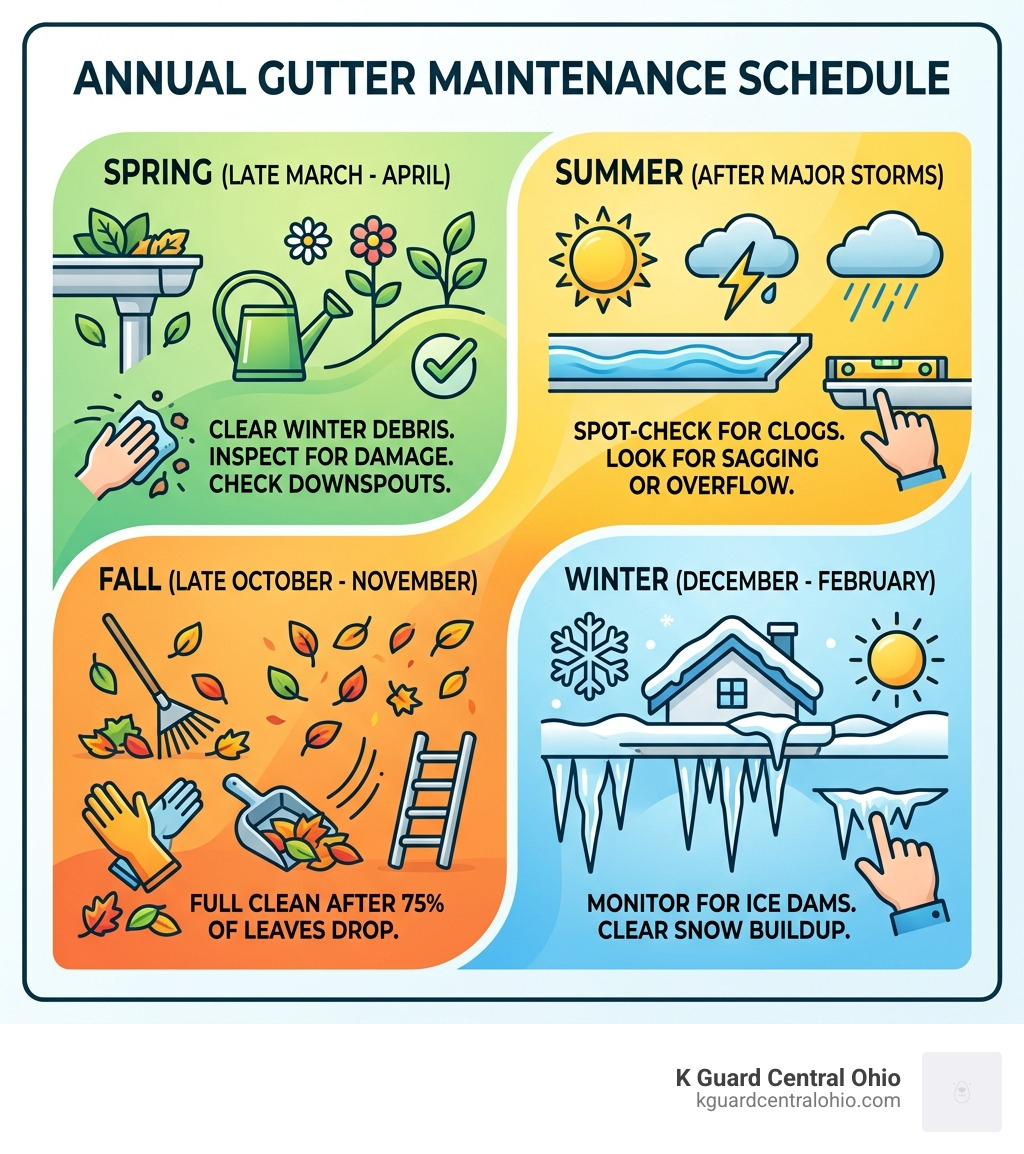
| Season | When | What to Do |
|---|---|---|
| Spring | Late March – April | Clear winter debris, inspect for damage, check downspouts |
| Summer | After major storms | Spot-check for clogs, sagging, or overflow |
| Fall | Late October – November | Full clean after 75% of leaves have dropped |
| Winter | December – February | Monitor for ice dams, clear snow buildup |
How often?
- No nearby trees: Once a year
- Few trees: Twice a year (spring and fall)
- Heavy tree coverage: Every 3-4 months
It’s easy to forget about gutters — until you’re staring at a flooded basement or a fascia board that’s gone soft with rot. By then, what could have been a simple cleaning job has turned into an $8,000 repair bill or worse.
The good news? Staying ahead of gutter problems doesn’t require a lot of time or expertise. It just requires a plan.
In Central Ohio, where spring rains are heavy and fall leaf drop is intense, your gutters work hard. A little attention at the right times of year goes a long way.
This guide walks you through exactly when and how to maintain your gutters — season by season — so your home stays protected all year long.
Why a Consistent Gutter Maintenance Schedule is Your Home’s Best Insurance
We like to think of gutters as the “silent guardians” of our homes. They don’t look like much, but they have a massive job: channeling thousands of gallons of water away from your most expensive investment. When you fall behind on your gutter maintenance schedule, that water has nowhere to go but into your home’s structure.
Foundation Protection and Soil Erosion
The primary job of a gutter system is to ensure water discharges at least 4 to 6 feet away from your foundation. When gutters are clogged, water overflows and pools at the base of your home. Over time, this saturates the soil, leading to foundation cracks, shifting, and even structural failure. Experts note that clogged gutters can cause $8,000 or more in foundation and fascia damage when left unaddressed.
Preventing Fascia Rot and Basement Flooding
Your fascia boards—the long wooden boards that run along the lower edge of the roof—are the first to suffer when gutters overflow. Constant moisture leads to wood rot, which can cost anywhere from $500 to $4,000 to repair. Furthermore, that overflowing water often finds its way into your basement. A flooded basement isn’t just a mess; it’s a breeding ground for mold and can lead to tens of thousands of dollars in restoration costs.
Pest Prevention and Mold Mitigation
Standing water and decomposing leaves are basically a five-star resort for mosquitoes, termites, and carpenter ants. Birds and rodents also love to nest in the “gutter gardens” created by neglected debris. By following a Routine Gutter Maintenance Checklist , you eliminate these habitats before they become a full-blown infestation.
To understand the mechanics of how a properly maintained system should operate, you can see How It Works on our specialized systems page.
Common Costs of Water Damage from Neglect:
- Foundation Repair: $5,000 – $15,000+
- Fascia/Soffit Repair: $500 – $4,000
- Basement Water Mitigation: $3,000 – $10,000
- Mold Remediation: $2,000 – $6,000
The Ultimate Seasonal Gutter Maintenance Schedule
Living in Central Ohio means we experience the full force of all four seasons. Our “weather drama” includes everything from heavy spring downpours to freezing winter slush. Because of this, a “one size fits all” approach doesn’t work. You need a schedule that adapts to our specific climate.

Spring: Post-Winter Recovery
As we move into April 2026, the first priority is clearing out the remnants of winter. Snow and ice can pull gutters away from the roofline, and early spring winds often toss small twigs and “helicopter” seeds into the tracks.
Summer: Storm Prep and Inspections
While summer is generally quieter for leaf fall, Central Ohio is prone to sudden, violent thunderstorms. These storms can dump inches of rain in minutes. If your gutters are even partially blocked, you’ll see immediate overflowing. Summer is the best time for a mid-year checkup to ensure everything is still securely fastened. You can see examples of proper Installation to know what a secure system should look like.
Fall: The Heavy Hitter
This is the most critical time for any gutter maintenance schedule. With our abundance of oak, maple, and buckeye trees, the volume of debris is staggering. We recommend following a 2026 Gutter Maintenance Schedule: Month-by-Month Guide to ensure you don’t miss the window before the first big freeze.
Winter: Ice and Snow Management
In winter, the focus shifts to prevention. Clogged gutters are the leading cause of ice dams. When melting snow can’t drain through the gutters, it refreezes at the roof edge, forcing water up under your shingles.
Spring: Starting Your Gutter Maintenance Schedule After Winter
When the snow finally melts in late March, it leaves behind a mess. We often find a layer of “shingle grit” (those tiny granules from your roof) mixed with decomposed leaves from the previous year.
The Spring Checklist:
- Clear the Sludge: Spring rain mixed with tree pollen creates a thick, yellow-green paste. This “pollen sludge” is surprisingly heavy and can block downspouts completely.
- Inspect for “Gutter Spikes”: Check if any fasteners have backed out due to the freeze-thaw cycle of an Ohio winter.
- Check the Alignment: Ensure the gutters still have a 1/4-inch slope for every 10 feet toward the downspouts.
- Seal the Leaks: Look for dripping at the seams.
If you’re curious about what a clean, professional setup looks like after a spring tune-up, browse our Photos gallery for inspiration.
Fall: The Most Critical Part of Your Gutter Maintenance Schedule
If you only clean your gutters once a year, do it in the fall. However, timing is everything. If you clean too early, the remaining leaves will just clog them up again in a week.
The 75% Rule We recommend waiting until at least 75% to 80% of the leaves have fallen from the trees on your property before performing your major fall cleaning. In Central Ohio, this typically happens in late October or early November.
The Fall Checklist:
- Downspout Flushing: Don’t just scoop the gutters; run a hose down the downspouts to ensure the underground drains are clear.
- Remove “Sweet Gum” Balls: If you have sweet gum or buckeye trees, these large seeds can act like a cork in your downspout opening.
- Check Fascia Health: While you’re up there, look for soft spots in the wood.
- Aesthetics Matter: Fall is also a great time to wipe down the exterior of the gutters. If yours are stained beyond repair, you might want to look into new Color Options that complement your home’s autumn palette.
DIY vs. Professional Gutter Cleaning: What’s Right for You?
This is the age-old homeowner dilemma. Should you spend your Saturday on a ladder or write a check to a pro? Let’s break down the realities of both.
The DIY Reality
Cleaning gutters yourself requires more than just a bucket. You need a sturdy extension ladder (not a step ladder!), a gutter scoop, heavy-duty gloves, and a spotter for safety. Warning: Falls from ladders are one of the leading causes of home-related injuries, with over 13,000 gutter-related ER visits reported annually. If you have a two-story home, the risk increases exponentially.
The Professional Advantage
Professional crews use high-powered vacuums, telescoping tools, and industrial-strength pressure washers. More importantly, they provide an expert eye. A pro will notice a hairline crack in a seam or a loose bracket that a homeowner might miss.
| Feature | DIY Cleaning | Professional Service |
|---|---|---|
| Cost | $20 – $50 (Supplies) | $119 – $234 (Avg. Single Story) |
| Time | 3 – 6 Hours | 0 Hours |
| Safety | High Risk | Zero Risk to Homeowner |
| Equipment | Basic | Industrial/Specialized |
| Thoroughness | Variable | High (Includes Inspection) |
For those considering a more permanent solution to end the cleaning cycle forever, we offer Financing options to make professional-grade protection more accessible.
Signs Your Gutters Need Immediate Attention
Sometimes you can’t wait for your scheduled maintenance. Your gutters will often “scream” for help if they are failing. Keep an eye out for these red flags:
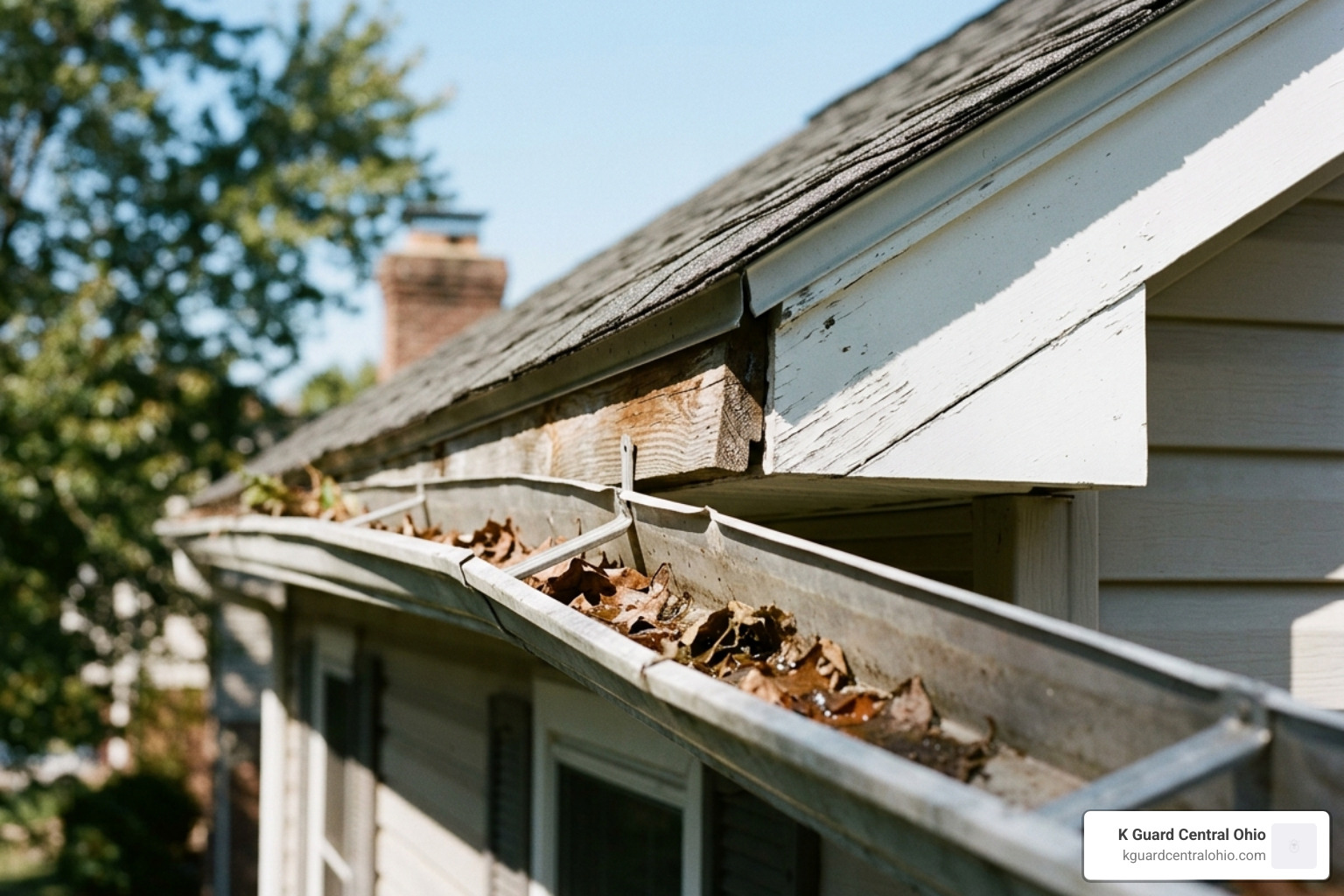
- The “Waterfall” Effect: During a rainstorm, if water is pouring over the sides of the gutters rather than out the downspout, you have a major clog.
- Sagging or Pulling Away: Gutters are heavy when full of wet debris. If you see a gap between the gutter and the roofline, the fasteners are failing.
- Plant Growth: If you see green sprouts peeking over the edge of your gutters, you don’t just have debris—you have soil. This means the organic matter has been there long enough to decompose.
- Staining and Peeling Paint: Water marks on your siding or peeling paint on the fascia boards are sure signs of chronic overflowing.
- Bird and Pest Activity: If you see birds constantly landing on your gutters or squirrels running in and out, they’ve likely built a home in your clogs.
- Basement Dampness: Even if you don’t see a flood, a musty smell in the basement often starts with gutter failure.
At K Guard, we’ve seen every type of gutter failure imaginable in the Columbus area. You can learn more About Us and our commitment to solving these issues for Central Ohio homeowners.
Frequently Asked Questions about Gutter Maintenance
How often should I clean my gutters?
For most Central Ohio homes, a bi-annual gutter maintenance schedule is the minimum requirement. You should aim for once in the late spring (after the seeds and pollen have dropped) and once in the late fall (after the leaves are down). However, if your home is nestled in a wooded lot with many overhanging oaks or pines, you may need quarterly cleanings (every 3 months) to prevent overflow.
Do gutter guards eliminate the need for maintenance?
This is a common misconception. Most “DIY” gutter guards—like plastic screens or foam inserts—actually require more maintenance because debris gets trapped on top of them or grows through the mesh. However, a high-quality, professional system like K Guard significantly reduces maintenance. While you may still want to do a quick visual inspection annually to check for storm damage, the days of scooping out rotting muck are over. Learn more about the Why K-Guard advantage.
When should I replace my gutters instead of cleaning them?
Gutters typically have a lifespan of 15 to 50 years depending on the material (vinyl vs. aluminum vs. copper). You should consider replacement if:
- You have persistent leaks that won’t stay sealed.
- There are structural cracks or rust holes through the metal.
- The gutters have been bent or warped by ice dams.
- You are replacing your roof (it’s the most cost-effective time to upgrade).
For more tips and tricks on keeping your home dry, check out our latest Blog posts.
Conclusion
A proactive gutter maintenance schedule is more than just a chore; it’s a strategy to protect your home’s value and your family’s safety. By spending a little time each spring and fall—or by investing in a system that does the work for you—you can avoid the “drain” on your wallet that comes with major water damage.
Whether you choose to tackle the ladder yourself or hire the experts, don’t let another season go by with neglected gutters. The peace of mind that comes with knowing your foundation is dry and your fascia is rot-free is worth every bit of effort.
Ready to stop worrying about your gutters for good? Our team is standing by to help you find a permanent solution tailored to the Central Ohio climate. Contact Us with any questions, or better yet, Schedule your free estimate today and let us show you how K Guard Central Ohio can protect your home for a lifetime.