Stop Climbing Ladders with the Best Gutter Guard Systems
Are You Still Climbing a Ladder to Clean Your Gutters?
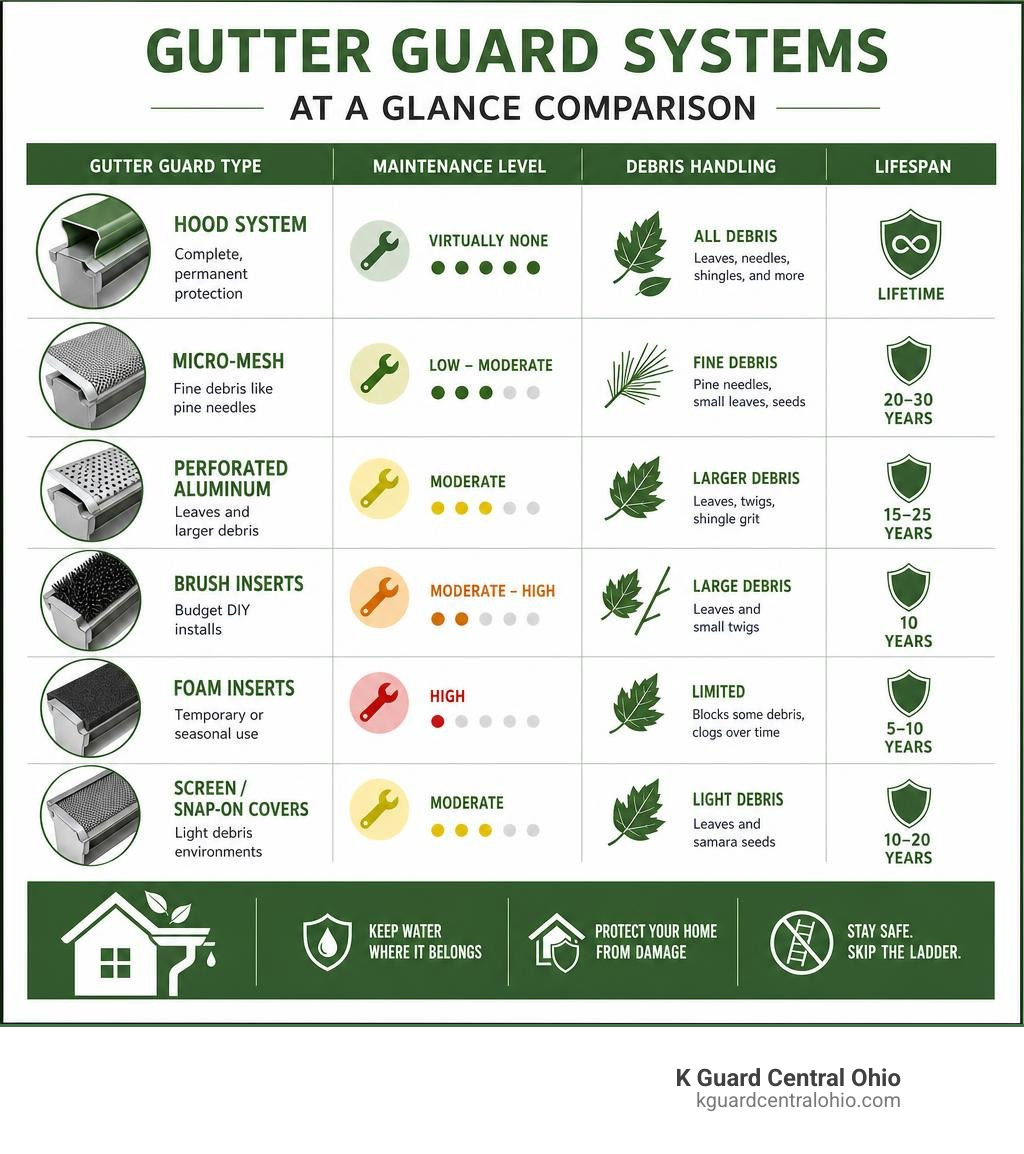
The best gutter guard systems stop debris from entering your gutters in the first place — so you never have to clean them out again. While a professional system like K-Guard has an average installation cost of approximately $5,000, it provides a lifetime guarantee and the complete elimination of annual gutter cleaning. Here’s a quick look at how the top options compare:
| Gutter Guard Type | Best For | Maintenance Level | Lifespan |
|---|---|---|---|
| K-Guard Hood System | Complete, permanent protection | Virtually none | Lifetime |
| Micro-mesh systems | Fine debris like pine needles | Low–moderate | 20–30 years |
| Perforated aluminum panels | Leaves and larger debris | Moderate | 15–25 years |
| Brush inserts | Budget DIY installs | Moderate–high | 10 years |
| Foam inserts | Temporary or seasonal use | High | 5–10 years |
| Screen/snap-on covers | Light debris environments | Moderate | 10–20 years |
Every year, thousands of homeowners across Central Ohio climb ladders to scoop out soggy leaves, pine needles, and roof grit from clogged gutters. It’s messy, time-consuming, and genuinely dangerous — over 650,000 ladder-related injuries happen in the U.S. each year. And even after all that effort, the gutters clog again.
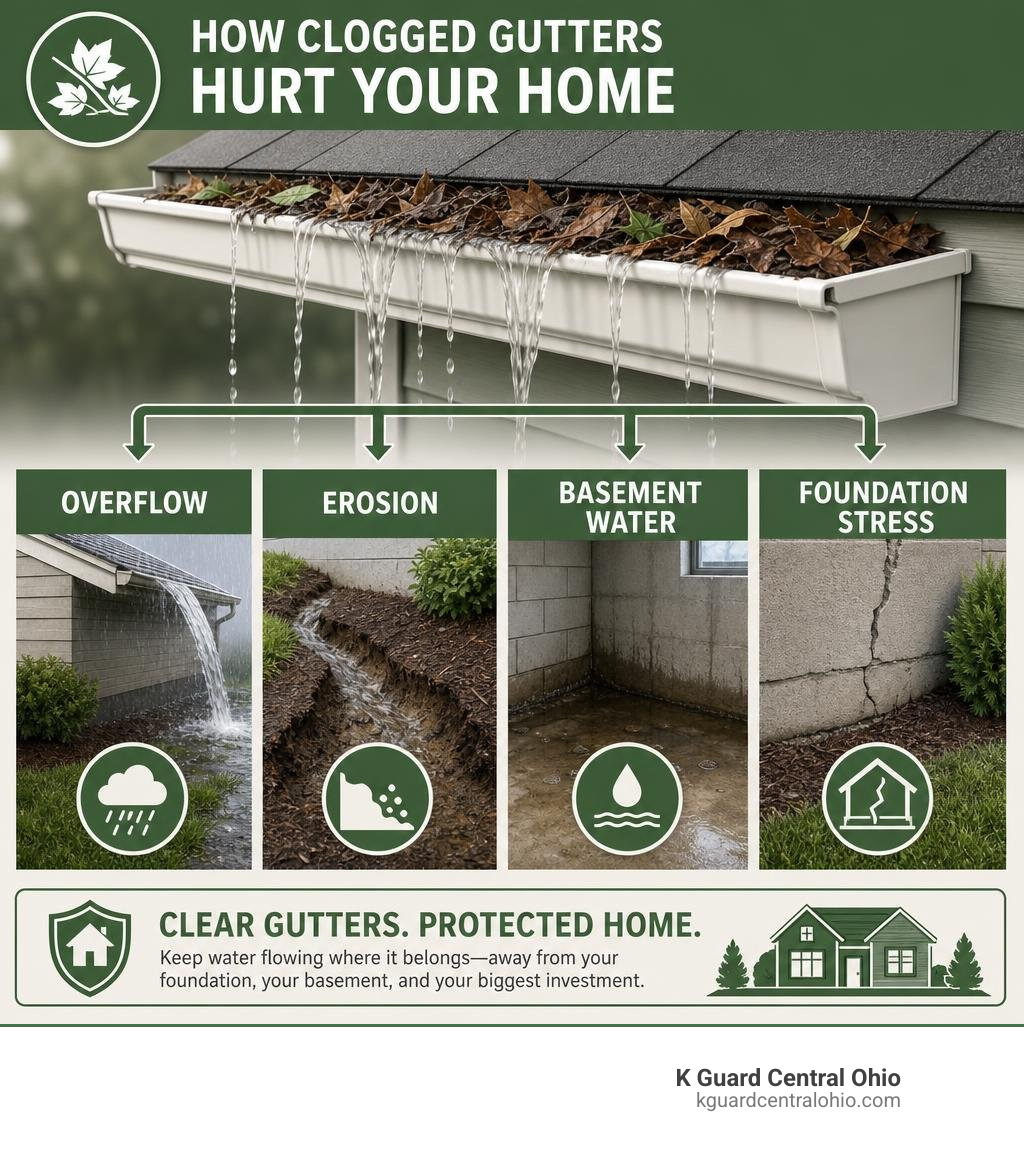
The problem isn’t just inconvenience. Gutters that overflow push water toward your foundation, rot your fascia boards, erode landscaping, and invite pests. Clogged gutters are one of the leading causes of preventable water damage to homes.
The good news: the right gutter guard system can eliminate this cycle entirely.
But not all gutter guards are created equal. Some reduce cleaning frequency. Others — like a properly installed hood system — can end gutter maintenance for good.
I’m Rich Mannino, General Manager of K-Guard Leaf Free Gutters, and I’ve spent nearly two decades helping homeowners find the best gutter guard systems for their homes — from single-story ranches to large multi-story properties across Central Ohio. In this guide, I’ll walk you through how the top systems actually compare, so you can make a confident, informed decision.
Terms related to best gutter guard systems:
Why Traditional Gutter Guard Types Fail to Protect Your Home
Most gutter guards sold as add-ons are designed to sit on top of your existing gutters. That sounds simple, and sometimes it is. The problem is that your existing gutter may already be undersized, sagging, pitched incorrectly, or packed with hidden debris before the guard ever goes on.
That is why many standard add-on systems do not truly solve the gutter problem. They change where the clog forms.
Instead of leaves collecting inside the gutter, debris often collects on top of the guard. Pine needles get caught in openings. Roof grit cakes onto mesh. Pollen and seed pods stick to damp surfaces. Water then skips over the guard, spills behind the gutter, or pours over the front edge.
Here is the practical difference between common add-on guards and an integrated K-Guard system:
| System Type | Common Weak Point | Maintenance Reality | Best Use Case |
|---|---|---|---|
| Screen guards | Large openings let fine debris through | Must be brushed or removed periodically | Light leaf coverage |
| Micro-mesh guards | Fine mesh can collect pollen, grit, and needles | Surface cleaning still needed | Fine debris with proper slope |
| Perforated aluminum panels | Holes can clog with small debris | Needs periodic clearing | Larger leaves and moderate debris |
| Foam inserts | Debris sits on top and breaks down inside the gutter | Must be removed and replaced over time | Temporary DIY use |
| Brush inserts | Debris can lodge in bristles | Must be pulled out and cleaned | Budget-friendly short-term use |
| K-Guard integrated hood system | Designed as a complete gutter system | No annual gutter cleaning | Permanent home protection |
If you want the deeper “why now?” behind gutter protection, we explain the home-damage risks in Why Your Home Needs Gutter Guards Right Now.
The Limitations of Standard Micro-Mesh and Screen Gutter Guards
Micro-mesh and screen systems are popular because they seem logical: small holes block debris while water passes through. In light conditions, they can help. But Central Ohio homes deal with a messy mix of broad leaves, maple helicopters, pine needles, roof grit, pollen, ice, wind, and sudden downpours. That is where flat or low-slope add-on guards often struggle.
Micro-mesh systems usually use a stainless-steel mesh with an aluminum or plastic frame. Stainless steel is durable and corrosion-resistant, but the mesh surface can still become a landing pad for fine debris. Roof granules, pollen, seed pods, and damp organic material can mat together over time. Once that happens, water has a harder time passing through.
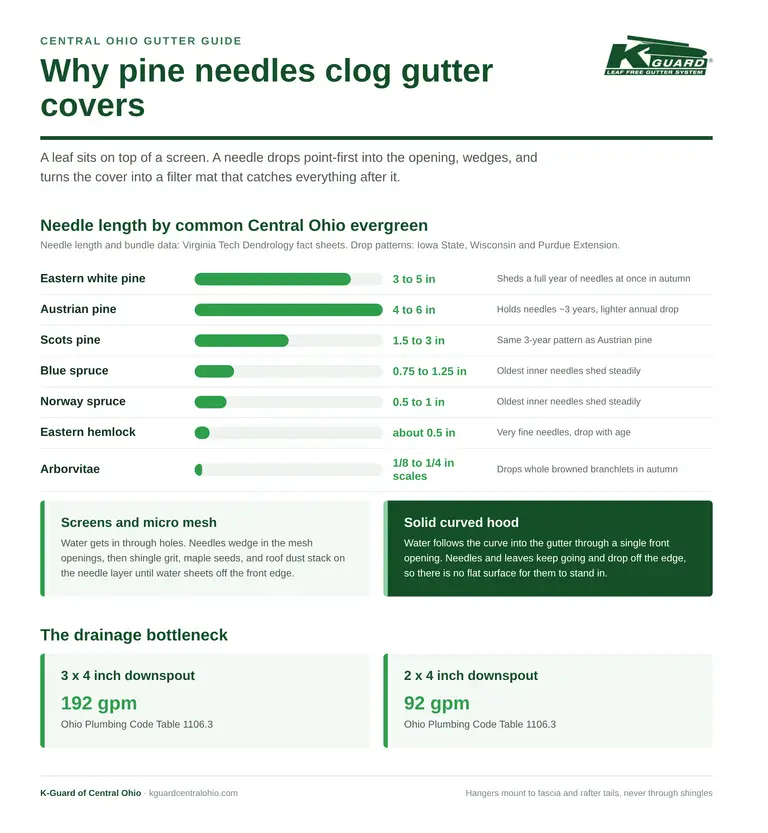
Screen guards have the opposite problem. Their openings are usually larger, which helps water flow but allows smaller debris to enter the gutter. Pine needles are especially annoying because they can stand upright, weave through openings, or bridge across the screen. They are basically nature’s toothpicks, except less useful and more irritating.
The biggest issue is maintenance. Many traditional guards reduce how often you clean your gutters, but they do not eliminate the job. You may still need to:
- Brush debris off the top surface
- Clear valleys where roof debris piles up
- Remove guards to clean gutters underneath
- Flush downspouts
- Replace damaged sections
- Refasten loose panels after wind or ice movement
Materials matter, too. Aluminum is lightweight and rust-resistant. Stainless steel resists corrosion and holds up well against fine debris. PVC is inexpensive but can become brittle from UV exposure and temperature swings. Foam is easy to install but tends to trap organic material and wear out faster. Copper is highly durable and attractive, but it is usually a premium specialty choice rather than the best value for most homes.
For homeowners who want a stronger, permanent approach, we recommend learning more about heavy-duty gutter design in Seamlessly Superior: How to Get Heavy Duty Gutters You’ll Never Have to Touch.
The Superiority of K Guard’s Integrated Hood System
K-Guard is different because it is not just a cover placed over an old gutter. It is a specialized, integrated gutter protection system built to move water efficiently while shedding debris.
The system uses the natural behavior of water, often called liquid adhesion or surface tension. Rainwater follows the curved hood into the gutter, while leaves, twigs, and larger debris slide off the front. In plain English: water goes in, junk stays out. That is the kind of science we can all get behind.
This design gives K-Guard several important advantages:
- It sheds leaves instead of trapping them on a flat surface.
- It handles heavy rain without relying on tiny mesh openings.
- It is professionally installed as a complete system.
- It attaches without sliding under shingles.
- It comes with a lifetime guarantee.
- It eliminates the annual gutter-cleaning cycle.
That last point matters most. Many systems promise “less cleaning.” K-Guard is designed so homeowners can stop cleaning gutters altogether. No more Saturday ladder adventures. No more mystery sludge. No more pretending a garden trowel is a professional gutter tool.
For heavy storm performance, see our guide to Heavy Rain Gutter Guards: Defending Your Home from the Ultimate Deluge.
Key Performance Factors: Debris, Rainfall, and Durability
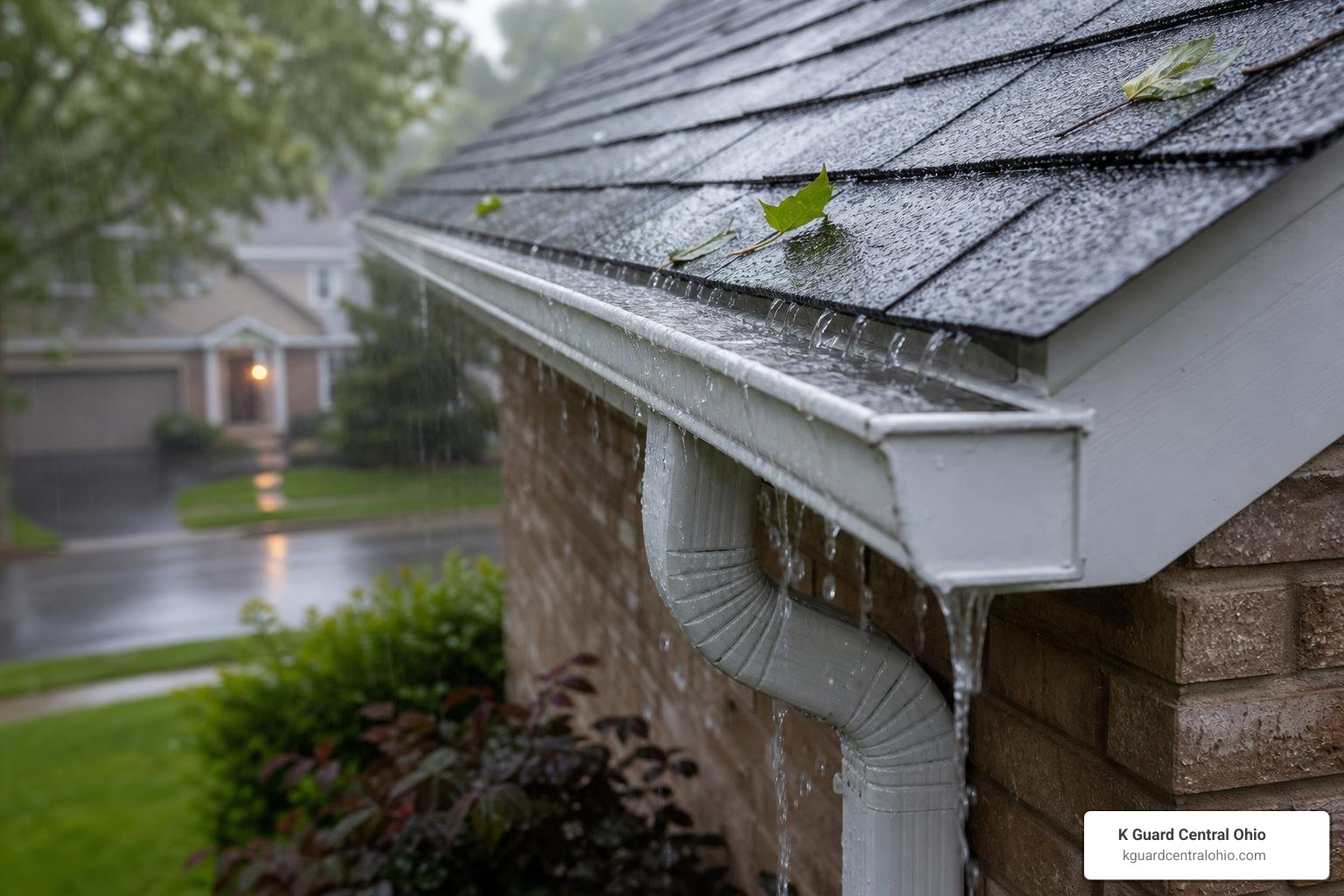
The best gutter system for a home in Central Ohio has to handle more than pretty autumn leaves. It has to perform through spring pollen, summer thunderstorms, fall leaf drop, winter freeze-thaw cycles, and the occasional “why is it raining sideways?” storm.
When comparing the best gutter guard systems, we look at three performance factors first:
- Debris handling
- Water capacity
- Long-term durability
A good system must deal with different debris types:
- Large leaves from oak, maple, sycamore, and other mature trees
- Small leaves and seed pods
- Pine needles
- Roof grit and shingle granules
- Twigs and small sticks
- Pollen and organic film
- Ice, snow, and freeze-thaw movement
It also needs materials that hold up. Aluminum is a strong value because it is lightweight, corrosion-resistant, and reliable in changing weather. Stainless steel mesh can be durable, but the frame and installation method matter just as much as the mesh itself. PVC and foam tend to be lower-cost options, but they usually have shorter lifespans. Copper is long-lasting but expensive and typically chosen for aesthetics or specialty homes.
Central Ohio homes also need a system that protects against overflow. When gutters overflow, water often lands right where you do not want it: beside the foundation. Over time, that can contribute to soil erosion, basement moisture, foundation cracks, and landscape washout.
If you are comparing options locally, our guide to Gutter Guards Columbus explains what homeowners in Central Ohio should consider before choosing a system.
Why Perforated Aluminum and Micro-Mesh Fall Short
Perforated aluminum panels and micro-mesh guards can both perform well in certain conditions, but they share one major weakness: their performance depends heavily on surface cleanliness and installation slope.
Perforated aluminum panels use rows of holes or slots to admit water. They can be durable and cost-effective, especially against larger leaves. But small debris can block the perforations. When roof grit, pollen, and wet organic debris collect, water may skip over the top during heavy rain.
Micro-mesh uses a finer filter. That helps block pine needles and roof granules, but it also creates a surface that can become coated. Once the mesh is covered, water flow drops. In real-world testing of gutter protection systems, installation angle and debris shedding often prove just as important as the guard material itself. A flat guard, even a premium one, is more likely to hold debris than a sloped design that encourages debris to slide or blow away.
The key issue is not whether perforated or micro-mesh guards “work.” Many do reduce gutter cleaning. The issue is whether they eliminate the maintenance problem.
Most add-on guards still require some combination of:
- Surface brushing
- Seasonal inspection
- Downspout flushing
- Removal for deep cleaning
- Refastening or replacement
- Clearing debris dams at roof valleys
K-Guard’s value is that it replaces the patchwork approach with a complete system. Instead of covering a potentially flawed gutter, we install a system designed from the start for water flow, debris shedding, and long-term protection.
Installation Methods and Protecting Your Roof Warranty
Installation method is one of the most overlooked parts of gutter guard performance. It is also one of the most important.
Common installation styles include:
- Under-shingle: The back edge slides under the first row of shingles.
- Drop-in: The guard rests inside or on top of the gutter.
- Snap-on: The guard clips onto the gutter lip.
- Screw-in: The guard is fastened to the gutter front, fascia, or other support point.
- Fascia-mounted: The system attaches to the fascia area without disturbing shingles.
Each method has trade-offs.
Under-shingle products can create concerns because they disturb the roof edge. If the roof is older, brittle, steep, or already vulnerable, lifting shingles can be risky. Drop-in and snap-on guards are easier for DIY installation, but they may shift, sag, or fail to maintain the slope needed for good debris shedding. Screw-in products can be more secure, but they still depend on the condition and capacity of the existing gutter.
Gutter style matters, too. Most Central Ohio homes use K-style gutters, which have a flat back and decorative front profile. Some homes use half-round gutters, often for historic or architectural reasons. Add-on products may not fit both styles equally well, and improper fit can create gaps where debris, pests, or water can enter.
K-Guard is fascia-mounted and professionally installed. That means we do not need to slide panels under your shingles. This helps protect the roof edge while creating a strong, clean, permanent installation.
For more detail on what professional installation includes, see Installed Gutter Guards: What Every Homeowner Near You Needs to Know.
Real-World Costs, Maintenance, and Hidden Pitfalls
Price matters. We get it. Nobody wakes up excited to spend money on gutters. If they do, we admire their enthusiasm, but we also have questions.
The average K-Guard installation is approximately $5,000. That is a meaningful investment, but it should be compared against the long-term cost of cleaning, repairs, water damage, and replacement of temporary products.
A cheaper DIY guard may look appealing at first. But the real cost includes:
- Your time
- Ladder risk
- Repeat cleanings
- Replacement sections
- Fasteners and tools
- Possible gutter repairs
- Water damage if the system fails
- Paying someone else to clean the guards later
Professional systems cost more upfront because they are designed, fitted, and installed for the home. With K-Guard, the value is the combination of permanent protection, lifetime guarantee, and elimination of annual gutter cleaning.
For a full breakdown of cost vs. value, read Gutter Guard Costs and Whether They Are Actually Worth It.
The Myth of “Maintenance-Free” Add-On Systems
Here is the truth: many gutter guards are marketed as maintenance-free, but most add-on guards still need attention.
Fine debris is the troublemaker. Pollen can coat surfaces. Roof grit can collect in small openings. Damp leaves can form mats. Organic growth can develop in shaded areas. Pine needles can wedge into screens. When that happens, water flow drops and overflow risk rises.
That does not mean every guard is useless. It means homeowners should understand the difference between:
- Reducing cleaning frequency
- Eliminating annual gutter cleaning
Most standard add-on systems do the first. K-Guard is built to do the second.
With K-Guard’s lifetime guarantee, homeowners are not buying a temporary cover. They are investing in a complete gutter protection system designed to keep gutters flowing without the yearly ladder routine.
We still believe homeowners should look at their exterior after major storms. That is just good homeownership. If a tree limb falls on the roof or a windstorm moves debris around, it is smart to check things from the ground. But that is very different from climbing a ladder every season to scoop muck out by hand.
Long-Term Value and Foundation Protection
The biggest value of a quality gutter system is not just clean gutters. It is protecting the home from water.
When gutters clog or overflow, water can damage:
- Foundations
- Basements and crawl spaces
- Fascia boards
- Soffits
- Siding
- Landscaping
- Walkways
- Mulch beds
- Exterior doors and trim
Water that pools near the foundation is especially concerning. Central Ohio soil can expand and contract with moisture changes. When runoff repeatedly dumps beside the home, it can increase pressure around the foundation and contribute to seepage or cracking over time.
A proper gutter protection system helps move water away from the house where it belongs. That reduces the risk of basement moisture, erosion, and costly repairs.
There is also a safety value. If you are no longer climbing a ladder to clean gutters, you are removing one of the riskiest recurring maintenance tasks from your to-do list. That alone is worth a lot. Your knees, back, and spouse who keeps saying “please get down from there” may all agree.
At an average cost of approximately $5,000, K-Guard is not the cheapest option. It is the option for homeowners who want a permanent system, a lifetime guarantee, and freedom from annual gutter cleaning.
Frequently Asked Questions About Gutter Protection
Below are the most common questions we hear from Central Ohio homeowners comparing the best gutter guard systems.
Do gutter guards work in heavy rain?
Yes, the right gutter guards work in heavy rain. The key phrase is “the right.”
Some guards struggle in heavy rain because water cannot pass through the surface fast enough. This is common when mesh is coated with roof grit or pollen, or when perforated openings are blocked by wet debris. Flat guards can also allow water to skim across the top and overshoot the gutter.
K-Guard is designed differently. Its hooded shape uses surface tension to guide water into the gutter while shedding debris. Because it does not rely on tiny screen openings, it is built for strong water intake during Central Ohio downpours.
Heavy rain performance also depends on proper installation, correct pitch, and downspout capacity. That is why professional installation matters. A great product installed poorly can still perform poorly.
Will installing gutter guards under shingles void my roof warranty?
Some gutter guards slide under shingles. This installation style can raise concerns because it may disturb the roof edge, especially on older roofs or roofs with brittle shingles.
Whether a specific installation affects a roof warranty depends on the roofing manufacturer, the condition of the roof, and how the product is installed. The safer approach is to avoid disturbing shingles whenever possible.
K-Guard attaches to the fascia area rather than sliding under shingles. That is one of the reasons we prefer an integrated, fascia-mounted system. It protects the gutter line without relying on the roof covering for support.
This matters for several roof types, including asphalt shingles, metal roofing, steep roofs, and homes where the roof edge needs to remain undisturbed. It also creates a cleaner installation and avoids many of the fit issues common with under-shingle add-ons.
How much do professional gutter guard systems cost?
Professional gutter guard pricing varies based on home size, roofline complexity, number of stories, gutter condition, downspout needs, and installation details.
For K-Guard, the average house installation is approximately $5,000.
That price should be viewed as a long-term investment, not just a product purchase. You are paying for:
- A complete specialized gutter guard system
- Professional installation
- Long-term durability
- A lifetime guarantee
- Elimination of annual gutter cleaning
- Better protection against overflow and water damage
DIY options cost less upfront, but they often require ongoing cleaning, replacement, or repairs. If you have to keep climbing a ladder, paying for cleanings, or replacing sections every few years, the “cheap” option can become less cheap over time.
Conclusion
The best gutter guard systems are not the ones with the flashiest claims or the smallest holes. They are the systems that solve the whole problem: debris, water flow, installation, durability, roof protection, and long-term maintenance.
Screens, foam, brush inserts, perforated panels, and micro-mesh guards can all reduce gutter clogs in certain situations. But most still require cleaning, brushing, removal, or replacement over time.
K-Guard Central Ohio is built for homeowners who want a permanent answer. Our specialized hood system is designed to shed debris, handle heavy rain, protect your roof edge, and eliminate annual gutter cleaning. With an average installation cost of approximately $5,000 and a lifetime guarantee, it is a strong choice for homeowners who want to stop climbing ladders for good.
To learn more, visit: