The Complete Guide to Buried Downspout Extensions and Drains
Why a Buried Downspout Drain Is One of the Smartest Upgrades for Your Home
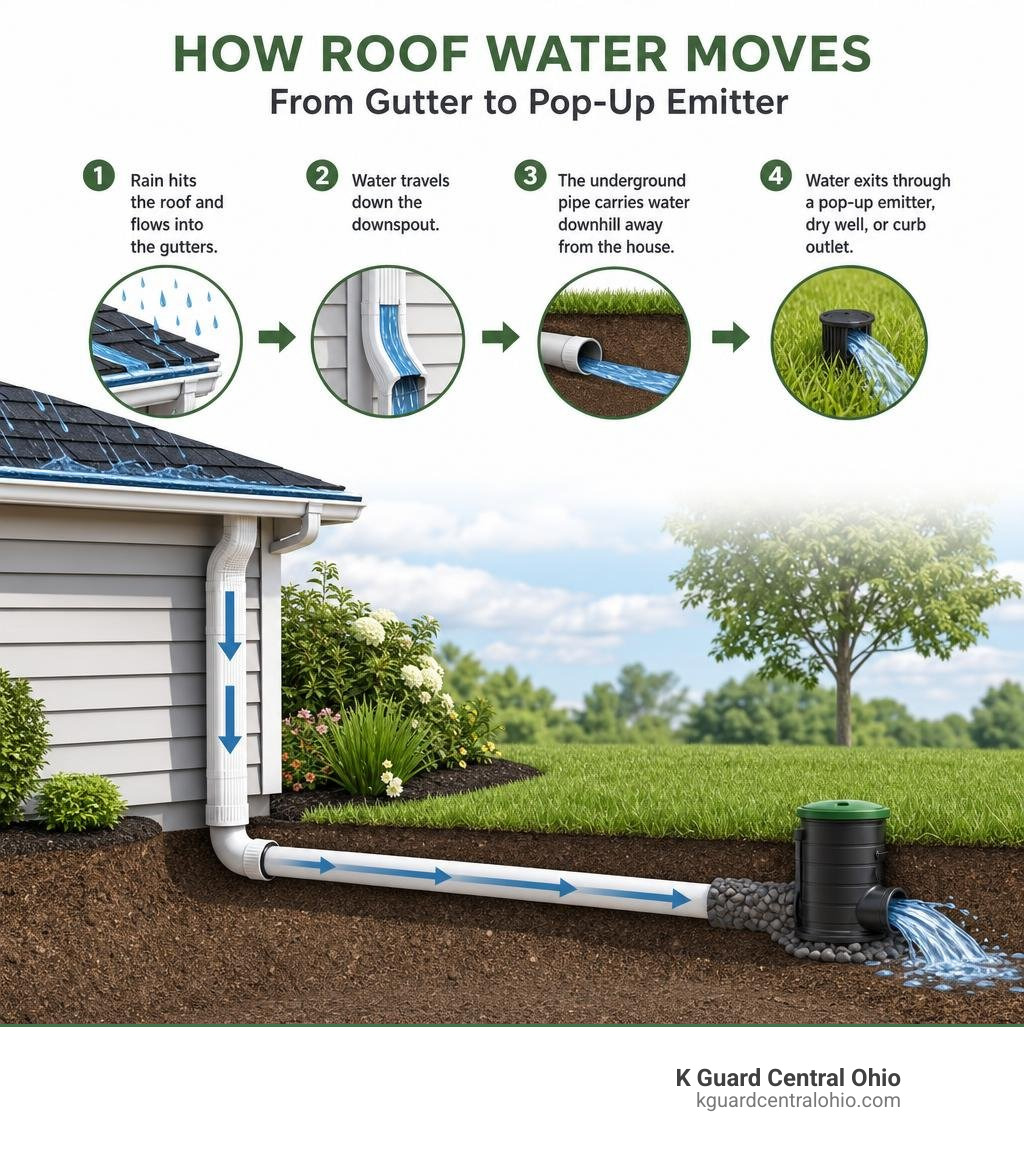
A buried downspout drain is an underground pipe system that carries roof runoff from your gutters and downspouts away from your foundation — discharging it safely into your yard, a curb, or a dry well.
Here’s how it works at a glance:
- Rain hits your roof and flows into the gutters
- Water travels down the downspout into an underground pipe
- The pipe carries water downhill (at least 1% slope) away from the house
- Water exits through a pop-up emitter, dry well, or curb outlet — at least 10 feet from the foundation
This matters because water sitting near your foundation is not a minor issue. Uncontrolled roof runoff can lead to water damage averaging $11,000 per incident. Foundation repairs typically run between $5,000 and $20,000. Basement flooding repairs average around $10,000. A properly installed buried system is a low-cost way to prevent all three.
Beyond protection, burying your downspouts also eliminates tripping hazards, removes unsightly plastic extensions from your lawn, and makes mowing far easier.
I’m Rich Mannino, General Manager of K-Guard Leaf Free Gutters. We help Central Ohio homeowners protect their homes with our lifetime-guaranteed gutter protection system — which completely eliminates annual gutter cleaning and has an average installation cost of $5,000. I’ve spent nearly two decades helping homeowners manage roof water — including how a clean, debris-free gutter system is the single biggest factor in keeping a buried downspout drain flowing properly year after year. In this guide, I’ll walk you through everything you need to know to design, install, and maintain a buried system that actually works.
What Is a Buried Downspout Drain and How Does It Work?
A buried downspout drain is simply a hidden extension of your gutter system. Instead of dumping water beside the house or sending it across the lawn through a plastic extension, the downspout connects to an underground pipe that carries water to a safe discharge point.
The system relies on gravity, not a pump. That means the pipe must slope continuously downhill toward the outlet. If the pipe dips, rises, or traps water, it can collect debris, freeze, or back up during heavy rain.
Common discharge points include:
- A pop-up emitter in the lawn
- A daylight outlet on a lower slope
- A curb outlet, where allowed
- A dry well or infiltration area
- A drainage basin designed to handle roof runoff
If you want a refresher on how downspouts fit into the full gutter system, start with The Complete Guide to Gutter Downspouts.
Buried Downspout Drain Components Homeowners Should Know
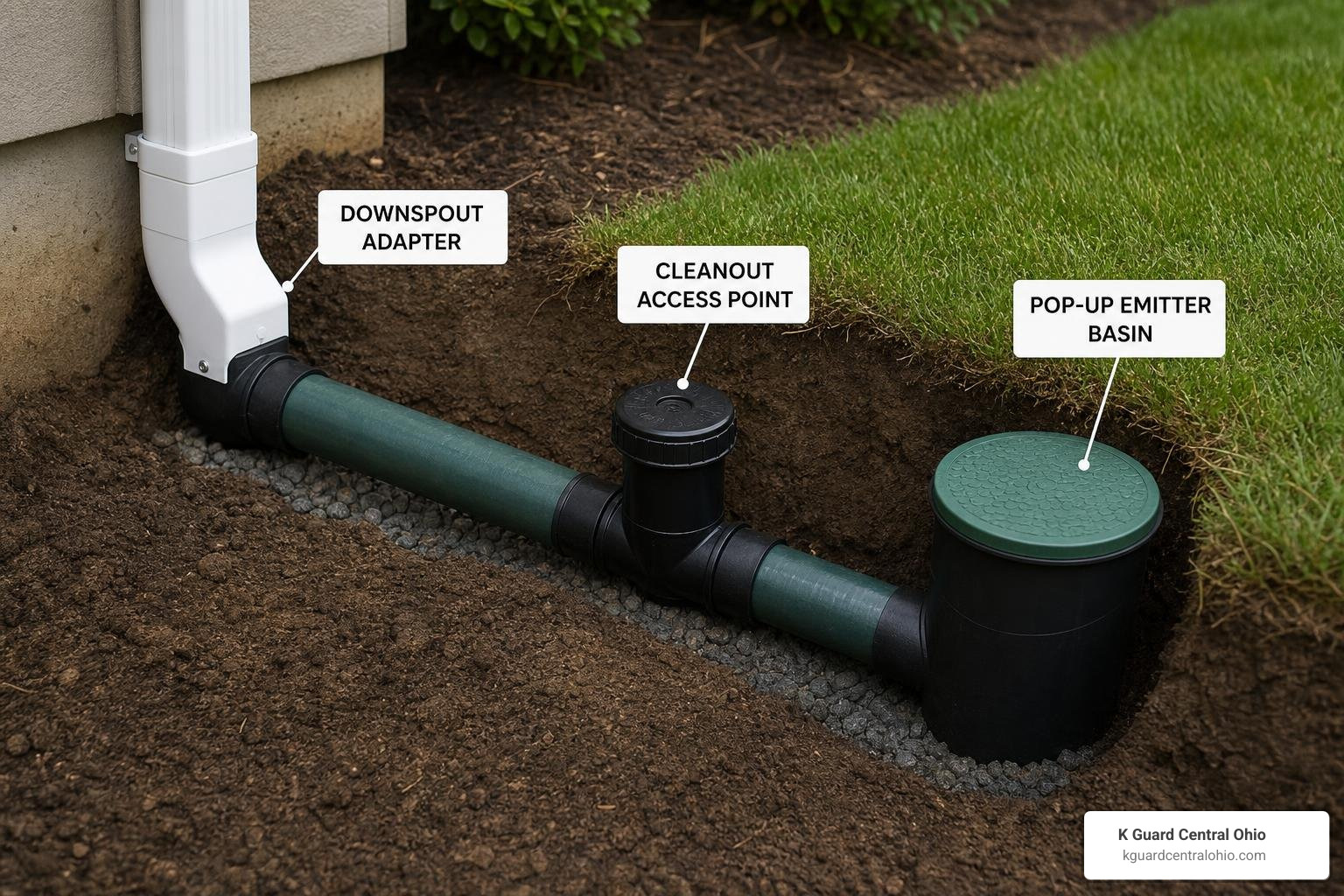
A good buried system is more than a pipe in a trench. The best systems include access points and debris control so the drain can be maintained later.
Key components include:
- Downspout adapter: Connects a rectangular 2×3 or 3×4 downspout to round pipe.
- Elbows: Help turn the water from vertical downspout flow into horizontal pipe flow.
- Solid drain pipe: Usually 3-inch or 4-inch pipe, depending on design.
- Cleanout: An accessible opening for flushing or vacuuming the line.
- Inline catch basin: Collects grit, leaves, and roof debris before they enter the main run.
- Wye fitting: Used when merging multiple lines. It moves water more smoothly than a T-fitting.
- Pop-up emitter: A low-profile outlet that opens when water pressure builds.
- Gravel bed: Helps water disperse around an emitter, basin, or dry well.
- Filter fabric: Helps keep soil from migrating into gravel drainage areas.
- Outlet screen: Keeps animals and large debris out of open discharge points.
How Water Moves Through the System
Water should move like this:
- Gutters collect roof runoff.
- Downspouts carry water down from the roofline.
- A transition adapter directs water into underground pipe.
- The pipe drops at a minimum 1% grade, which equals about 1/8 inch per foot.
- Water exits freely at the discharge point.
That 1% grade is small, but it matters. A 30-foot run needs roughly 3.75 inches of total drop. Without that pitch, shingle granules, leaves, and sediment can settle inside the line.
The goal is to reduce soil saturation near the foundation. Less saturated soil means less hydrostatic pressure against basement walls and fewer chances for seepage.
Buried Downspout Extensions vs. Splash Blocks, Above-Ground Extensions, and Rain Barrels
| Option | Visibility | Trip Hazard | Mowing | Maintenance | Foundation Protection | Best Use |
|---|---|---|---|---|---|---|
| Buried downspout drain | Low | Low | Easy | Moderate | High when designed well | Long-term runoff control |
| Above-ground extension | High | Medium | Annoying | Low to moderate | Fair if kept in place | Budget-friendly short runs |
| Splash block | Medium | Low | Easy | Low | Limited | Minor runoff areas |
| Rain barrel | Medium | Low | Moderate | Moderate | Limited unless overflow is managed | Water storage for gardens |
A rain barrel can be useful, but it must have an overflow route. Once full, it no longer protects the foundation unless excess water is directed away.
Benefits, Drawbacks, and When a Buried System Makes Sense
A buried system makes the most sense when downspouts currently dump water near the foundation, across walkways, into mulch beds, or into low lawn areas.
The key is making sure the buried line receives clean, controlled roof runoff. That starts with a properly working gutter system and reliable debris protection. K-Guard’s specialized gutter guard system helps eliminate annual gutter cleaning and keeps leaves, sticks, and roof debris from feeding into buried drain lines.
Main Benefits of Burying Downspouts
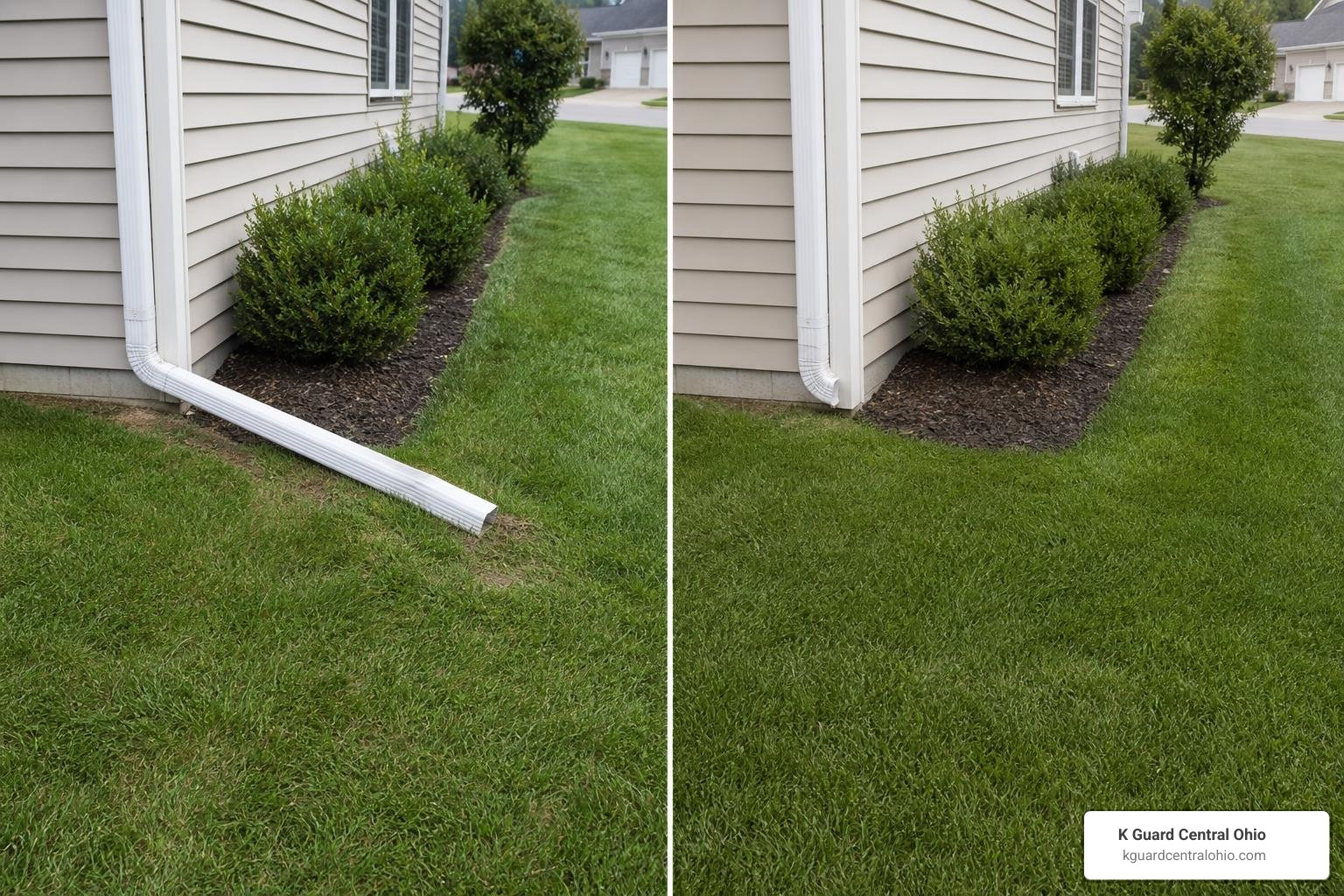
The biggest benefits are practical:
- Foundation protection: Moves roof water away from basement walls and footings.
- Less basement moisture: Helps reduce seepage risk during heavy rain.
- Erosion control: Keeps mulch, topsoil, and landscape beds from washing out.
- Fewer puddles: Reduces soggy spots that attract mosquitoes.
- Cleaner curb appeal: Hides bulky plastic extensions.
- Safer walkways: Removes trip hazards from paths and patios.
- Easier mowing: No more moving extensions before cutting the grass.
- Better inspection appeal: Drainage improvements are a positive sign to buyers and inspectors.
In short: buried drains make your yard look less like a plumbing experiment and more like a finished landscape.
Potential Drawbacks and Maintenance Challenges
Buried drains are excellent when installed correctly, but they are not magic tunnels. Common problems include:
- Clogging: Leaves, twigs, and shingle grit can collect in the pipe.
- Root intrusion: Roots seek moisture and can enter poorly sealed joints.
- Pipe collapse: Thin or flexible pipe can crush under traffic or poor backfill.
- Freezing: Standing water in low spots can freeze during Central Ohio freeze-thaw cycles.
- Poor slope: Bellies in the trench trap water and debris.
- Harder repairs: Since the pipe is underground, fixing mistakes may require digging.
- Upfront cost: Proper pipe, fittings, basins, and labor cost more than a splash block.
This is why gutter protection matters. If leaves never enter the gutter system in the first place, the buried drain has a much easier life.
When a Buried Downspout Drain Is Not Enough
A buried downspout drain handles roof runoff. It does not solve every drainage problem.
You may need more than buried downspouts if you have:
- Yard grading that slopes toward the house
- Heavy Central Ohio clay soil that drains slowly
- A high water table
- Neighboring runoff entering your yard
- Sump pump discharge problems
- Failed footer drains
- Chronic basement leaks
- Low areas that need swales or French drains
- Utility conflicts or stormwater restrictions
Also, local rules matter. Some communities limit where stormwater can discharge. Before connecting to a curb, storm drain, or shared system, check local requirements.
Design Rules: Pipe Material, Size, Depth, Slope, and Discharge Distance
A buried system works only as well as its design. Pipe material, slope, outlet location, and cleanout access all matter.
Before digging in Central Ohio, call 811 so underground utilities can be marked. The best drainage plan in the world is not worth hitting a utility line. That is the opposite of a relaxing Saturday.
Best Pipe Materials for a Buried Downspout Drain
The most common pipe options are:
- Smooth-wall PVC: Durable, lower clog risk, easy to clean.
- SDR35 pipe: Common underground drainage pipe with good flow and bell-end joints.
- Schedule 40 PVC: Stronger and more rigid, often useful under driveways or traffic areas.
- Thin-wall PVC: Can work for residential drainage when properly installed and protected.
- Corrugated pipe: Flexible and easy to route, but more prone to sediment buildup and crushing if poorly installed.
For most buried downspout drains, we prefer solid smooth-wall pipe near the house. Perforated pipe releases water along the run, which can defeat the purpose if it starts draining too close to the foundation.
Perforated pipe belongs in infiltration areas, dry wells, or French drain designs – not as the first pipe leaving the downspout beside your basement wall.
Recommended Pipe Size: 3-Inch vs. 4-Inch Drains
Most residential underground downspout systems use 4-inch pipe because it handles heavy roof runoff, connects easily to common fittings, and is more forgiving during intense storms.
A 3-inch pipe can work for shorter runs or single downspouts, and it may maintain better velocity in some layouts. But 4-inch pipe is usually the safer choice when:
- The roof area is large
- Multiple downspouts merge
- The run is long
- Central Ohio storms dump water quickly
- You want easier cleaning access
When combining lines, use Wye fittings instead of T-fittings. Wyes guide water in the direction of flow and reduce turbulence.
How Deep to Bury Downspout Pipe and What Slope to Use
A typical buried downspout pipe is installed 12 to 18 inches deep, but depth depends on outlet elevation, slope, obstacles, and freeze concerns.
The non-negotiable rule is slope:
- Minimum slope: 1% grade
- Equivalent drop: 1/8 inch per foot
- 20-foot run: about 2.5 inches of drop
- 40-foot run: about 5 inches of drop
Use a string line, line level, laser level, or transit to confirm the pitch. Do not guess. Human eyeballs are great for admiring lawns, not measuring drainage slope.
Avoid:
- Low spots
- U-shaped traps
- Dips under sidewalks
- Pipe runs that go down, then back up
- Loose trench bottoms that settle later
How Far From the House Should the Outlet Be?
The discharge point should be at least 10 feet from the foundation. In many yards, 10 to 20 feet is common, but the best distance depends on slope and where water can safely exit.
Good outlet locations:
- Drain downhill away from the house
- Do not send water onto a neighbor’s property
- Do not flood sidewalks or driveways
- Are not placed where water will flow back toward the foundation
- Comply with local stormwater rules
If the yard does not have enough fall, a dry well, basin, swale, or professional drainage design may be needed.
How to Install a Buried Downspout System Step by Step
If you are installing new downspouts first, see How to Install Downspouts in 5 Simple Steps. A buried drain works best when the above-ground gutter and downspout system is already sized and flowing properly.
Step 1: Plan the Drainage Route and Call 811
Map the route before digging. Identify:
- Downspout location
- Outlet location
- Required slope
- Sidewalks, patios, and driveways
- Tree roots
- Utility lines
- Property lines
- Low spots
- Local discharge rules
Then call 811. Wait for utility marking before any trenching begins.
Step 2: Dig the Trench at the Correct Depth and Pitch
Use a trenching shovel or spade to cut a clean path. Remove sod carefully if you plan to reuse it.
Best practices:
- Start at the downspout and work toward the outlet.
- Maintain 1% slope.
- Keep the trench bottom firm and consistent.
- Remove rocks that could damage pipe.
- Avoid creating bellies where water can sit.
- Protect nearby landscaping.
Step 3: Connect the Downspout to Underground Pipe
Use a rectangular-to-round adapter sized for your downspout. Most homes use 2×3 or 3×4 downspouts.
A good connection may include:
- Downspout adapter
- 90-degree or sweeping elbow
- Leaf filter or debris separator
- Vented cleanout
- Sealed pipe connection
Keep at least one access point near the house if possible. If the line ever clogs, you want to clean it from above, not excavate like an archaeologist hunting for plastic pipe.
Step 4: Lay Pipe, Add Fittings, and Install Cleanouts or Catch Basins
Lay the pipe with the outlet end downhill. Use solid PVC, SDR35, or another suitable drainage pipe.
Include:
- Wye fittings for merged lines
- Cleanout risers for long runs
- Inline catch basins where grit may collect
- Long sweeping bends instead of sharp turns
- Sealed joints to reduce root intrusion
Catch basins are especially helpful for roofs with older asphalt shingles that shed granules. The basin collects debris before it travels through the full pipe run.
Step 5: Install the Outlet, Pop-Up Emitter, Basin, or Dry Well
Common outlet options include:
- Pop-up emitter: Opens during flow and sits low in the lawn.
- Daylight outlet: Pipe exits on a lower slope.
- Dry well: Stores runoff underground and lets it infiltrate slowly.
- Basin or bubbler: Collects and releases water at a safe point.
Add gravel and filter fabric where needed to prevent soil from clogging the outlet area. If using a pop-up emitter, make sure water can drain from the pipe after flow stops. Standing water increases freeze risk.
Step 6: Test, Backfill, and Restore the Yard
Before backfilling, test the system with a garden hose.
Check for:
- Leaks at joints
- Water flowing freely to the outlet
- No pooling in the pipe
- No washout at the discharge area
- Proper emitter operation
Then backfill carefully. Tamp soil lightly in layers, replace sod, seed bare areas, and restore grading so surface water also moves away from the house.
Preventing Clogs, Freezing, Roots, and Costly Repairs
The best buried drain is the one you can forget about most of the year. To get there, keep debris out, keep water moving, and keep access points available.
If your gutters already clog frequently, review Unclogging Your Gutters: A Step-by-Step Guide from the Ground Up.
How to Keep a Buried Downspout Drain From Clogging
The best clog prevention starts at the roofline.
Use:
- A high-quality gutter guard system
- Clean downspout transitions
- Debris filters
- Smooth-wall pipe
- Catch basins
- Cleanouts
- Annual flushing where needed
K-Guard’s specialized gutter guard system is designed to eliminate annual gutter cleaning and keep leaves, sticks, and debris from entering the gutter trough. That is a major advantage for any buried drain because underground pipes are much easier to maintain when they are not being fed a steady diet of leaves.
For seasonal upkeep guidance, see Don’t Get Drained: A Gutter Maintenance Schedule That Works Wonders.
How to Prevent Freezing in Underground Downspouts
Central Ohio freeze-thaw cycles can expose poor installation quickly. To reduce freezing risk:
- Maintain continuous slope.
- Avoid low spots where water sits.
- Keep gutters debris-free.
- Use cleanouts or air gaps where appropriate.
- Make sure the outlet drains after storms.
- Keep pop-up emitters clear of leaves and turf.
- Inspect the system before winter.
Freezing is usually not caused by the pipe being underground. It is usually caused by trapped standing water.
How to Reduce Root Intrusion and Pipe Damage
Roots love moisture. To keep them out:
- Use sealed or glued joints.
- Choose PVC or SDR35 with tight fittings.
- Avoid routing lines through major tree root zones.
- Bed pipe properly so it does not sag.
- Use stronger pipe where vehicles or equipment cross.
- Consider Schedule 40 PVC under driveways.
- Add cleanouts so camera inspection is possible later.
If a system repeatedly clogs in the same spot, a camera inspection can reveal roots, crushed pipe, or a belly in the line.
Tools, Fittings, and Accessories Checklist
Common tools:
- Shovel
- Trenching spade
- Tape measure
- String line
- Line level or laser level
- PVC saw or pipe cutter
- Utility marking flags
- Work gloves
- Garden hose
Common materials:
- Downspout adapter
- 4-inch solid pipe
- Elbows
- Wye fittings
- Couplings
- Cleanout fittings
- Inline catch basin
- Pop-up emitter
- Outlet screen
- Filter fabric
- Gravel or pea stone
- Soil, seed, straw, or sod for restoration
DIY vs. Professional Installation and Cost Considerations
A buried downspout project can be simple or surprisingly complicated. The difference is usually grading.
For broader gutter and downspout budgeting context, see Don’t Get Drained: Unpacking the True Cost of New Gutters and Downspouts.
When DIY Can Work
DIY may be reasonable when:
- It is one short, straight run
- The yard clearly slopes away from the house
- There are no hardscape crossings
- The outlet is simple
- Utilities are not in the route
- You have basic tools
- You are comfortable checking slope
- The project can be completed over a weekend
Always call 811 first, even for a shallow trench.
When to Hire a Professional
Hire a professional when the project involves:
- Multiple downspouts
- Long pipe runs
- Clay soil and poor drainage
- Recurring basement leaks
- French drain tie-ins
- Sidewalk or driveway crossings
- Storm drain connections
- Deep trenching
- Heavy roots
- Code or permit questions
- Unclear slope
Professionals can also spot when the real issue is not the downspout at all, but grading, sump discharge, or foundation drainage.
What Homeowners Should Budget in 2026
As of June 2026, buried drainage costs vary based on trench length, pipe material, number of downspouts, outlet type, access, soil conditions, and restoration work.
For K-Guard’s specialized gutter protection system, the average house installation is approximately $5,000. That investment is about more than convenience. With K-Guard, homeowners get a lifetime guarantee and the total elimination of annual gutter cleaning.
That matters because a buried downspout drain is only as reliable as the water entering it. Clean, protected gutters help prevent the underground system from becoming a buried leaf collection tube. Very fancy. Very useless.
Frequently Asked Questions About Buried Downspout Drains
How deep should a buried downspout drain be?
Most buried downspout drains are installed 12 to 18 inches deep, but depth depends on slope, outlet elevation, obstacles, and local freeze conditions. The pipe must maintain at least a 1% grade, or about 1/8 inch of drop per foot.
If the outlet is too high or the yard is flat, simply burying the pipe deeper will not fix the problem. The water still needs somewhere lower to go.
Should buried downspout drains use solid or perforated pipe?
Use solid pipe near the house. Solid pipe carries roof runoff away before releasing it.
Perforated pipe may be used in a dry well, infiltration trench, or French drain design, but it should not discharge water right beside the foundation. That can put the same water problem underground instead of solving it.
Do buried downspouts require gutter guards?
Gutter guards are not technically required, but we strongly recommend them.
A buried drain can clog from:
- Leaves
- Twigs
- Maple seeds
- Pine needles
- Shingle granules
- Roof debris
A quality gutter protection system dramatically reduces what enters the downspout. K-Guard is built to eliminate annual gutter cleaning, which also helps protect buried drain lines from preventable clogs.
Conclusion
A buried downspout drain is one of the best ways to move roof runoff away from your foundation, protect your basement, reduce erosion, improve curb appeal, and make your lawn easier to maintain.
The keys are simple:
- Use solid pipe near the house.
- Maintain at least 1% slope.
- Discharge water at least 10 feet from the foundation.
- Avoid dips and U-shaped traps.
- Add cleanouts or catch basins.
- Keep debris out of the gutter system.
- Respect local stormwater rules and utility markings.
For Central Ohio homeowners, the best drainage starts at the roofline. If your gutters stay clear, your downspouts and underground drains work better for years.
Ready to eliminate annual gutter cleaning and protect your home with a lifetime-guaranteed system? Explore the gutter protection system.