Your Gutters Won’t Last Forever — Here’s How Long They Actually Should
The average lifespan of gutters depends heavily on the material they’re made from, how well they’re maintained, and the climate they’re exposed to. Here’s a quick-reference summary:
| Gutter Material | Typical Lifespan |
|---|---|
| Copper | 50–100 years |
| Aluminum | 20–30 years |
| Galvanized Steel | 15–25 years |
| Vinyl | 10–20 years |
| Seamless Aluminum | 25–35+ years |
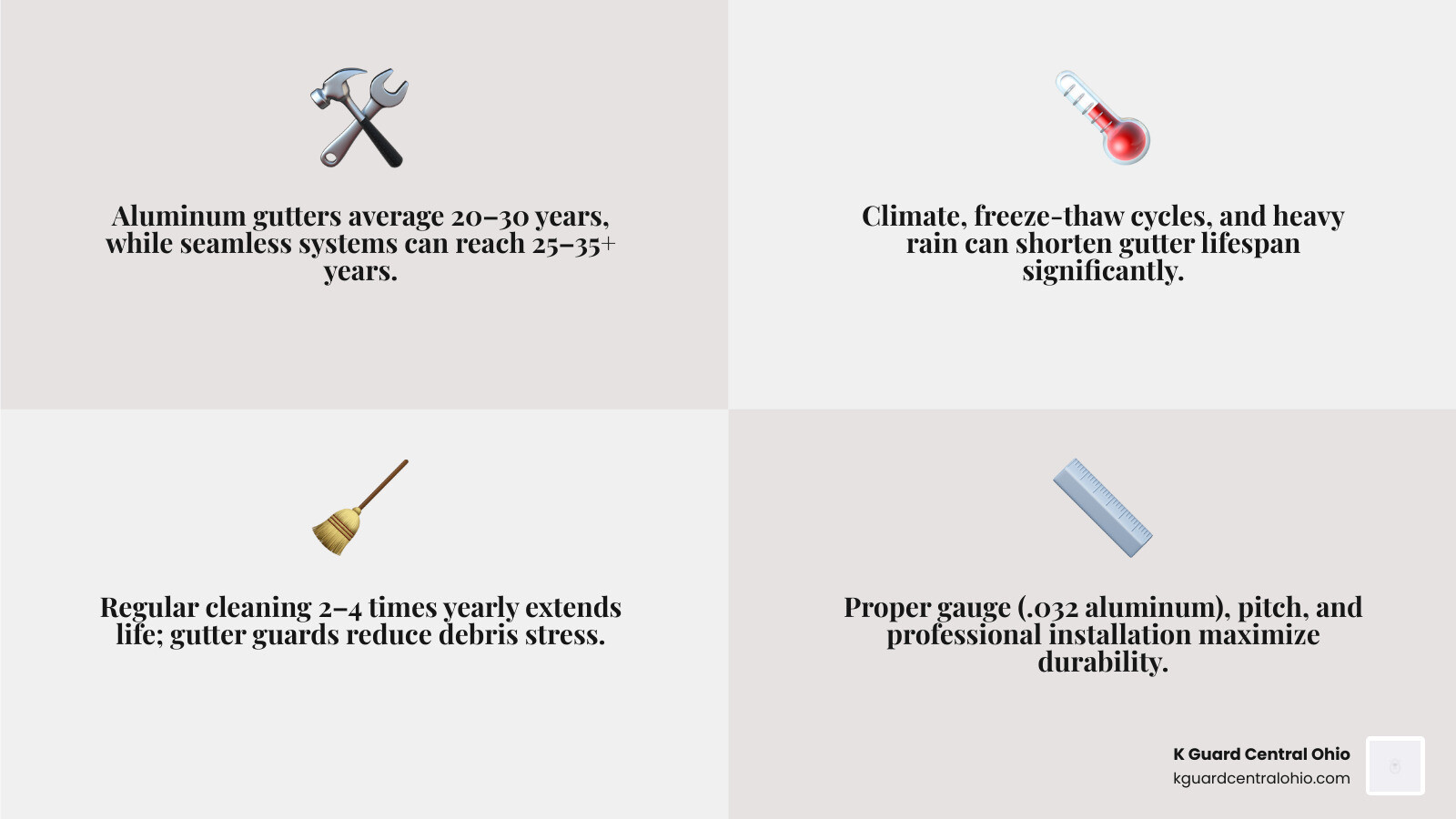
Most homes have aluminum gutters, which average around 20–30 years with proper care. Neglect that maintenance, and you’ll likely be replacing them much sooner.
Gutters do a quiet but critical job. They channel rainwater away from your roof, walls, and foundation. When they fail — whether from age, debris buildup, or poor installation — the damage they leave behind can be expensive. Water stains, fascia rot, and even foundation problems are all common results of a gutter system that’s given out.
The good news: knowing your gutter material and its expected lifespan puts you in control. You can plan ahead, spot problems early, and choose a system designed to last.
I’m Rich Mannino, General Manager of K-Guard Leaf Free Gutters, and after nearly two decades working with gutter systems across Central Ohio, I’ve seen how material choice, installation quality, and protection systems directly determine the average lifespan of gutters on real homes. That experience shapes everything in this guide.
What Is the Average Lifespan of Gutters?
Across all common materials, gutters usually last anywhere from about 10 years to 100 years. That is a wide range, but it makes sense once we look at what they are made of and how they are used. Industry references like the Study of Life Expectancy and InterNACHI’s Standard Estimated Life Expectancy Chart for Homes both show the same basic pattern: copper lasts the longest, aluminum is the common middle ground, and vinyl tends to have the shortest service life.
Installation quality, maintenance habits, and climate can shift those numbers up or down quite a bit. A well-installed gutter system in Central Ohio with proper drainage and protection can outlast a neglected system by many years.
The average lifespan of gutters by material
Here is the practical range homeowners should know:
| Material | Typical Lifespan | Notes |
|---|---|---|
| Aluminum | 20-30 years | Most common residential option |
| Copper | 50-100 years | Premium material with very long life |
| Galvanized steel | 15-25 years | Strong, but vulnerable to rust over time |
| Vinyl | 10-20 years | Budget-friendly, but less durable in temperature swings |
| Seamless aluminum | 25-35+ years | Fewer joints means fewer failure points |
Downspouts often last a bit longer than the gutter trough itself. Some sources put aluminum downspouts around 30 years, while copper downspouts may last much longer.
Why aluminum gutters are the most common benchmark
When people ask about the average lifespan of gutters, they are usually asking about aluminum without realizing it. That is because aluminum is the standard choice on many homes.
Why is it so common?
- It resists rust better than steel
- It is lightweight
- It is more affordable than copper
- It comes in many colors
- It delivers solid longevity without premium-material pricing
Not all aluminum is equal, though. Thickness matters. Research consistently points to heavier .032 aluminum coil lasting longer than thinner .027 material. In plain English: thicker metal usually stands up better to denting, stress, and long-term wear.
Why protected seamless systems often last longer than traditional open gutters
Seamless systems usually outlast sectional gutters because they have fewer joints. And fewer joints means fewer places for leaks, separation, and sealant failure to start.
Protected systems can go a step further. By reducing debris buildup, they also reduce clogs, standing water, and the extra weight that causes sagging. That matters in Central Ohio, where leaves, spring storms, and winter weather can all pile on stress fast.
A custom-fit, heavy-duty seamless system with built-in protection often has a practical lifespan in the 25-35+ year range. For homeowners who want fewer maintenance headaches, that is a major advantage. For more on that approach, see Seamlessly Superior: How to Get Heavy Duty Gutters You’ll Never Have to Touch.
What Affects How Long Gutters Last?
Even the best material can fail early if the system is poorly installed or constantly clogged. On the flip side, average materials can last impressively long with proper care. The biggest factors are climate, maintenance, debris load, workmanship, and material quality.
Climate and environmental conditions that shorten gutter life
Central Ohio is not gentle on gutters. We deal with:
- Freeze-thaw cycles
- Heavy spring and summer rain
- Snow and ice loads in winter
- Wind-blown debris
- Tree litter in fall
Those conditions matter. Freeze-thaw cycles can loosen fasteners, stress seams, and worsen small cracks. Heavy rain exposes poor pitch and undersized systems. Snow and ice add weight that can bend brackets or pull gutters away from the fascia.
Wooded lots are another big one. If your house sits under mature trees, your gutters may collect leaves, seed pods, twigs, and shingle grit faster than you can say “I just cleaned those.”
For more on how Central Ohio weather affects exterior systems, see Delaware Roofing: Roof Lifespan in Central Ohio Climate.
Material quality, thickness, and workmanship
A gutter system is only as good as its parts and installation.
Important details include:
- Aluminum thickness, such as .027 vs .032
- Proper hanger spacing
- Correct slope for drainage
- Secure attachment methods
- Quality corners, end caps, and outlets
- Cleanly installed downspouts
Older systems with gutter spikes can be a clue to age. Since spikes were largely phased out more than 20 years ago, seeing them often suggests a system that is already in the later stages of its life. That does not automatically mean immediate failure, but it is a sign to inspect carefully.
Good workmanship adds years. Poor workmanship steals them. Gutters that are pitched wrong, loosely attached, or badly sealed may start leaking and sagging long before the material itself should have worn out.
How maintenance impacts the average lifespan of gutters
Maintenance may be the single biggest variable in the average lifespan of gutters.
Open gutters usually need cleaning at least twice a year, and homes with heavy tree coverage may need it 2-4 times yearly. Why? Because trapped debris holds moisture, causes overflow, stresses hangers, and keeps water sitting where it should be moving.
Regular maintenance should include:
- Clearing debris
- Checking for leaks
- Making sure downspouts flow freely
- Tightening loose brackets
- Watching for sagging or separation
- Touching up sealant where needed
If you want a deeper look, our Detailed Guide to Gutter Lifespan breaks down these issues further.
Signs Your Gutters Need Repair or Replacement
A gutter rarely sends a polite calendar invite announcing retirement. Usually, it starts hinting. Then dripping. Then sagging. Then costing you money.

Visible damage you should not ignore
Some warning signs are easy to see from the ground:
- Cracks or pinholes
- Rust or corrosion
- Warping or bending
- Sagging sections
- Loose or detached runs
- Peeling paint nearby
- Color fading or flaking finish
- Separated joints
Color fading often starts showing up around the 15-20 year mark on older systems. It is not always a structural problem by itself, but it can be a sign that the gutters have been weathering for a long time.
Performance problems that point to failure
Sometimes the gutter looks okay but performs badly. Watch for:
- Overflow during normal rain
- Standing water in the trough
- Dripping seams
- Water pooling near the foundation
- Basement moisture or mildew
- Fascia rot
- Water marks on siding
- Downspouts that back up or spill over
One of the best homeowner tests is simple: walk around the house during a moderate rain. If water is pouring over the edge, leaking at joints, or dumping next to the foundation, the system is no longer doing its job.
When replacement makes more sense than repeated repairs
Repair is often smart when the issue is limited and the rest of the system is in good shape. Examples:
- One damaged section after a branch strike
- A single loose downspout
- Minor isolated leaks
- One corner needing resealing
Replacement makes more sense when:
- Repairs keep piling up
- Gutters are nearing or past expected lifespan
- Multiple sections are sagging
- They detach from the house repeatedly
- Seams leak in several places
- Rust or corrosion is widespread
- Water damage is already showing up on fascia or foundation areas
At a certain point, repeated repair becomes the home-improvement version of patching an old garden hose with duct tape. It may work for a while, but it is not the long-term play.
How to Extend Gutter Life and Cut Maintenance
The good news is that gutter lifespan is not just luck. A few good habits can add years to your system and prevent expensive damage.
Cleaning, inspections, and small fixes that add years
For traditional open gutters, we recommend a seasonal routine:
- Inspect in spring for winter damage
- Clean in late spring if seeds and blossoms build up
- Inspect again in fall as leaves drop
- Check after major storms
- Tighten loose brackets
- Reseal corners or end caps if needed
- Make sure downspouts discharge away from the foundation
A few extra tips:
- Do not lean ladders directly on gutters
- Do not ignore minor drips at seams
- Extend downspouts far enough to move water away from the house
- Trim branches that hang over the roofline
Small fixes are cheap. Rotting fascia and foundation drainage issues are not.
Why gutter guards can dramatically improve longevity
Gutter guards can help gutters last longer because they reduce the conditions that cause premature failure:
- Less debris accumulation
- Better water flow
- Less standing moisture
- Less weight from soggy leaves
- Fewer clogs and overflows
- Less frequent cleaning and disturbance
That matters especially in tree-heavy neighborhoods around Central Ohio. A protected system is not just about convenience. It can also reduce wear caused by recurring blockage.
For homeowners who want to stop annual gutter cleaning altogether, a fully integrated gutter protection system offers a very different experience from a standard add-on screen or cover.
Choosing a system designed to last longer
If long-term durability is the goal, we recommend focusing on design as much as material.
Look for:
- Heavy-duty aluminum
- Seamless construction
- Proper sizing and water capacity
- Strong hidden hangers
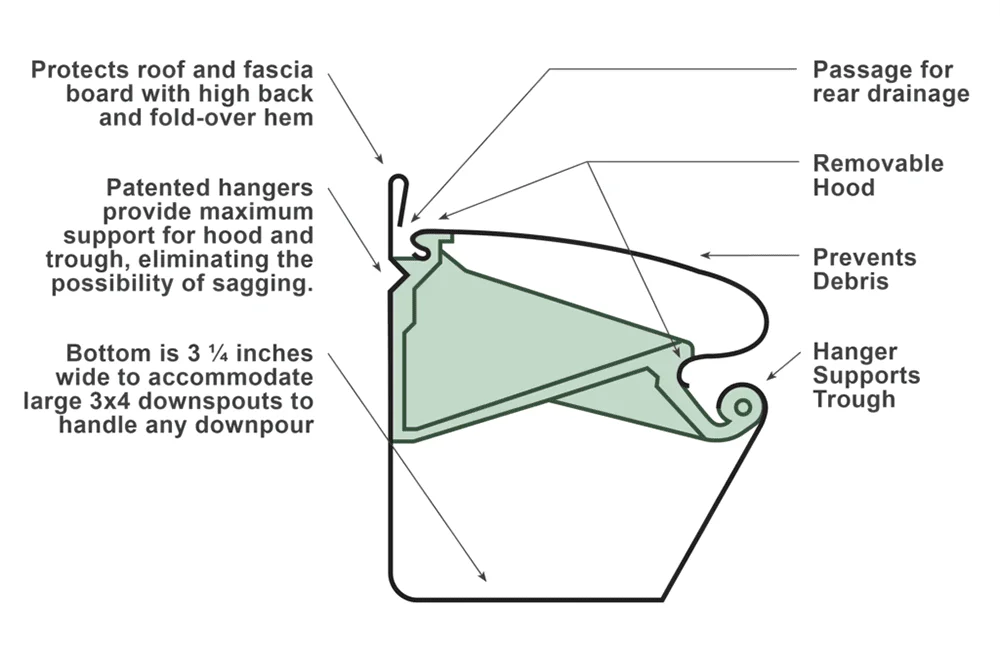
- Integrated hood protection
- Professional installation
That is where a purpose-built system stands apart. K-Guard is designed as a complete gutter and hood system, not just an open gutter with an accessory placed on top. It is built to reduce clogging, improve flow, and eliminate annual gutter cleaning. It also comes with a lifetime guarantee, which is a meaningful part of the long-term value.
To learn more, visit Why K-Guard and Our Products.
Gutter Replacement Cost in 2026: What Homeowners Should Expect
If your gutters are failing, lifespan matters – but so does budget.
Typical gutter replacement costs and protection system pricing
Basic gutter replacement costs vary widely depending on material, home size, accessibility, and whether the system is sectional or seamless. General industry ranges often fall around:
- $4-$30 per linear foot depending on material
- About $1,900 on average for a basic replacement project
Aluminum is generally one of the more affordable metal options. Copper sits at the premium end. Seamless systems cost more than basic sectional systems, but usually perform better and last longer.
How to compare upfront price vs cost per year
The smartest way to compare gutter options is not just by sticker price. It is by annualized value.
For example:
- A cheaper system that fails early or needs regular cleaning and repair may cost less upfront but more over time
- A better-built system that lasts longer and needs less maintenance can have a lower true yearly cost
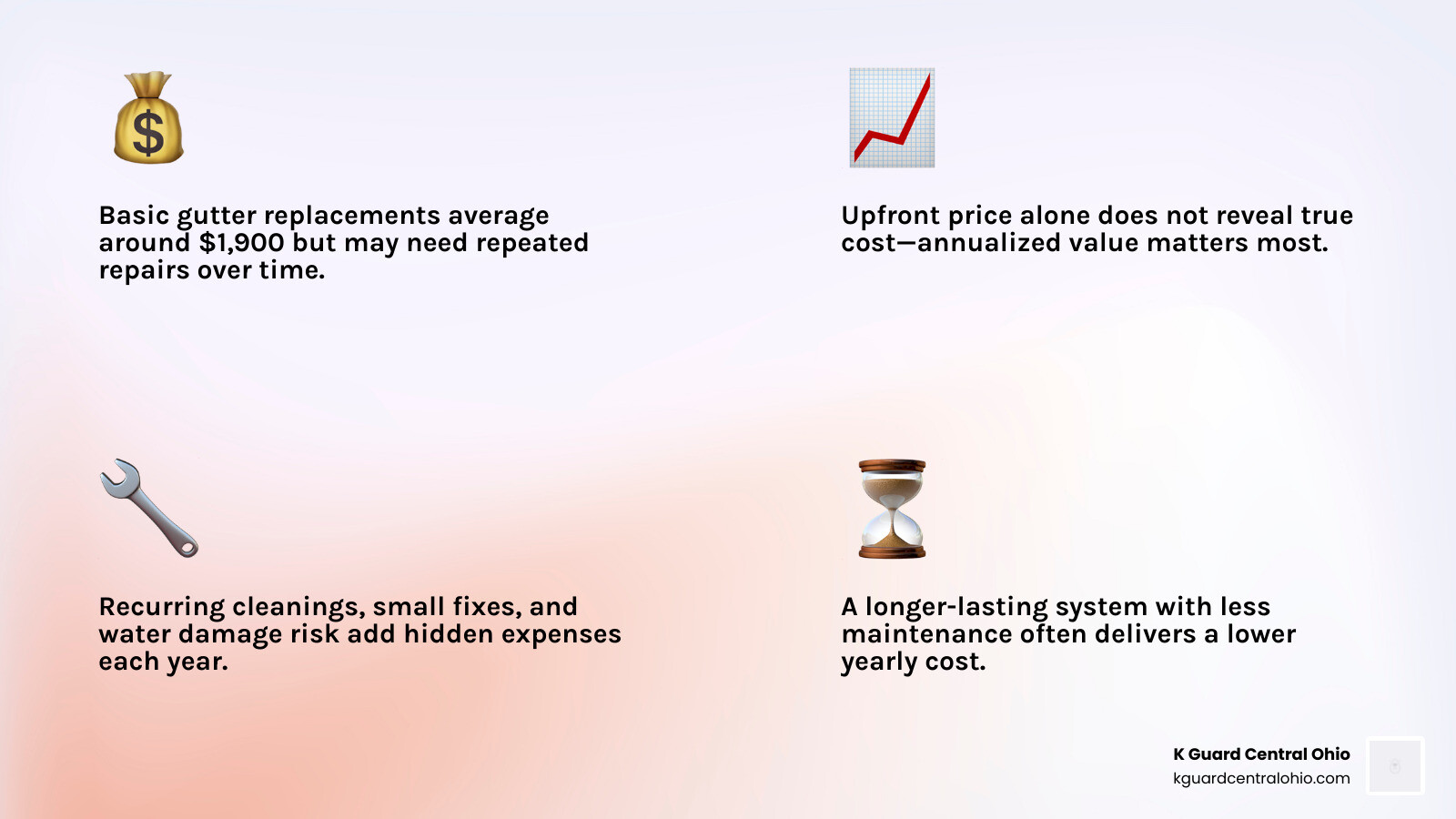
This is especially true if you factor in the cost of recurring cleanings, small repairs, water damage risk, and your time. Saving money upfront is great until you are paying for the same problem every fall.
What a premium gutter guard system may cost
For homeowners in Central Ohio considering a premium protected system, the average house installation is approximately $5,000.
That higher initial investment typically reflects:
- Seamless custom fabrication
- Heavy-duty materials
- Integrated gutter protection
- Professional installation
- Long-term performance benefits
- A lifetime guarantee
If the system truly eliminates annual gutter cleaning and reduces repair frequency, the value picture changes. Over time, many homeowners find that a protected system makes more financial sense than repeatedly paying to clean, patch, and babysit a lower-end setup.
For more pricing details, see Cost of New Gutters 101 and Don’t Get Soaked: A Homeowner’s Guide to New Gutter Costs.
Frequently Asked Questions About the Average Lifespan of Gutters
What is the average lifespan of aluminum gutters?
Most aluminum gutters last about 20-30 years, with 20 years being a common benchmark in industry charts. Higher-quality, thicker aluminum such as .032 coil tends to last longer than thinner material, especially when the system is well installed and maintained.
How often should gutters be cleaned to maximize lifespan?
For open gutters, at least twice a year is the usual minimum – typically spring and fall. If your home has a lot of tree coverage, cleaning 2-4 times per year may be necessary. Protected systems are different. A fully integrated K-Guard system is designed to eliminate annual gutter cleaning, comes with a lifetime guarantee, and has an average installation cost of about $5,000 for the average house, which can reduce both maintenance burden and clog-related wear.
Should you replace gutters when replacing the roof?
Not always. If the gutters are in good condition, properly pitched, and performing well, they may not need replacement just because the roof is being replaced. But roof replacement is a smart time to evaluate them. If the gutters are older, leaking, undersized, or already near the end of their service life, it can be cost-effective to upgrade at the same time.
Conclusion: How to Get the Most Years Out of Your Gutter System
The average lifespan of gutters is not a single number. It is a range shaped by material, installation quality, maintenance, and local weather. In most cases, aluminum gutters last 20-30 years, copper lasts far longer, vinyl tends to wear out sooner, and protected seamless systems usually offer the best balance of longevity and practicality for many homes.
The biggest takeaway is simple: gutters last longer when they stay clear, drain properly, and are built from quality materials. If your current system is constantly clogging, leaking, or pulling away from the house, replacement may be the better investment over another round of repairs.
For many Central Ohio homeowners, a protected system offers the strongest long-term value: no annual gutter cleaning, a lifetime guarantee, and an average installation cost of about $5,000 for the average house. If you are ready to compare options built for durability, explore Our Products and 5-Inch Seamless Gutters: What You Need to Know About Pricing.