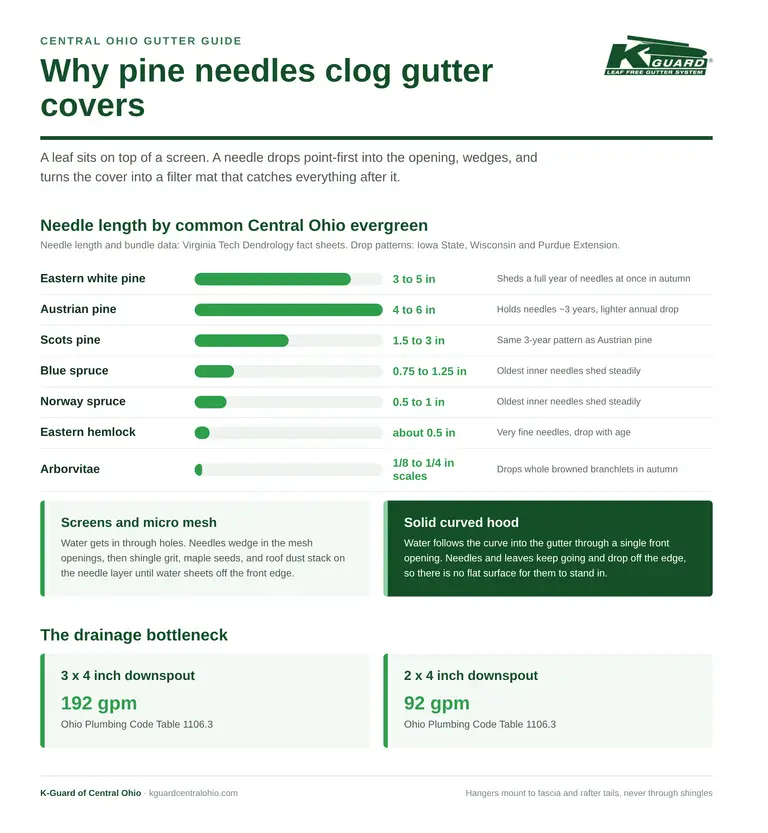
Different Types of Downspouts: Round, Square, and Everything in Between
What Are the Different Types of Downspouts?
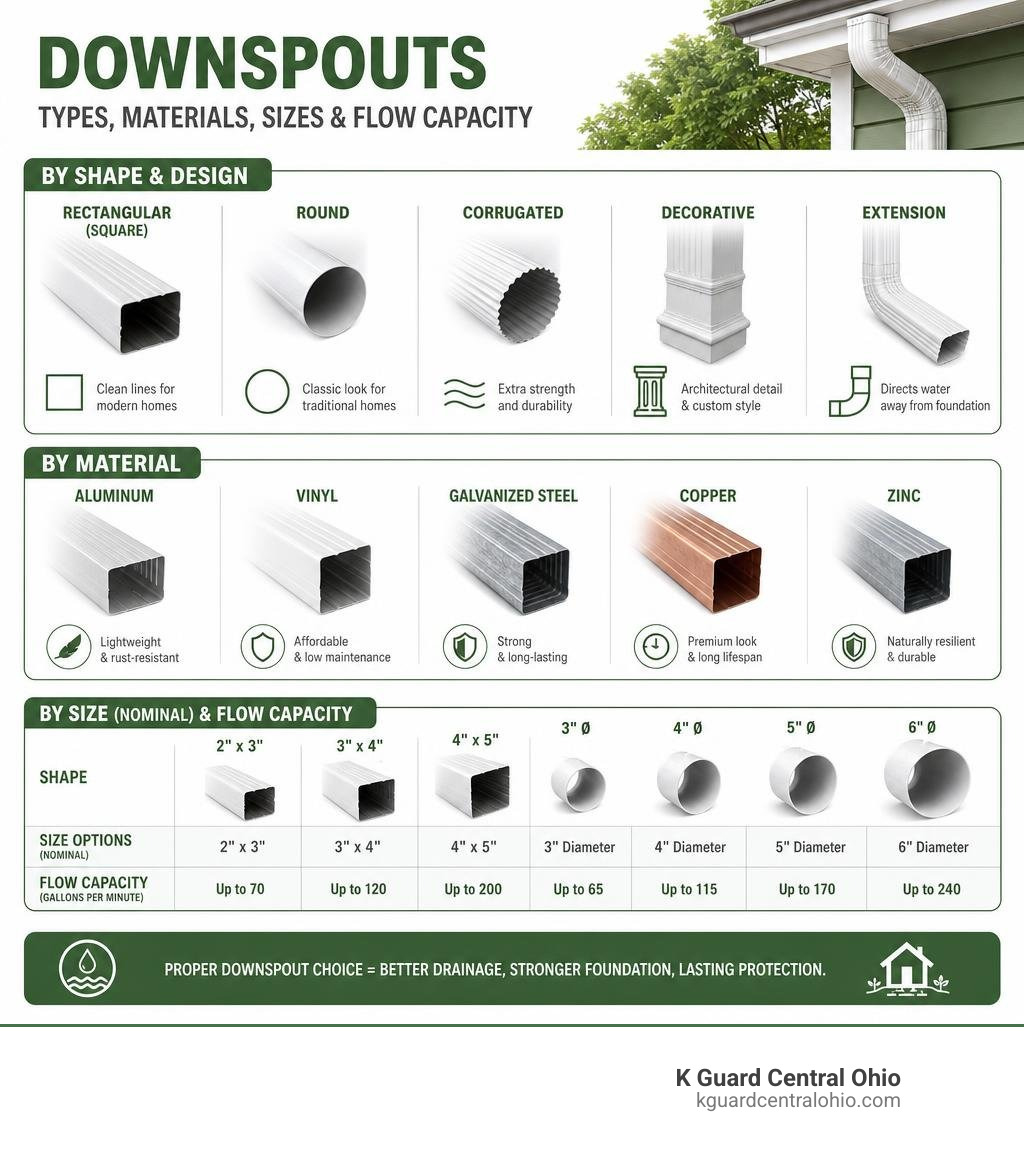
Different types of downspouts fall into several main categories based on shape, material, and construction. Here’s a quick overview:
| Type | Best For | Common Sizes |
|---|---|---|
| Rectangular/Square | K-style gutters, modern homes | 2×3, 3×4, 4×5 inches |
| Round | Half-round gutters, historic homes | 3, 4, 5, 6 inch diameter |
| Corrugated | Added structural strength | Same as above |
| Custom/Decorative | Luxury, architectural detail | Varies |
| Extension | Directing water away from foundation | Varies |
Materials include aluminum, vinyl, galvanized steel, copper, and zinc — each with different costs, lifespans, and maintenance needs. Construction is either seamed (DIY-friendly, lower cost) or seamless (fewer leaks, more durable).
Downspouts are the vertical pipes that carry rainwater from your gutters down to the ground and away from your home’s foundation. They’re easy to overlook — until something goes wrong.
When a downspout is the wrong size, wrong style, or poorly placed, the consequences show up fast: water pooling near your foundation, soil erosion around landscaping, and even basement flooding. Choosing the right downspout isn’t just an aesthetic decision. It’s a functional one that protects your home’s structural integrity.
Interestingly, the concept of directing roof runoff away from walls goes back further than most people realize. The Tower of London used the first recorded downspout in 1240 — installed to protect freshly whitewashed walls from rain streaks. Nearly 800 years later, the core purpose hasn’t changed.
I’m Rich Mannino, General Manager of K-Guard Leaf Free Gutters, and with nearly two decades overseeing gutter systems across Central Ohio, I’ve seen how the different types of downspouts impact drainage performance, home protection, and long-term maintenance. In this guide, I’ll walk you through everything you need to make the right call for your home.
Different types of downspouts word list:
Exploring the Different Types of Downspouts by Shape and Design
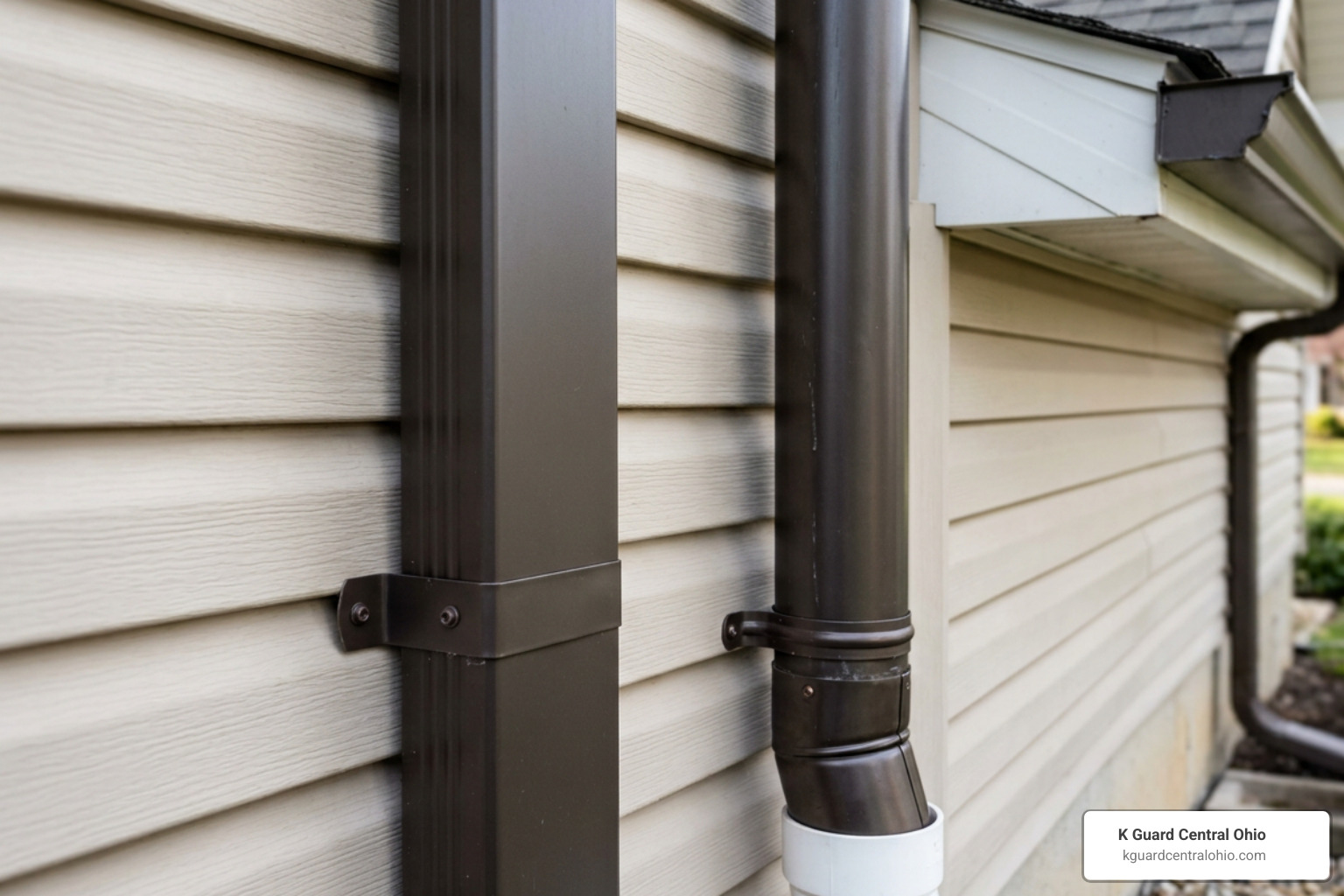
When selecting downspouts, the shape is often the first decision you will make. The shape, or profile geometry, determines how water flows through the system, how easily debris can pass without causing clogs, and how the pipe blends with your home’s architecture.
In Central Ohio, where we experience heavy summer downpours and freezing winter snowmelt, choosing a shape that manages water volume efficiently is critical. If you want to learn more about how to match these shapes to your home, you can read about Selecting the Perfect Downspout for Your Home’s Exterior.
Rectangular and Square Downspouts
Rectangular and square downspouts are the most common styles found on modern American homes. They feature flat surfaces and clean lines that run flush against your home’s siding.
Standard rectangular downspouts usually come in corrugated formats. These corrugated ridges are not just for looks; they add structural strength to the metal, helping the pipe withstand freezing water expansion during cold Ohio winters.
One of the biggest advantages of rectangular downspouts is their low profile. They typically project only 2 to 3 inches from your exterior walls, compared to the 4 to 5 inches required by round styles. This space-saving design makes them highly discreet, blending seamlessly into corners. They are designed to pair perfectly with standard K-style gutters, which are the most popular gutter profile on the market today.
Round and Half-Round Downspouts
Round downspouts offer a smooth, cylindrical design that brings a classic, traditional look to a home. Because they have a completely smooth interior with no sharp corners, water flows through them with minimal friction. This smooth path also means there are fewer places for small twigs, pine needles, and leaves to get caught, making round downspouts naturally more resistant to clogs.
Round downspouts are the traditional pairing for half-round gutters. They are highly favored for historic homes, brick exteriors, and European-style architecture. While they project slightly further from the home’s exterior than rectangular options, their elegant aesthetic is often considered a major upgrade in curb appeal.
How Different Types of Downspouts Match Your Gutter Profile
For a gutter system to perform reliably, the downspout must match the style and capacity of the horizontal gutter run. A mismatch can lead to poor sealing, water leaks, and unsightly transitions.
As a general rule, K-style gutters are paired with rectangular downspouts, while half-round gutters require round downspouts. This pairing ensures that the outlet—the opening where the gutter connects to the downspout—fits perfectly without restricting water flow.
If you are planning a complete system upgrade, understanding this compatibility is essential. For a deeper dive into how these components work together, check out The Complete Guide to Gutter Downspouts.
Downspout Materials and Construction: Seamed vs. Seamless
The material of your downspouts dictates how long they will last, how much maintenance they will require, and how they will handle the harsh seasonal changes of Central Ohio.
| Material | Average Lifespan | Pros | Cons |
|---|---|---|---|
| Vinyl | 10–15 Years | Very budget-friendly, rustproof, easy to install | Can become brittle and crack in freezing temperatures |
| Aluminum | 20–30 Years | Lightweight, rustproof, available in many colors | Can dent relatively easily from ladders or hail |
| Galvanized Steel | 15–20 Years | Extremely strong, handles heavy snow and ice | Heavy, can eventually rust if the zinc coating wears off |
| Copper | 50+ Years | Beautiful natural patina, incredibly durable, rustproof | High upfront cost, requires professional installation |
| Zinc | 30–50 Years | Extremely durable, self-healing patina | Expensive, sensitive to coastal salt air (though fine for Ohio) |
To understand how these standards are monitored and classified across the industry, you can refer to the Downspout Types and Placement Standards | National Gutter Authority.
Aluminum, Vinyl, and Steel Options
Aluminum is the undisputed king of residential downspouts. It is lightweight, rustproof, and incredibly budget-friendly. Because it is highly malleable, it can be manufactured in a wide range of colors to match your home’s trim. For homeowners looking for a reliable, low-maintenance option that won’t break the bank, aluminum is almost always the best choice.
Vinyl (or PVC) downspouts are another low-cost alternative. They are completely rustproof and incredibly easy to assemble, making them popular for DIY projects. However, they struggle in climates like Central Ohio. The extreme temperature swings from hot summers to freezing winters cause vinyl to expand and contract rapidly, making it brittle and prone to cracking over time.
Galvanized steel is the heavyweight champion of strength. If your home is prone to heavy snow accumulation or ice dams, steel downspouts can handle the weight without sagging or pulling away from the wall. The downside? They are heavy, and if the protective zinc coating is scratched or wears down, they will rust.
If you are weighing the costs of these standard materials, you can explore detailed pricing breakdowns in our guide on The Real Cost of Gutter and Downspout Replacement in 2026.
Copper and Zinc for Luxury Homes
For historic restoration projects or luxury custom homes, copper and zinc are the premier choices.
Copper downspouts are prized for their incredible longevity, often lasting more than 50 years. Over time, copper undergoes a stunning chemical transformation. It starts as a bright, shiny salmon pink, deepens into a rich dark brown, and eventually develops a beautiful blue-green verdigris patina. This patina acts as a protective barrier, making the metal completely immune to rust and corrosion.
Zinc downspouts offer similar high-end durability. Like copper, zinc develops a protective patina over time that can actually “self-heal” minor scratches. Both of these materials are heavy and require specialized soldering during installation, meaning they must be installed by experienced professionals.
Choosing Between Different Types of Downspouts: Seamed vs. Seamless
Just like horizontal gutters, downspouts are available in seamed or seamless designs.
Seamed downspouts are made from pre-cut sections of pipe that are joined together during installation. These seams run vertically down the back of the pipe and horizontally at every connection point. While seamed sections are inexpensive and easy to transport, every seam represents a weak point where debris can catch, water can leak, or freezing ice can burst the joint.
Seamless downspouts are custom-fabricated on-site from a continuous roll of metal using a specialized machine. Because there are no vertical seams, they offer a completely smooth interior, superior leak resistance, and a much cleaner, streamlined appearance. They are far more durable and are highly recommended for homeowners looking to minimize future maintenance.
Sizing, Spacing, and Elbow Configurations for Optimal Drainage
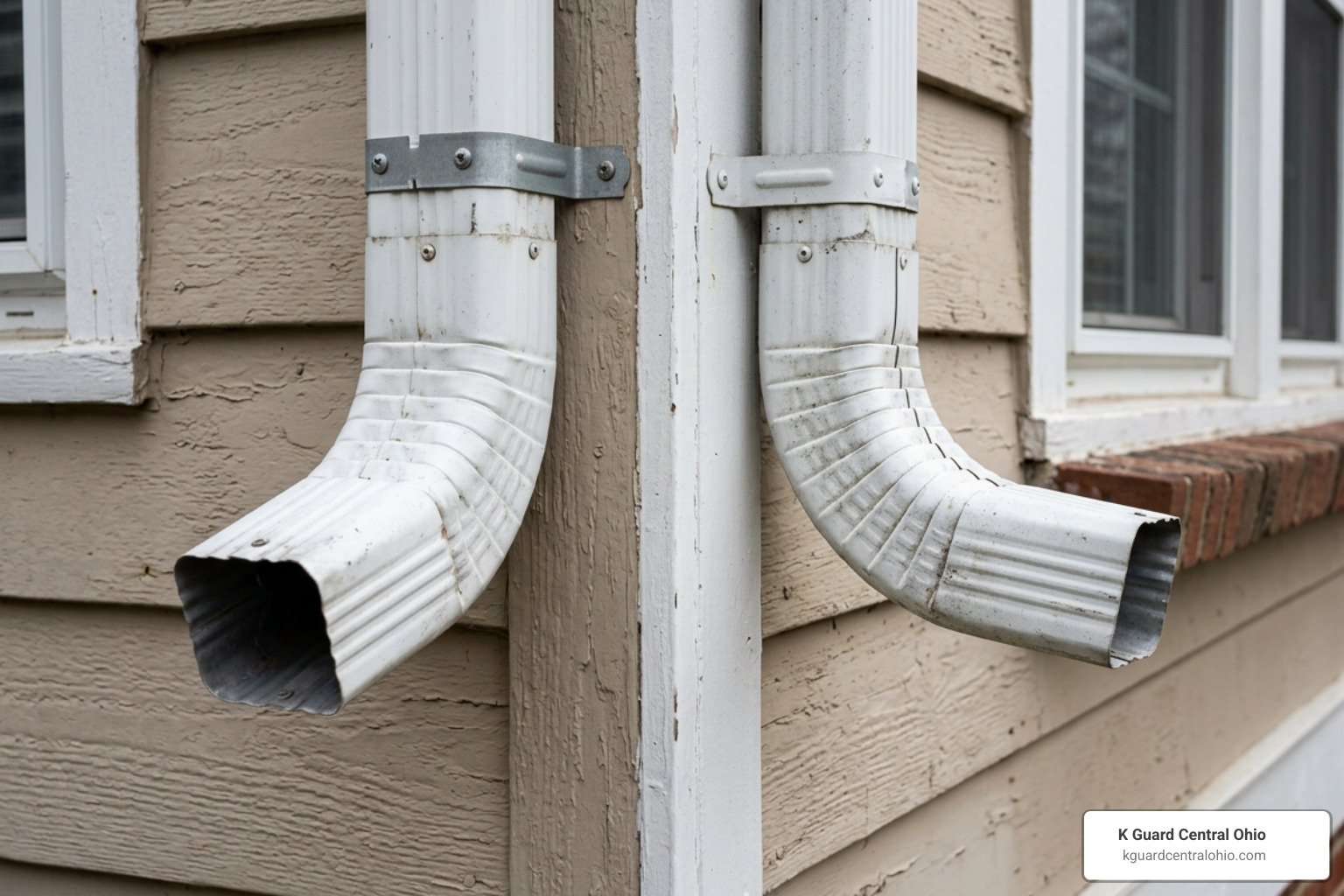
A downspout can only drain water as fast as its size and configuration allow. If your downspouts are too small or have too many sharp turns, water will back up into your gutters, spill over the sides, and wash out your landscaping.
To see the engineering calculations behind roof drainage capacities and how downspouts handle different rates of water flow, you can view the official Gutter PA1 (Revised 2019).xlsx.
Calculating Downspout Size and Spacing
The size of your downspouts should match the size of your gutters and the square footage of your roof.
- 2×3-inch downspouts are the standard choice for 5-inch K-style gutters. A single 2×3 downspout can safely carry water from approximately 600 square feet of roof area.
- 3×4-inch downspouts are paired with 6-inch gutters. Because of their larger cross-section, they can handle about 650 to 700 square feet of roof area and are much less prone to clogging from small leaves and twigs.
- 4×5-inch downspouts are typically reserved for large custom homes or commercial buildings with massive roof areas.
In terms of spacing, a standard rule of thumb is to install one downspout for every 30 to 40 linear feet of gutter. However, in areas prone to heavy, sudden downpours, reducing that spacing to one downspout every 20 to 30 feet ensures that your system never becomes overwhelmed.
Understanding Elbow Styles: A-Style vs. B-Style and Angles
Downspout elbows are the curved fittings used to direct water around obstacles like roof overhangs, brick ledges, and foundation walls. Choosing the right elbow style is critical for keeping water flowing smoothly.
- A-Style Elbows direct water forward or backward relative to the face of the downspout. If you are standing in front of your home looking at the downspout, an A-style elbow will bring the water directly toward you or push it back toward the wall.
- B-Style Elbows direct water to the left or right. These are used when you need to navigate sideways around a corner, a window frame, or a structural column.
Standard elbows come in various angles, including 30°, 45°, 75°, and 90°. The 75-degree elbow is the industry standard for residential installations because it provides a gentle enough slope to keep water moving fast while keeping the downspout tight against the house.
Avoid the mistake of going “elbow-crazy.” Every single bend in a downspout creates friction, slows down the water flow, and creates a potential catching point for leaves and debris. Keep your runs as straight and simple as possible.
Installation Best Practices and Preventing Foundation Damage
Proper downspout installation is the final, crucial step in protecting your home from water damage. Even the best downspouts in the world will fail if they dump water directly next to your foundation. Over time, water pooling near your home can crack concrete basement walls, cause soil erosion, and lead to mold growth.
To prevent this, downspouts must terminate with a proper discharge clearance. We recommend directing water at least 4 to 6 feet away from your foundation wall. This can be achieved using splash blocks, flexible plastic extensions, or—for the cleanest look and best performance—a buried downspout drain.
A buried drain connects your downspout directly to an underground PVC pipe that carries the water safely away to a low point on your property, a dry well, or the street curb. If you want to tackle this yourself, read our step-by-step guide on How to Install Downspouts in 5 Simple Steps. If you are interested in a more permanent, invisible solution, check out The Complete Guide to Buried Downspout Extensions and Drains.
Frequently Asked Questions about Gutter Downspouts
How many downspouts does a standard residential home need?
Most residential homes require one downspout for every 30 to 40 linear feet of gutter. If your home has a complex roofline with multiple valleys, or if you live in an area that experiences sudden, intense storms, you may need additional downspouts spaced every 20 to 30 feet to handle the high volume of water.
What is the difference between A-style and B-style downspout elbows?
The difference lies in the direction of the water flow. An A-style elbow directs water forward or backward (toward or away from the wall). A B-style elbow directs water sideways (to the left or right). You choose the style based on the obstacles you need to navigate on your home’s exterior.
How far should a downspout extend from the home’s foundation?
At a bare minimum, a downspout should discharge water at least 3 feet away from your foundation. However, to truly protect your basement and landscaping from soil erosion and water intrusion, we highly recommend extending the discharge 4 to 6 feet away using high-quality extensions or underground drains.
Conclusion
Choosing from the different types of downspouts can feel overwhelming, but matching the right shape, material, and size to your home is one of the smartest investments you can make to protect your property from water damage.
At K-Guard Central Ohio, we believe in providing homeowners with permanent, worry-free solutions. That is why we offer our specialized, fully integrated K-Guard Leaf Free Gutter System. Our system features oversized downspouts that easily handle the heaviest Central Ohio rainstorms without clogging.
With our industry-leading lifetime guarantee, you can enjoy the complete elimination of annual gutter cleaning and the dangerous chore of climbing ladders. The average installation cost is approximately $5,000—a smart, long-term investment that protects both your home’s foundation and your peace of mind.
Ready to upgrade your home’s drainage system? Explore K-Guard Products today to connect with our local team and get started.