
Downspout Drain Extensions 101: Keep Your Foundation High and Dry
Why Foundation Protection Starts with Your Gutters
Downspout drain extensions are attachments that connect to the bottom of a downspout and direct roof runoff away from your home’s foundation. Without them, water dumps right at the base of your house — where it can saturate soil, seep into basements, and cause serious structural damage over time.
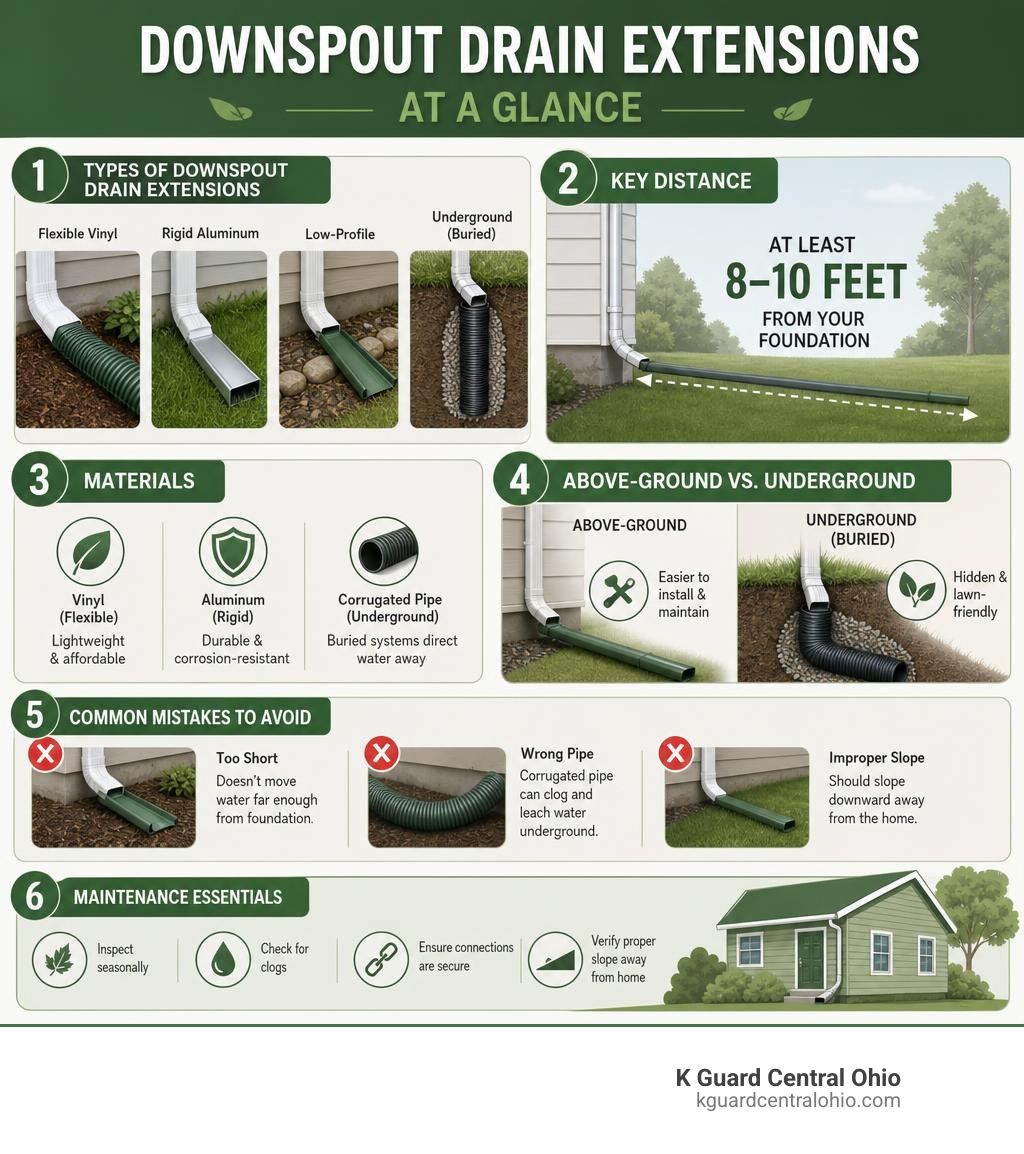
Here’s a quick summary of what you need to know:
- What they do: Move water from your downspout to a safer discharge point, away from your foundation
- Types available: Flexible vinyl, rigid aluminum, low-profile, and underground (buried) systems
- How far they should reach: At least 8–10 feet from your foundation
- Above-ground vs. underground: Above-ground extensions are easier to install; underground systems are hidden and lawn-friendly
- Key mistake to avoid: Using short extensions or corrugated pipe that clogs or leaches water underground
- Maintenance: Inspect seasonally for clogs, separation, or improper slope
Even a well-designed gutter system can’t protect your home if the water it collects dumps right next to your foundation. That last few feet of the drainage path — from the downspout base to a safe discharge point — is where downspout drain extensions do their job.
I’m Rich Mannino, General Manager of K-Guard Leaf Free Gutters, and after nearly two decades managing complete residential water-management systems, I’ve seen how the wrong (or missing) downspout drain extensions can undo everything a good gutter system is designed to accomplish. In the sections below, I’ll walk you through every option available so you can make the right call for your home.
Related content about downspout drain extensions:
Water has a simple goal in life: gravity wants it on the ground as quickly as possible. When hundreds of gallons of roof runoff pour off your shingles during a typical Central Ohio rainstorm, your gutters are the first line of defense. However, catching the water is only half the battle. If your downspouts empty right next to your basement walls, you are actively inviting structural failure.
When water pools around the perimeter of your home, it saturates the soil. This saturated earth exerts immense hydrostatic pressure against your basement or crawlspace walls. Over time, that relentless pressure forces water through porous concrete, block joints, and minor hairline cracks.
Furthermore, the ground directly surrounding your home is known as the “zone of failure.” This is the soil that was excavated and then backfilled when your home was built. Because it has been disturbed, it is far more porous and susceptible to settling than the undisturbed, natural clay soil further out in your yard. Dumping water into this zone is a recipe for foundation settling, soil erosion, and wet basements. To understand how your gutters collect this water in the first place, check out The Complete Guide to Gutter Downspouts.
How Water Accumulation Damages Your Home
When water saturates the zone of failure, the consequences are rarely cheap. Over time, you will start to notice:
- Foundation Cracks: Sinking or shifting soil causes concrete slabs and block walls to crack and bow.
- Basement Seepage: Musty smells, damp carpets, and standing water during heavy storms.
- Mold and Mildew Growth: Excess moisture in crawlspaces or basements creates a breeding ground for mold, ruining indoor air quality.
- Landscape Washout: Heavy downspout streams can gouge deep trenches in your lawn and ruin expensive mulch beds.
When these issues arise, homeowners often have to seek professional drainage repair or yard drainage solutions to correct the underground damage.
The Role of Gutter Systems and Downspouts
The overall capacity of your gutter system dictates how much water is successfully funneled to your downspouts. If your gutters clog with leaves and maple seeds, water overflows the sides, rendering any downspout extension useless.
Traditional gutter setups rely on basic splash blocks to catch downspout water. While splash blocks help minimize soil erosion directly under the elbow, they rarely push water far enough away to escape the zone of failure. To optimize how water moves from your roof to your yard, you need to match your gutter capacity with the appropriate downspout profile. You can learn more about these options in our guide on Different Types of Downspouts: Round, Square, and Everything in Between.
Choosing the Right Downspout Drain Extensions for Your Home
Selecting the right downspout drain extensions comes down to balancing aesthetics, lawn maintenance, and budget. You want something that effectively moves water past the 8-to-10-foot mark without turning your yard into an obstacle course.
| Extension Type | Pros | Cons | Ideal For |
|---|---|---|---|
| Flexible Vinyl | Highly adjustable, budget-friendly, easy DIY installation | Susceptible to cracking from UV rays, can be crushed by mowers, looks less finished | Quick fixes, temporary routing around landscaping |
| Rigid Aluminum | Extremely durable, color-matched to siding, clean professional appearance | Rigid path (harder to curve around obstacles), must be manually flipped or moved to mow | Front yards where curb appeal matters, permanent above-ground paths |
| Low-Profile Vinyl | Sits flat to the ground, can be covered with mulch or decorative stone | Can clog easily if leaves slip past the gutters, limited length options | Side yards with narrow pathways, garden beds |
| Underground (Buried) | Completely hidden, zero mowing obstructions, discharges far away | Higher upfront cost, requires digging, must be installed with correct pitch to prevent freezing | Long-term foundation protection, homeowners wanting clean lawn lines |
Above-Ground vs. Underground Downspout Drain Extensions
If you are looking for a quick, above-ground fix, options like the Flex-A-Spout Vinyl Downspout Extension – Adjustable 25.5 to 55 in. – Gutter All or the Angel Sar 21 in. White Polypropylene Flexible Drain Downspout Extension, Extended to 68 in. (2-Pack) offer excellent flexibility. These accordion-style extensions allow you to bend and stretch the pipe around landscaping features.
For a more durable above-ground option that matches your home’s exterior trim, a metal option like the 7 Foot Aluminum Downspout Extension 30 Colors | Foundation Protection – Gutter All provides a rigid, clean look that withstands wind and heavy storms far better than plastic.
However, above-ground extensions have one major enemy: the lawnmower. If you are tired of tripping over plastic pipes or having to constantly disconnect them before mowing, a buried system is the ultimate upgrade. For a deep dive into buried kits, check out Don’t Let Your Gutters Down: Top Buried Downspout Kits to Save Your Lawn.
Selecting the Best Materials and Sizes
When purchasing downspout drain extensions, size compatibility is crucial. Standard residential downspouts are either 2×3 inches or 3×4 inches.
- Vinyl and Polypropylene: Highly popular due to retail availability. Products like the Amerimax Vinyl 24-5 in Black Downspout Extension (Lowe’s 1000458399) or the Amerimax Home Products Flex-A-Spout 55 in. Black Vinyl Downspout Extension (Home Depot 303499069) feature universal adapters that fit both standard sizes.
- Low-Profile Options: If you want to hide above-ground extensions under mulch, low-profile kits lay flat against the turf.
- Durability: While vinyl is cost-effective, polypropylene offers superior UV resistance and structural strength, meaning it won’t crack as quickly under the hot summer sun.
Underground Drainage Systems and How They Work
An underground downspout system is the gold standard for residential water management. Instead of letting water pool on your lawn, a buried system channels roof runoff through smooth-wall underground pipes directly to a designated discharge point. To understand how these systems are planned, refer to The Complete Guide to Buried Downspout Extensions and Drains.
How Bubbler Pots and Pop-Up Emitters Function
At the end of an underground pipe sits a bubbler pot or pop-up emitter. These devices remain flush with your lawn when dry, allowing you to mow right over them without a second thought.
When it rains, water fills the underground pipe. As hydrostatic pressure builds, it pushes the lid of the emitter upward, allowing water to gently spill out onto your grass, a rock bed, or a rain garden. Once the rain stops, the lid automatically snaps shut, preventing grass clippings, leaves, and curious rodents from entering the drainage system.
Preventing Clogs and Freezing in Buried Lines
The two biggest concerns with buried downspout lines are clogs and freezing during Central Ohio winters.
To prevent clogs, you should never connect a downspout directly to an underground pipe without a debris filter. A debris filter (often installed at the base of the downspout) catches leaves, twigs, and shingle grit before they can enter the buried line.
To prevent freezing, professional installers use an “ice guard” or air-gap fitting. This fitting creates a physical break between the downspout and the underground pipe. If the buried pipe freezes solid in January, water can safely overflow out of the air gap rather than backing up into your gutters, preventing heavy ice dams from forming on your roof line. For premium reliability, we always recommend using rigid, solid PVC pipe rather than corrugated plastic pipe, as corrugated pipe has internal ridges that trap debris and hold standing water.
Common Installation Mistakes to Avoid
Whether you are tackling this as a weekend DIY project or hiring a professional, avoiding common pitfalls will save you from major headaches down the road.
- Incorrect Pitch: Underground pipes must slope downward away from the home. A minimum slope of 1/4 inch per foot (about a 2% grade) is required to keep water moving. If the pipe is flat or slopes backward, water will pool, stagnate, and freeze.
- Short Discharge: Ending your extension only 2 or 3 feet from your foundation does not solve the problem; it simply moves the puddle slightly. Always aim for a minimum of 8 to 10 feet.
- Using Corrugated Pipe: Corrugated pipe is cheap and easy to bend, but its ridges trap shingle grit and leaves, leading to inevitable clogs. Once a buried corrugated pipe clogs, clearing it is incredibly difficult, often requiring you to dig up your entire yard. Always use solid, smooth-wall PVC.
If you are looking for general above-ground alternatives, kits like the VEVOR Rain Gutter Downspout Extensions, 2-Pack Flexible Downspout Extender, Down Spout Drain Extension Extendable offer quick, temporary relief while you plan a permanent solution.
Step-by-Step Installation of Downspout Drain Extensions
If you are installing above-ground extensions, the process is straightforward:
- Clean out your existing downspout elbow to ensure no leaves are trapped.
- Slide the universal adapter of your extension (such as a Flex-A-Spout) over the downspout end.
- Secure the connection using two self-tapping sheet metal screws to prevent wind from blowing it off.
- Stretch and bend the extension to direct water toward your lawn or garden bed, ensuring a continuous downward slope.
For a detailed look at working with downspouts, see How to Install Downspouts in 5 Simple Steps and The Ultimate Guide to Gutter to Downspout Connection and Fittings. If you are retrofitting your system, you might also find Adding a Downspout to Existing Gutter Systems Without the Stress highly useful.
Where to Safely Discharge Water
You cannot simply dump your roof water anywhere. Doing so can lead to disputes with neighbors or city code violations.
- Avoid Property Lines: Never discharge water directly onto a neighbor’s property or within a few feet of their foundation.
- Stay Clear of Walkways: Discharging water onto driveways or sidewalks creates slip hazards in the summer (algae growth) and dangerous ice patches in the winter.
- Utilize Rain Gardens or French Drains: Directing water to a low-lying area filled with water-loving plants or a gravel-filled French drain allows the water to naturally filter back into the water table without causing surface erosion.
Frequently Asked Questions About Downspout Extensions
How far should downspout extensions extend from the foundation?
Downspout extensions should extend at least 8 to 10 feet from your home’s foundation. This distance ensures that discharged water bypasses the highly porous “zone of failure” (the backfilled soil around your basement) and drains into undisturbed soil that can handle the moisture without shifting.
Can you bury flexible corrugated downspout extensions?
While you can bury them, we highly advise against it. Corrugated plastic pipes have internal ridges that easily trap leaves, dirt, and shingle grit, leading to clogs that are nearly impossible to clear without excavation. Additionally, corrugated pipe is weak and can easily be crushed by lawnmowers or shifting soil. Always use solid, smooth-wall PVC for buried lines.
Do underground downspout extensions freeze in the winter?
They can if standing water is trapped inside due to improper pitch. However, a properly sloped PVC pipe (1/4 inch of drop per foot) will drain completely dry between rains, leaving no water to freeze. Installing an ice guard/air gap at the transition from the downspout to the underground pipe ensures that if a freeze does occur, water can safely escape above ground without backing up into your gutters. If you are experiencing structural issues from past water damage, you may also want to consult with a professional foundation repair specialist to assess your foundation’s health.
Conclusion
Managing roof runoff doesn’t stop at your roofline. To truly protect your home’s foundation, landscaping, and basement from costly water damage, you need high-performing downspout drain extensions that carry water safely away from your home.
However, even the best extensions can’t do their job if your gutters are constantly clogged with leaves, pine needles, and outdoor debris. That is where we come in. At K-Guard Central Ohio, we offer a specialized, fully integrated, leaf-free gutter guard system. Built with heavy-duty, commercial-grade aluminum, our system features a patented hood design that completely eliminates gutter clogging for life, ensuring the total elimination of annual gutter cleaning.

We back our work with a lifetime guarantee, meaning you will never have to climb a dangerous ladder to clean your gutters again. With an average house installation cost of approximately $5,000, investing in K-Guard is the ultimate way to protect your home from the roof down.
Ready to secure your home’s foundation and upgrade your gutter system? Explore K-Guard Products today and schedule your free estimate with our Central Ohio team!